How to Start a Volunteer Program: A Step-by-Step Nonprofit Guide




Volunteer time is now worth over $34 an hour.
Volunteers provide nonprofits with the on-the-ground support they need to further their missions, whether that means building homes, providing meals for food-insecure families, mentoring local youths, or cleaning up trash at local parks.
If you lead a volunteer program, or need to start one, you want volunteers who show up, feel useful, and come back. This guide walks you through ten steps to get there, from setting goals to measuring results.
Once you’ve completed these steps, you’ll have a volunteer management process that allows you to recruit, engage, and retain volunteers now and into the future.
What is a volunteer program?
A volunteer program serves as the organizational foundation for continuously recruiting, managing, and retaining volunteers. It includes written goals, defined roles, a recruitment plan, and a way to track hours and results. A strong program makes volunteering easy for supporters and keeps your team from starting over each time you need help.

Quick answer: how to start a volunteer program
To start a volunteer program, set clear goals, write a mission statement, and build a small leadership team to guide the work. From there, define your volunteer roles, create a schedule, and promote your opportunities to recruit your first volunteers. Train your volunteers thoroughly, communicate with them consistently, show genuine appreciation for their time, and evaluate your program regularly so you can keep improving it. Each of these steps is covered in detail below.
How to start a volunteer program in 10 simple steps
1. Set goals for your volunteer program
Your goals should be SMART: specific, measurable, attainable, relevant, and time-bound.

Here are a few volunteer program goal examples:
- We want to plant 10,000 trees in our community by 2028.
- We want to find homes for 70% more pets than we did last year.
- We want to create 400 meal kits per week for families in need.
These goals are specific and have a clear timeline, giving your team a clear and attainable benchmark to strive for. Use your goals to make decisions about your volunteer program, such as how many volunteers you need or what work they should prioritize.
2. Craft a mission statement
Your mission statement acts as your team’s guiding principle and can be used to promote your volunteer program and set priorities. Your volunteer program’s mission statement should align with your nonprofit’s overall mission statement to show how your program fits into your larger efforts.
Base this statement on your program’s goal. A strong mission statement can boost your marketing efforts by telling prospective volunteers what they can expect from working with your organization.
3. Create a leadership team
Create a team that will oversee and coordinate various aspects of your program. Depending on the size of your program, your team may consist of the following roles:
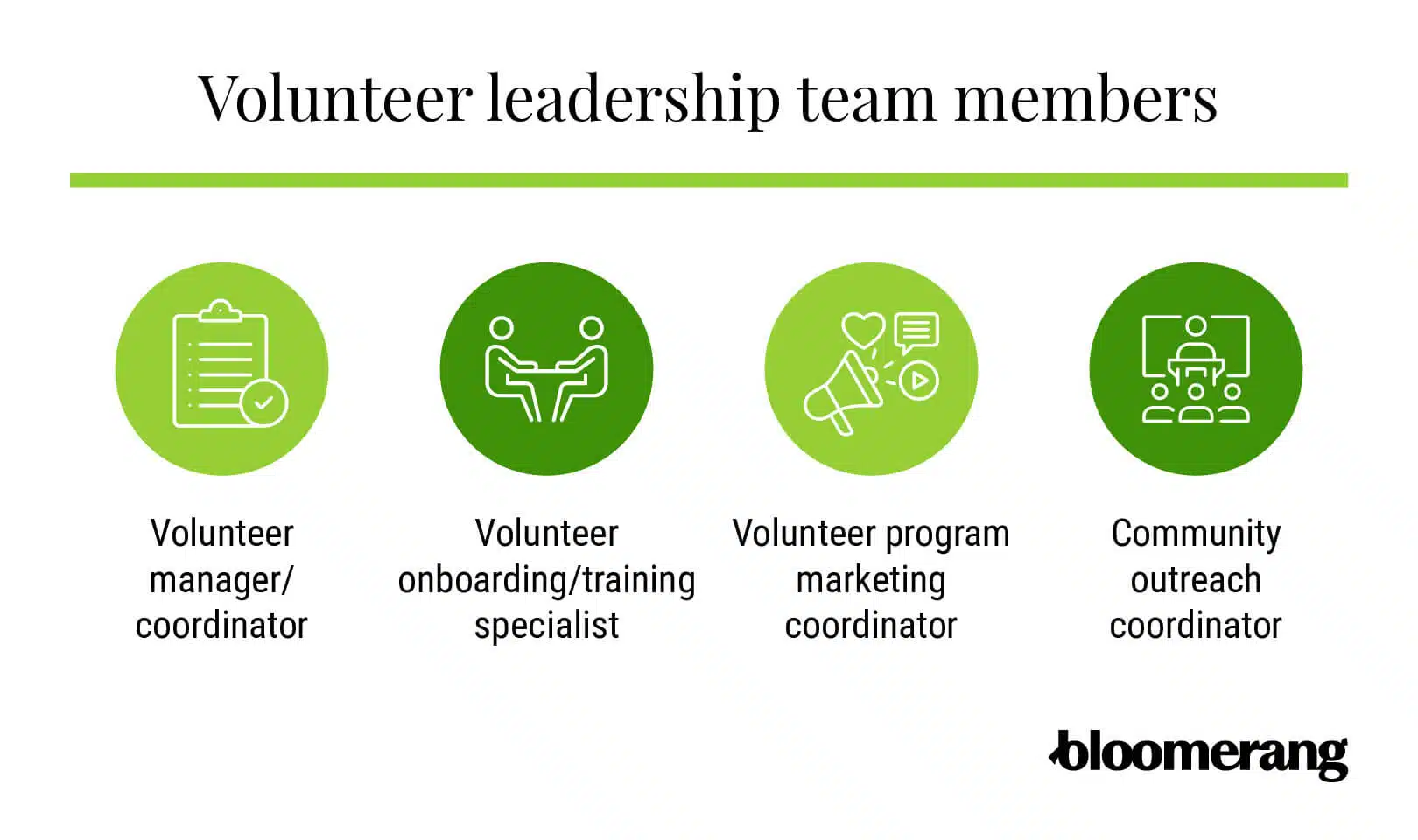
- Volunteer manager/coordinator
- Volunteer onboarding/training specialist
- Volunteer program marketing coordinator
- Community outreach coordinator
If you have a small team, one person may take on many (or all) of these responsibilities. Additionally, some of these roles may be filled by qualified volunteers rather than paid nonprofit staff members.
Make sure each team member knows their responsibilities and when they will be asked to share data or reports relevant to their roles.
4. Define your volunteer roles
The first stage of the volunteer recruitment process involves determining what roles you need to fill.
Develop clear volunteer role descriptions that explain what qualifications potential volunteers should have. These explanations should include the following:
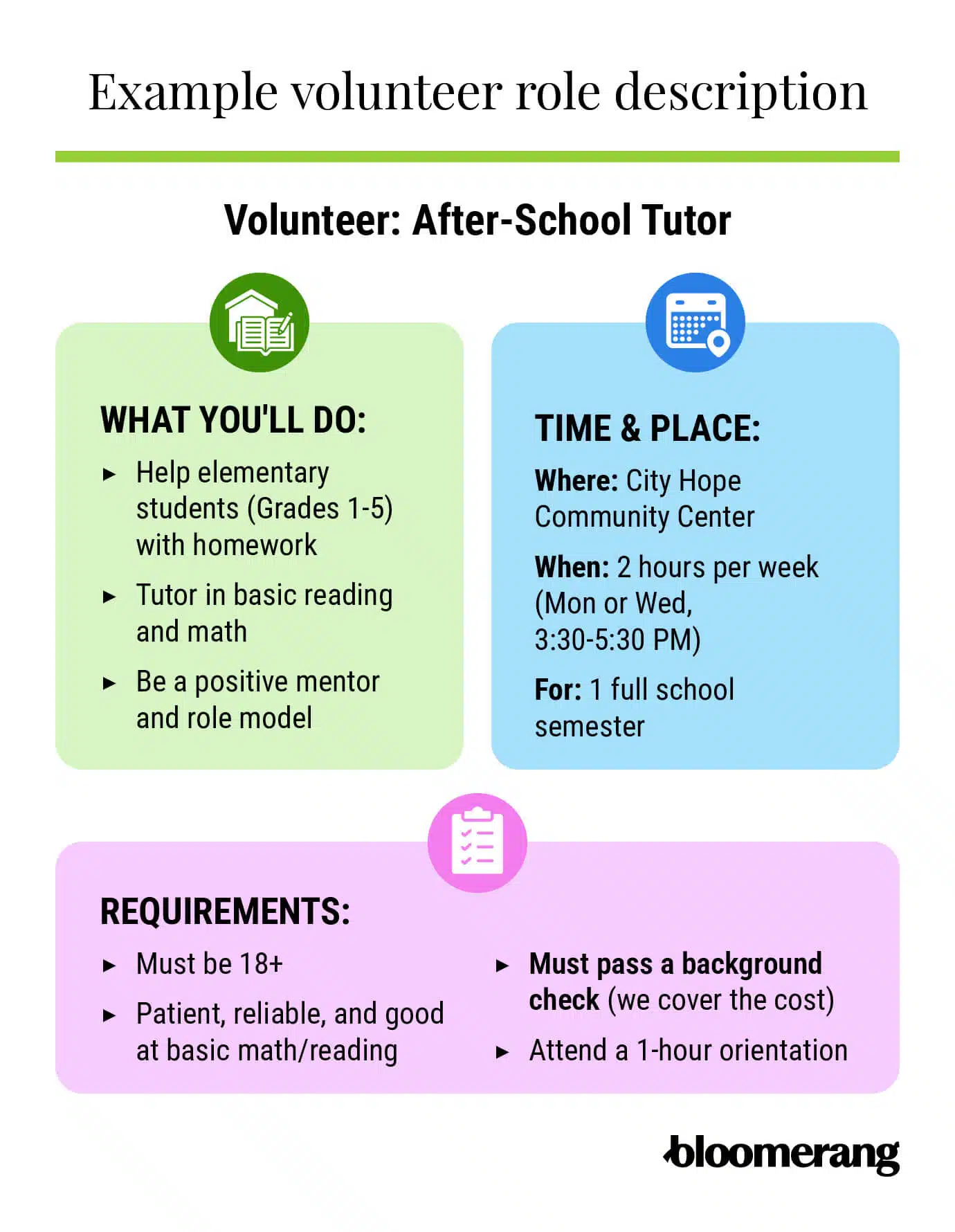
- Role titles: Use a descriptive, self-explanatory title that is easily understood by your volunteers and staff.
- Role information: Include a high-level description that explains what the role is and the tasks they will perform.
- Skill qualifications: Describe the skills and qualifications required to do the tasks.
- Certifications: Don’t forget to list any necessary certifications, background checks, or other requirements that volunteers will need to work in their role.
After creating your volunteer role descriptions, you can create your registration form. Add skill and certification-based questions to streamline your volunteer onboarding and scheduling process.
5. Develop your volunteer schedule
Keeping your volunteer schedule organized is key to reaching your program goals. Develop your schedule by:
- Determining the types of shifts you will offer. Fill your calendar with various recurring and one-time opportunities based on your program’s needs. You may also consider offering micro-volunteer opportunities (typically between 1-2 hours) or virtual volunteer opportunities for volunteers with busy schedules, mobility issues, or transportation restrictions.
- Being clear about shift times and locations. Use your volunteer calendar or communications platform to share event logistics like the start and end times for each opportunity, their locations, and who volunteers should report to.
- Sending volunteers scheduling reminders. Send shift reminders 24 hours in advance to help reduce no-shows. You can also use your volunteer software’s mobile app to send alerts when there are only a few spots left in a shift or when you urgently need assistance for a specific shift.
Try offering volunteers the opportunity to self-schedule and select the shifts that appeal to them. You can also send messages to specific volunteers when you schedule opportunities that are relevant to their skills or interests.
6. Promote your program to recruit volunteers
Once you’ve finalized your volunteer roles and schedule, it’s time to start promoting your opportunities. Use the following strategies to connect with a broad group of prospective volunteers:
- Craft an easy-to-use online registration form. Make sure your volunteer registration page only asks for necessary information so that it’s easy and fast to fill out. Follow online accessibility and mobile-friendly best practices. Include a link to the form on your volunteer landing webpage.
- Spread the word on social media. Launch campaigns on social media platforms, like Facebook and Instagram. Share the link to your registration page and highlight the benefits of getting involved.
- Personally invite current volunteers. If you already have a list of active volunteers, make them feel appreciated by giving them the first choice when new positions become available. Encourage them to invite their family and friends to get involved, too. You can even offer incentives to do so, such as free merchandise.
Your nonprofit’s donors can also be a great resource for finding potential volunteers. These individuals have already shown their support for your cause and may be interested in getting involved in a hands-on way.
7. Train volunteers
Volunteers will feel more comfortable and have a better experience when you equip them with the information and resources they need to perform their tasks.
Your training and orientation processes should be thorough and hands-on. Follow these guidelines for a successful training experience:
- Set clear expectations. Communicate expectations such as your code of conduct and the chain of command. You will also need to clearly communicate what training courses, lessons, and forms each volunteer needs to complete before their shift.
- Make the training accessible. The more training options there are, the better. Consider offering online courses or live streaming your training lessons for those who can’t make it to in-person training. In addition, ensure your training materials are accessible for people with disabilities, whether that means including captions for training videos, large-font printed materials, or making images screen-reader-friendly. Also, consider offering training manuals in multiple languages.
- Track progress. Use your volunteer management software to track where each volunteer is in the training process and identify volunteers who are fully onboarded and ready to start participating. This allows you to get these newly onboarded volunteers up and running quickly.
8. Streamline ongoing volunteer management and communication
Effective ongoing volunteer management is essential for making sure everything runs smoothly and delivering a positive volunteer experience. The better the experience your volunteers have, the more likely they are to volunteer again.
It’s up to your team supervisors to help your volunteers excel by offering them support whenever they need it. Here are a few volunteer management tips to ensure everything runs smoothly:
- Optimize your check-in process. Ensure your supervisors check in volunteers right when they arrive. Some volunteer management platforms allow coordinators to use their phones as mobile check-in kiosks. This will allow you to manage no-shows and late volunteers throughout the day in real time and review volunteer performance later.
- Maintain open communication. Keep your teams informed throughout the day about any sudden changes. Communicate through your mobile app to individuals or teams to ensure that they can respond quickly to developing situations.
- Offer ongoing support. During any volunteer event, make sure volunteers have the contact information for the go-to staff member who can answer any questions. Facilitate a positive experience by planning breaks during longer opportunities and offering water and snacks to help maintain high energy.
By streamlining your volunteer program’s logistics, you show volunteers you value their time. Volunteers should feel like they’re a central part of your nonprofit (because they are!). By offering positive experiences and ongoing engagement, you can develop deeper relationships with volunteers that lead to long-term support.
9. Show appreciation to volunteers
When it comes to volunteer retention, appreciation is the golden ticket. Whether it is a simple thank you as your volunteers leave, a gift such as a free t-shirt or water bottle, or a more significant statement of gratitude like a personal phone call, appreciation efforts make a difference to your volunteers.
No matter what type of thank you message you send volunteers, make sure it’s personal and specific. Tailor thank yous to each volunteer with messages like, “Dear Vanessa, thank you for volunteering at our Run4Good 5K event. Because of your support, we were able to raise $10,000 for local elementary schools and host a safe, fun event for the community.”

10. Evaluate your volunteer program
The final stage in the volunteer management process is to evaluate and optimize your existing plans to see even better results for future opportunities. When you understand how your volunteers discovered your organization, which opportunities they’re most interested in, and their preferred communication platforms, you can tailor your marketing efforts and opportunities to be more appealing in the future.
Two of the most effective ways to assess the success of your volunteer program are running reports and asking volunteers for feedback.
Pull reports
Harness the data in your volunteer management software to run reports on data points like:
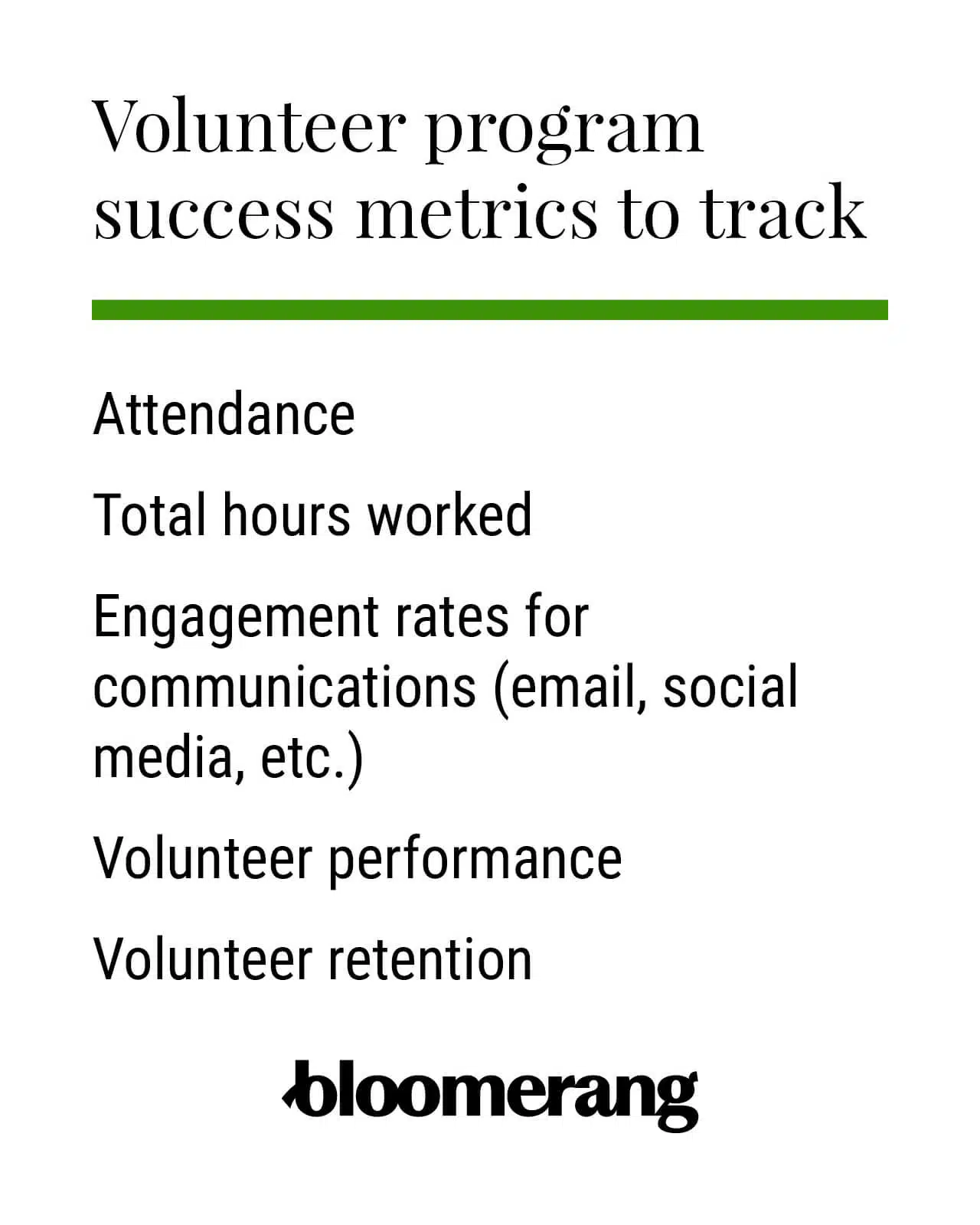
- Volunteer attendance: This will give you a good idea of how many volunteers show up to shifts they’ve claimed and what your no-show rate is. This gives you a chance to adjust and improve those problem areas.
- Total hours worked: Using this report, you can measure the average number of volunteer hours worked and then calculate the value of an average volunteer. This data is useful for planning and can also be used in grant applications.
- Communications: Tracking your messages with your volunteers provides insight into how much communication is required to ensure they are engaged and likely to volunteer again in the future. You can also determine which platforms see the highest response rates.
- Volunteer performance: Have supervisors evaluate your volunteers’ performances. You can then pull a report to identify particularly effective volunteers and craft personalized thank you messages for those individuals or even consider expanding their responsibilities if they desire.
- Volunteer experience: When you maintain information on your supporters’ volunteer history, you can invite them to work similar shifts in the future.
Talk to volunteers
When asking for volunteer feedback, supplement your quantitative data with qualitative information about volunteer satisfaction levels. Once they have finished working a shift, or at the end of an event or program, consider sending your volunteers a survey.
Ask volunteers questions like:
- What was your favorite aspect of the volunteer opportunity and why?
- What was your least favorite aspect and why?
- Did you feel the volunteer training was sufficient?
- What could we have done to make the experience more rewarding?
- Would you volunteer with our organization again?
- Would you recommend our volunteer opportunities to a friend?
With this feedback, you can then make changes to your volunteer management process based on volunteers’ comments, ensuring that you continually improve your process to provide the best experience possible.
How Bloomerang Volunteer makes everything easier
Bloomerang Volunteer brings all essential volunteer management activities under one roof, making it easy to recruit, engage, and retain volunteers while also tracking progress made toward your program goals.
Our volunteer management software gives your team more time back in the day, giving them access to tools that allow them to:
- Customize recruitment, scheduling, and administrative settings according to your program’s specific needs.
- Streamline the volunteer application process with recruitment workflows that make it easy to collect essential documents, including waivers and background checks.
- Leverage a scheduling tool to track attendance and send shift confirmations and notifications.
- Offer self-service options that allow volunteers to select shifts that align with their preferences.
- View end-to-end reporting that syncs with your CRM to provide a comprehensive view of your volunteers.
Our volunteer management software also features a convenient and user-friendly mobile app. This way, you can stay in touch with volunteers, providing them with critical information and updates as needed.
Want to see our tools in action? Watch this video to learn how two nonprofits leveraged Bloomerang Volunteer to amplify their impact:
FAQs: how to start a volunteer program
What is the first step in developing a volunteer program?
The first step is a community needs assessment. Define who you serve, learn what they need, and list the groups already working on the same problem. Then decide where volunteers can help most. Your findings shape your goals, roles, and recruitment message. Our community needs assessment guide walks through each question.
What are the legal requirements for a volunteer program?
Volunteers are unpaid, so do not give them pay or benefits that could make them look like employees. Check your state's rules on background checks, minors, waivers, and insurance. Keep records of hours and training. Requirements vary by state and role, so work closely with your nonprofit's legal counsel before you recruit.
How do I recruit my first volunteers?
Start with the people closest to your mission: donors, board members, program families, and local schools or businesses. Post clear role descriptions with the time needed, make signing up quick, and follow up fast. Ask each new volunteer to invite one friend.
How do I keep volunteers coming back?
Match people to roles they enjoy, train them well, and say thank you quickly and personally. Share the impact of their time, ask for feedback each quarter, and offer a path to bigger roles. Volunteers stay when they feel useful and noticed.
How do I measure whether my volunteer program works?
Track volunteer attendance, hours given, retention, and satisfaction against the goals you set in step one. Review the numbers every quarter and ask volunteers what to improve. Use the results to decide which roles, schedules, and recruitment channels to change.

Wrapping up
These essential steps can help you at any stage of developing your volunteer program, whether you’re creating a new program from scratch or reviewing your current program to identify gaps in your strategy.
Every minute you invest in planning an effective volunteer management process ensures that your organization can recruit, engage, and retain more volunteers, ultimately transforming them into long-term supporters.
Looking for more support to get your volunteer program up and running smoothly? Check out these additional resources:
- 20 Volunteer Recruitment Strategies for Nonprofits. Recruit more new volunteers for your budding program by following the expert ideas in this guide.
- 15 Volunteer Scheduling Software Tools & Tips for Success. Keep your volunteer schedules organized with comprehensive software solutions. Explore top options here.
- The 9 Best Volunteer Apps to Increase Engagement in 2027. Stay in touch with volunteers while on the go by exploring your options for volunteer apps.