The Ultimate Volunteer Management Guide for Nonprofits





Volunteers are an essential part of a nonprofit's workforce. In fact, about one in four Americans volunteers each year. Effective volunteer management is vital to an organization's day-to-day operations, so nonprofits must invest in smart management strategies to reduce administrative overhead and increase volunteer retention.
This guide will equip your organization with up-to-date information, best practices, and strategic guidelines for successfully managing volunteers. Here's what to expect:
- What is volunteer management?
- Why should your organization invest in volunteer management?
- Essential elements of a volunteer management strategy
- Your volunteer management plan template
- Sample volunteer communication calendar
- What you need to know about volunteer management software
- Volunteer management best practices
- Volunteer management FAQs
What is volunteer management?
Volunteer management is the process by which a nonprofit organization recruits, trains, engages, and retains volunteers.
By developing a strong volunteer management strategy, your nonprofit's team can build a positive and immersive volunteer experience that will help cultivate lasting, mutually beneficial supporter relationships. This strategy involves optimizing the volunteer management lifecycle, which encompasses the stages volunteers go through to become more involved with your organization.
Why should your organization invest in volunteer management?
Volunteers are the unsung heroes of most nonprofits' ongoing programming efforts and fundraising events. They're your organization's brand and mission ambassadors in the community and directly impact your organization's success. Volunteers offer tremendous value and thrive when given the right tools and resources.
Need more convincing? The proof is in the following numbers:
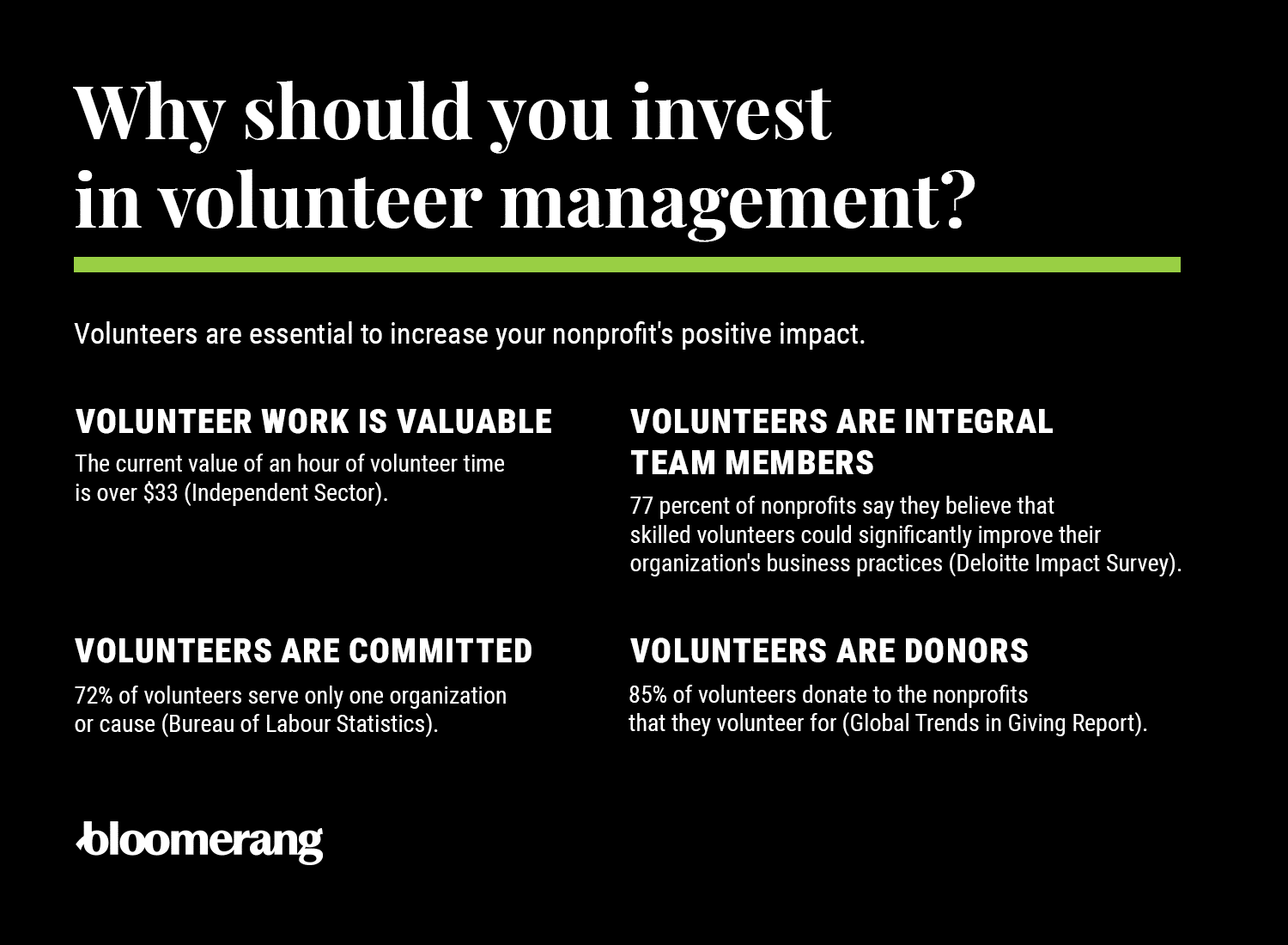
- Volunteers are committed: 72% serve only one organization or cause (Nonprofits Source).
- Volunteer work is valuable: The current value of an hour of volunteer time is over $36 (Independent Sector).
- Volunteers are donors: Nearly 80% of volunteers also donate to charity, compared to 40% of non-volunteers (Nonprofit Pro).
Essential elements of a volunteer management strategy
Your volunteer management strategy will be unique to your organization. However, the basic steps of the volunteer management process will look similar across all nonprofits.
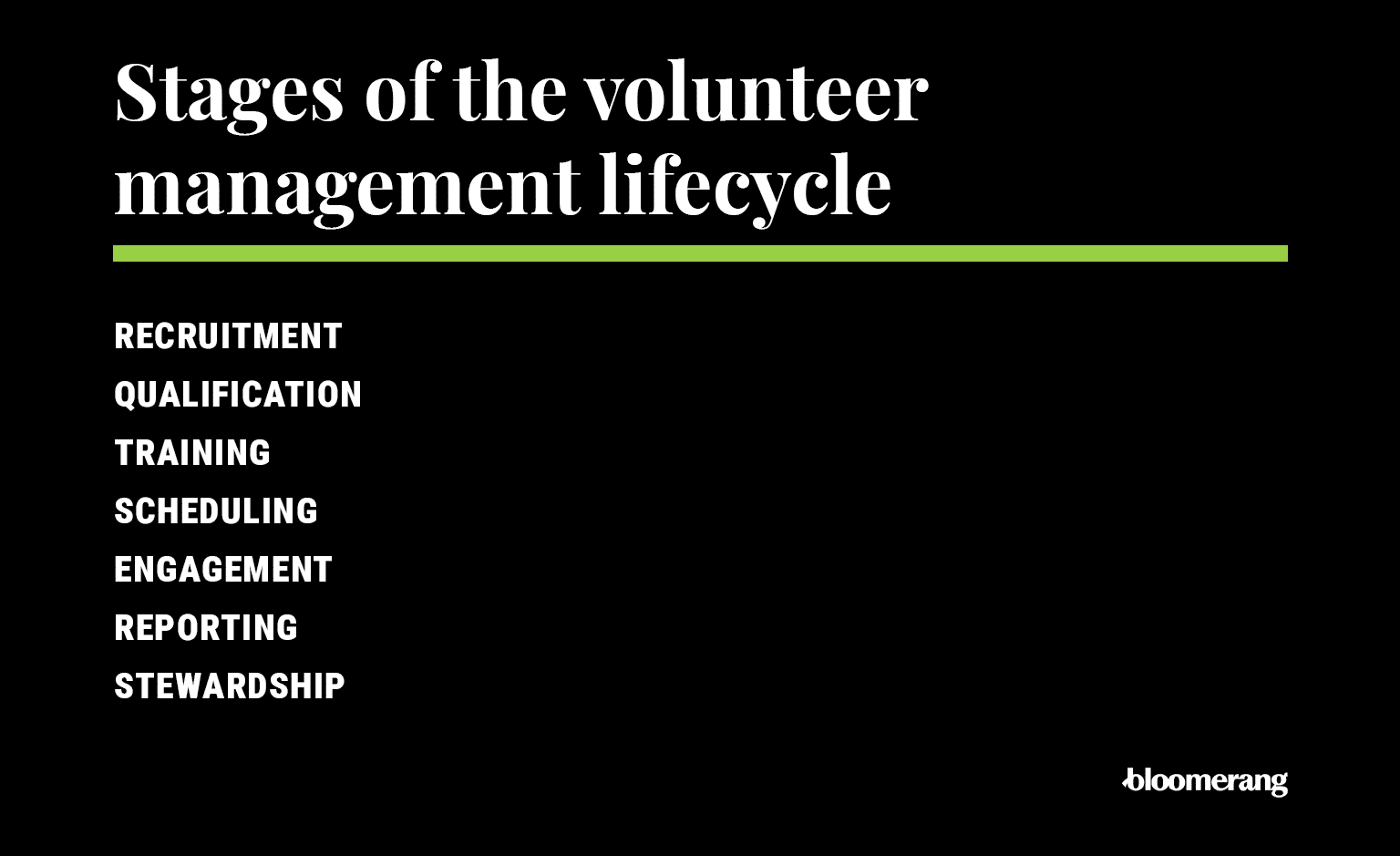
Let's examine how to optimize each stage to improve volunteer management. These seven stages will help you master the golden rules of volunteer management: recruit, retain, and recognize.
Recruitment
Recruiting volunteers has never been easier. There is no need to rely on a sign-up sheet on a bulletin board anymore. Digital channels offer a convenient way to find new volunteers and provide them with a simple sign-up process.
Here are the steps of the volunteer recruitment process:
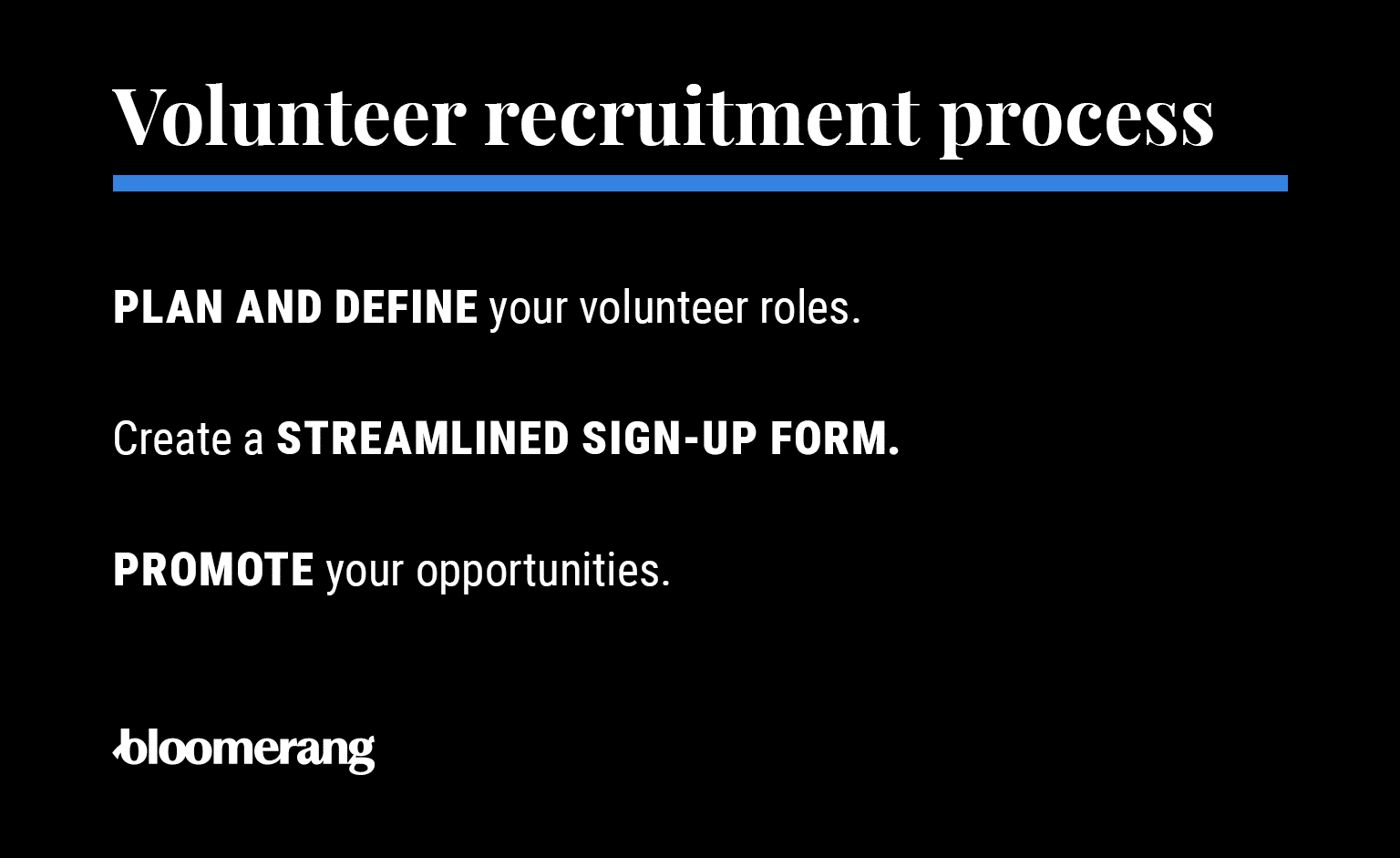
- Plan and define your volunteer roles. Start by defining your volunteer roles and creating detailed descriptions for each open position. Volunteers will feel more comfortable joining a program with clear expectations for time commitments and role responsibilities.
- Create a simplified sign-up process. Design a sign-up form and onboarding process that gathers all the information you need to assign volunteer roles and shifts. Relevant details include volunteers' contact information, interests, availability, t-shirt sizes, and dietary needs, if applicable.
- Promote your opportunities. Advertise open roles across multiple channels, including your website, email newsletter, and social media pages. Offer an easy-to-use online sign-up form that's mobile-friendly and quick to complete.
The goal of any successful volunteer recruitment plan should be to collect all the information required to place volunteers in roles where they will thrive.
Additionally, the more straightforward the sign-up process, the better. Look for a volunteer management solution that lets you ask logic-based questions during sign-up, reducing the number of fields a volunteer needs to complete. For example, if you need to know whether someone is first-aid certified, your form could include a yes/no response, and if a volunteer responds yes, the form could prompt them to provide a certificate.
Qualification
The key to long-term volunteer program success for your organization and its supporters is ensuring volunteers feel fulfilled and equipped to perform their roles properly. Ensure volunteers are in the right positions by taking these steps to qualify them:
- Screen volunteers. Run background checks on new volunteers and collect the necessary waivers to ensure they can participate in your opportunities without legal issues.
- Use volunteer management software to match volunteers to roles that align with their preferences. For example, Bloomerang Volunteer offers RosterMode™ best-match rostering, an AI-assisted approach to placement that matches volunteers to open roles based on their qualifications, preferences, availability, and needs.
The better the volunteer placement, the better the outcome for your organization and volunteers. A satisfied volunteer shows up on time and returns to volunteer more, helping you retain more volunteers in the long run.
Training
The goal of your volunteer training and orientation should be to set your volunteers up for success by equipping them with the information and tools they need to thrive in their roles.
When you process new volunteers' registration information, send them a link to sign up for a training session. This invitation helps maintain momentum and get volunteers involved as soon as possible.
Keep these volunteer training best practices in mind:
- Allow volunteers to complete training on their own time by offering online training modules and videos.
- Offer practical training tips and advice for scenarios volunteers may encounter throughout their shift. For example, share best practices for interacting with kids or answering questions from community members.
- Acknowledge when volunteers successfully complete the training process so they can begin signing up for shifts.
- Track each volunteer's progress in the training process in your volunteer database so you don't accidentally require them to repeat any exercises.
You never want to overwhelm your volunteers by making them jump through too many hoops. Keep things as straightforward as possible and ensure you only require training specific to the role or task a volunteer is responsible for.
Scheduling
Volunteer scheduling is essential to keep your organization running like a well-oiled machine. Proper scheduling ensures that all volunteer shifts have the workforce they need to complete necessary tasks efficiently.
With the help of volunteer management software, your organization can:
- Maintain an organized volunteer schedule to avoid overlapping shifts or assignments.
- Enable volunteers to sign up for shifts independently, eliminating extra work for your staff.
- Identify open shifts that need to be filled and promptly communicate with your volunteer base to gather additional support.
- Send volunteer scheduling communications, including confirmations, reminders, and cancellations.
Clear, consistent communication is key to maintaining an organized schedule. Volunteers should never be left in the dark about when their shifts begin and end. Send notifications via your volunteer app, texting platform, or email marketing software to keep supporters in the loop.
Engagement
Maintaining volunteers' loyalty over time requires continually engaging with them on a personal level. Volunteers want to be treated as the unique individuals they are and form genuine connections with staff and fellow volunteers. Make volunteers feel welcome at your organization by taking these steps:
- Create a welcome packet for new volunteers. Send volunteers a welcome email with all the logistics they need, including directions to your volunteer facility, parking details, and any access codes they may need. Mail them free merchandise, such as a t-shirt, mug, or tote bag, to celebrate their involvement.
- Send personalized communications. Make volunteers feel special by acknowledging milestones, such as birthdays, with personalized emails or cards.
- Recognize volunteer milestones. Acknowledge benchmarks in the volunteer journey, such as a volunteer's tenth event they participated in or their volunteer start date anniversary. Provide special prizes or certificates to recognize their accomplishments.
Volunteers will be much more likely to stay involved with your organization when you make an effort to make them feel included as members of a larger group working together toward a shared goal.
Reporting
Accurate, frequent reporting allows your organization to determine what's going well with your volunteer management strategy and what needs improvement. With the help of a powerful volunteer management system, you can analyze your volunteers' work in the following ways:
- Track volunteer engagement patterns to understand supporters' preferences. For example, you might discover that your early weekday morning volunteer shifts are perpetually understaffed, while your weekend opportunities often see more people sign up than needed. As a result, you may add more weekend shifts to accommodate volunteers' preferences and make the most of their availability.
- Assess the monetary value of volunteer hours. Volunteer time represents real money that your organization can save on tasks that would otherwise require paid staff members to complete. Using your volunteer management system, you can calculate the value of volunteer hours and assess the impact of volunteers on your mission.
- Create personalized volunteer impact reports. Knowing the real difference their contributions make can motivate volunteers to stay involved in your program. Use your reporting tools to develop personalized impact reports based on each volunteer's involvement history. Once or twice a year, send a report detailing the total hours worked, total people (or animals) they helped, etc.
Accurate reporting is often essential for maintaining compliance with grant regulations, so keep your data as up to date and accurate as possible.
Stewardship
From recruitment to training, your organization has invested a lot of effort into every volunteer, and they have invested in your organization's success through their time and hard work. That's why it is important to continue building relationships with volunteers through stewardship and recognition efforts.
Your volunteer recognition efforts don't have to be complicated. Simple messages of appreciation or certificates of recognition can go a long way in making volunteers feel appreciated and helping retain them in the long run. You can also publicly recognize volunteers by sharing photos of them hard at work on your social media pages or website.
When volunteers feel appreciated for their efforts, they'll be much more likely to stay involved with your organization.

Your volunteer management plan template
Use this four-column lifecycle table as a quick-reference guide for building, assessing, and optimizing your organization's volunteer management plan.
Sample volunteer communication calendar
To put the engagement and stewardship strategies from the table into practice, you can create a volunteer communication calendar to help you stay organized. Your calendar should include a regular communications cadence so that volunteers stay in the loop and have multiple ways to engage with your organization.
Here's an example of a monthly calendar that includes a touchpoint every five days:
- Day 1 – Send a recap of the month's upcoming events.
- Day 5 – Highlight upcoming training sessions.
- Day 10 – Share photos from a recent volunteer event.
- Day 15 – Send volunteers a personalized appreciation email thanking them for their recent involvement.
- Day 20 – Promote your volunteer referral program.
- Day 25 – Share a video from a recent volunteer event.
- Day 30 – Recognize the Volunteer of the Month.
These touchpoints cover a range of topics and offer unique ways for volunteers to connect with your organization throughout the month. With regular outreach, you can keep your volunteer program top of mind for participants and encourage them to stay involved.
What you need to know about volunteer management software
Keeping volunteer information organized throughout the volunteer lifecycle is no simple task. Software solutions can simplify the process, giving you access to all the tools you need to manage volunteers in one convenient place. Let's explore the ins and outs of volunteer management software and what it can do for your nonprofit.
What is volunteer management software?
Volunteer management software offers tools and features specifically designed to help increase the administrative efficiency of managing volunteer programs and events. A comprehensive volunteer management system provides volunteer coordinators and managers with tools to recruit, screen, schedule, manage, and communicate with the volunteer workforce through a single platform.
Volunteer management software should also provide volunteers with a smooth user experience during sign-up and scheduling, as well as communication tools that allow them to contact their volunteer manager. A volunteer management system eliminates miscommunication and no-shows, reduces administrative time, and increases volunteer retention.
Our recommended volunteer management platform: Bloomerang Volunteer
If your nonprofit needs a new volunteer management system, look for one with comprehensive features to reduce staff workload and improve the volunteer experience. Our recommended solution is Bloomerang Volunteer.
Bloomerang Volunteer offers the best of volunteer and donor management in one unified platform. Nonprofits can add donor management and fundraising features to their volunteer management software, creating a robust solution for the seamless management of all constituents.
Bloomerang Volunteer includes the following features to simplify volunteer management:
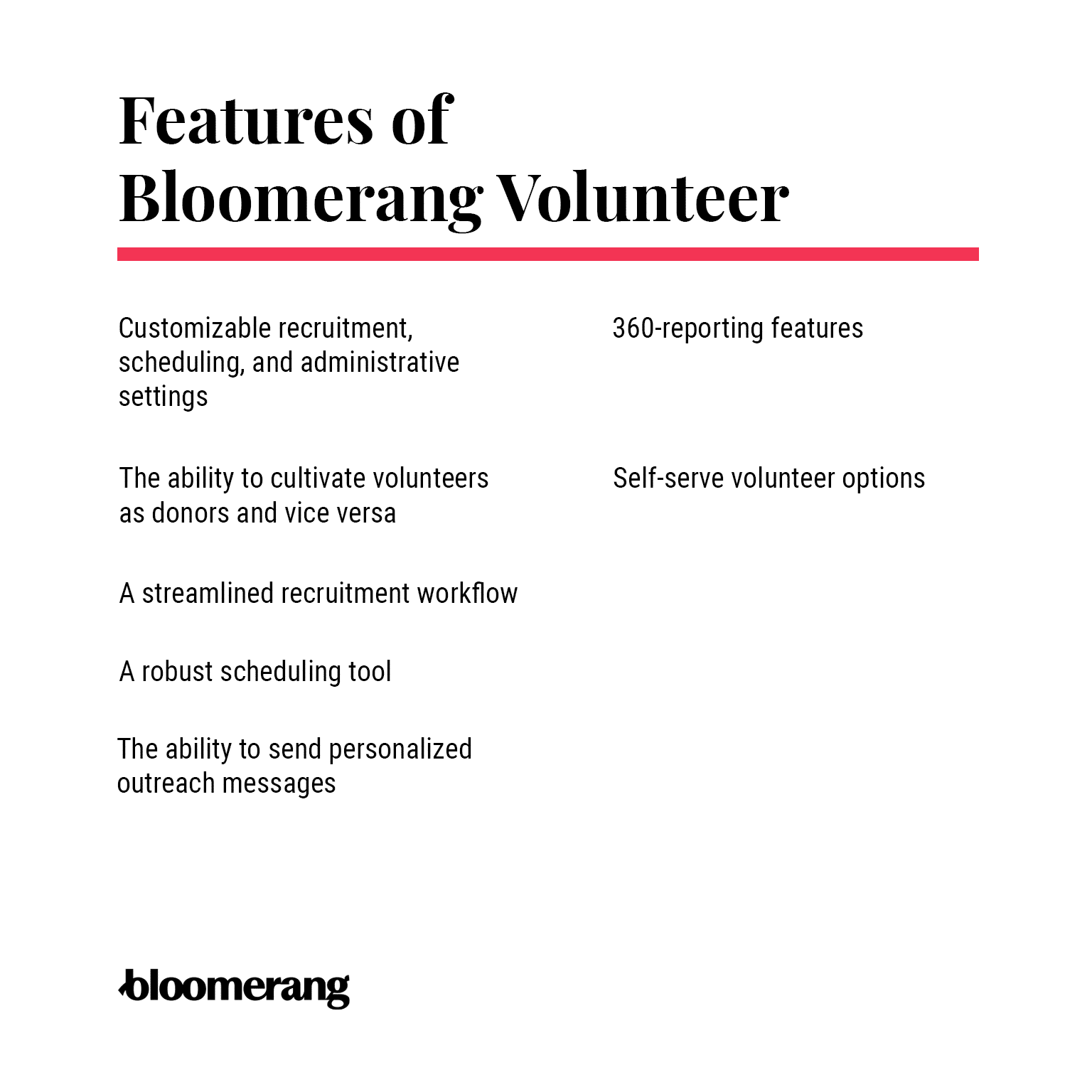
- The ability to customize your recruitment, scheduling, and administrative settings to your program's needs
- A simplified recruitment workflow with questions about qualifications and availability, and a simple process for processing background checks and waivers
- Two-way profile sync between your volunteer and donor management tools
- A robust scheduling tool that allows you to track attendance and send shift confirmations and reminders
- Self-serve volunteer options that allow supporters to apply online and use a volunteer mobile app to view and sign up for open shifts
- The ability to send personalized outreach messages, such as appreciation notes, using email or the volunteer app
- End-to-end reporting features that allow you to track data from all programs and events, and automatically sync this information with your CRM
Bloomerang's Giving Platform allows nonprofits to track both volunteers and donors in one system, giving you a holistic view of all supporters.
What are the benefits of managing volunteers and donors within one system?
A unified volunteer and donor management platform offers the following benefits:
- Save time and resources. By managing donors and volunteers in a single system, you can save time by avoiding the need to toggle between multiple platforms. Often, you'll have donors who also volunteer and volunteers who also donate, so it makes sense to track all of these individuals using the same system. Plus, your organization can save money by avoiding having to invest in two separate platforms.
- Discover hidden fundraising opportunities among your volunteer base. Long-time volunteers or particularly passionate volunteers are often good candidates for fundraising requests. Your database can identify highly engaged volunteers, enabling you to develop a personalized outreach plan.
- Increase donor engagement by offering volunteer opportunities. Inviting donors to engage with your volunteer opportunities is an effective way to build long-term relationships. With a unified system, you can easily reach out to donors and incorporate them into your volunteer scheduling processes.
Bloomerang's platform enabled one organization to see a 60% growth in volunteer involvement and save two hours each day through self-service volunteer management. The organization was also able to start viewing donations in real time and consolidate all donation processing, communications, and volunteer management in one app.

Volunteer management best practices
Here are a few final tips to ensure that your volunteer management strategy is robust and sustainable:
1. Use a multichannel recruitment strategy.
Recruiting new volunteers to your organization requires a multi-channel marketing approach that uses your existing online channels and partnerships with other organizations to spread the word. To help you implement effective communication practices, let's walk through the primary channels that will enhance your volunteer recruitment process.
If you already have a list of volunteers who have worked at previous events you've organized, make them feel appreciated by giving them exclusive access to available positions. Encourage your email recipients to share volunteer opportunities with their friends and family. Consider offering a referral thank-you gift as an incentive.
Website
Keep your volunteer opportunities page up to date to make it easier for potential volunteers to sign up for opportunities that interest them. Ensure your volunteer web page is optimized for mobile to provide mobile visitors with a simplified, convenient experience.
Social media
Use social media platforms like Facebook and Instagram to promote your volunteer opportunities and share information about the program's purpose and success. Share videos and photos from past volunteer opportunities to thank volunteers for their involvement and show potential volunteers how much fun they can have by getting involved.
Other nonprofits
Consider partnering with other local nonprofit organizations to help spread the word to a broader audience. The partnership should be mutually beneficial, with both organizations supporting each other's recruitment efforts through social media posts or email messages.
Corporate partners
Plenty of businesses facilitate employee engagement in volunteer programs through corporate volunteerism. Supporting nonprofit causes enhances a business's reputation as a responsible steward of the community.
Contact local businesses and companies to see if they'd like to partner with your organization on volunteer opportunities. You can even host dedicated corporate volunteer events that facilitate team bonding while volunteering.
We recommend contacting businesses whose employees have skills relevant to your nonprofit's needs. For example, if your organization is an animal shelter, you could partner with a local dog grooming business to ensure your shelter dogs receive proper grooming and increase their chances of adoption.
2. Get to know your volunteers.
Keeping track of your volunteers' interests, goals, and skills ensures they have a fulfilling experience with your organization.
When volunteers register for the first time, ask a few questions about what skills they offer that are relevant to your nonprofit's needs, such as graphic design or social media marketing experience. Note these skills in your volunteer database and use your communications to highlight opportunities that appeal to volunteers.
Volunteers will find greater long-term fulfillment from working with your organization if they can use their unique talents to make a difference.
3. Ask volunteers for feedback.
Volunteer feedback is valuable for improving everything from operational planning to organizational culture. Gaining insight from your volunteers can help you understand their needs and wants, ultimately improving retention.
Consider sending a simple survey to volunteers after they complete a shift, or taking the time to grab coffee with a small group of volunteers once a month to discuss how you could improve their experience. Document the feedback you receive in your volunteer management software, and put the insights into action as you plan your next program or initiative.
4. Empower volunteers to take on leadership roles.
Your most dedicated, long-term volunteers may be interested in deepening their involvement with your organization and taking on more responsible roles. Offer these passionate supporters the opportunity to apply for leadership roles.
These roles could include leading volunteer shifts, training new volunteers, or serving on a volunteer committee to advise your organization's staff on programming and project progress. Clearly outline the responsibilities and expectations for volunteer leadership roles, including the required skills, years of experience, and time commitment.
As volunteers get up and running in their new leadership roles, provide them with both positive and constructive feedback to help them develop in their positions and serve your mission more effectively.
5. Understand volunteers' motivations.
The decision to volunteer, just like the decision to donate, is an emotional choice. Volunteers are motivated by different things, and nonprofits can build powerful connections with them by tapping into their motives to get involved.
For example, some volunteers might work with your organization because your mission personally impacts their lives. If your nonprofit raises funds for cancer research, volunteers may get involved if they have a family member who has fought cancer.
Other volunteers may get involved because of a personal conviction. For instance, environmentally conscious volunteers may work with your conservation organization to make a hands-on impact on the environment.
Combine volunteers' talents and interests with a role that fits their motives for volunteering, and you'll help build a meaningful relationship that will last for years.
6. Offer flexible and virtual volunteer opportunities.
Many volunteers juggle career, school, or family obligations while working with your nonprofit. Offering flexibility is an important way to ensure your volunteers can work for you, especially if they're students or are in the workforce.
Offer shorter shifts, weekend opportunities, and virtual volunteer opportunities, if possible, to build flexibility into your volunteer schedule. Studies show that volunteering online or over the phone is now the third most common way to volunteer, meaning volunteers are eager to make the most of flexible opportunities.
7. Prioritize consistency.
It's best to avoid involving volunteers in tasks that require consistent maintenance. Jobs like record-keeping, administrative duties, and coordinating donor relations or events are best suited to full-time, paid staff. If you must use a volunteer in those areas, try to use a volunteer who has worked with you regularly for a long time. Consistency is key!
8. Involve volunteers in fundraising.
Volunteers often take an interest in fundraising and donating to show their support for your mission in additional ways. According to Nonprofit Pro, nearly 80% of volunteers also donate to charity, compared to 40% of non-volunteers. You can spotlight giving opportunities, such as your monthly giving program, as well as opportunities to take the driver's seat with fundraising, like in peer-to-peer campaigns.
Volunteer management FAQs
What skills do you need for volunteer management?
For volunteer management, you need strong communication skills to clearly explain tasks, set expectations, and keep everyone in the loop. Empathy and emotional intelligence are huge, too, since understanding why people are volunteering helps you keep them motivated and engaged. You'll also need solid organizational skills to juggle schedules and track hours, plus a knack for leadership to inspire your team and resolve the occasional conflict.
What certifications and courses are required for volunteer management?
There aren't strict educational requirements or mandatory degrees to get started with volunteer management. Many volunteer managers learn on the job or transition from related fields like HR, communications, or project management.
However, if you want to stand out or level up your skills, the gold standard in the field is the Certified in Volunteer Administration (CVA) credential. If you aren't ready for a full certification, taking a few online courses in nonprofit management, community engagement, or basic human resources can provide a solid foundation.
What are the three Rs of volunteer management?
The three Rs—recruit, retain, recognize—are the golden rules of building a thriving volunteer program.
- Recruit: Creating compelling, clear volunteer descriptions and actively reaching out to your community to invite them to participate.
- Retain: Providing excellent training, offering meaningful tasks, and building a welcoming, organized environment.
- Recognize: Acknowledging and celebrating your volunteers' hard work through gestures, such as an annual dinner, a shout-out on social media, or a simple handwritten note, so they know their impact is deeply valued.
Wrapping up
Successful volunteer management requires a lot of work, but the rewards are well worth the effort. Effective volunteer management leads to better volunteer retention, keeping your volunteer program strong and stable for years to come.
Explore these additional resources for more volunteer management advice:
- 19 Volunteer Recruitment Strategies That Work 2026. Expand your volunteer recruitment with these effective strategies for finding the right volunteers.
- Crafting Memorable Volunteer Journeys: Tips For Success. These tips will help you optimize each volunteer's journey and create a meaningful experience.
- 5 Ways to Get the Most Out of Your Volunteer Scheduling Tool. This guide will ensure your volunteer scheduling stays organized and useful.