

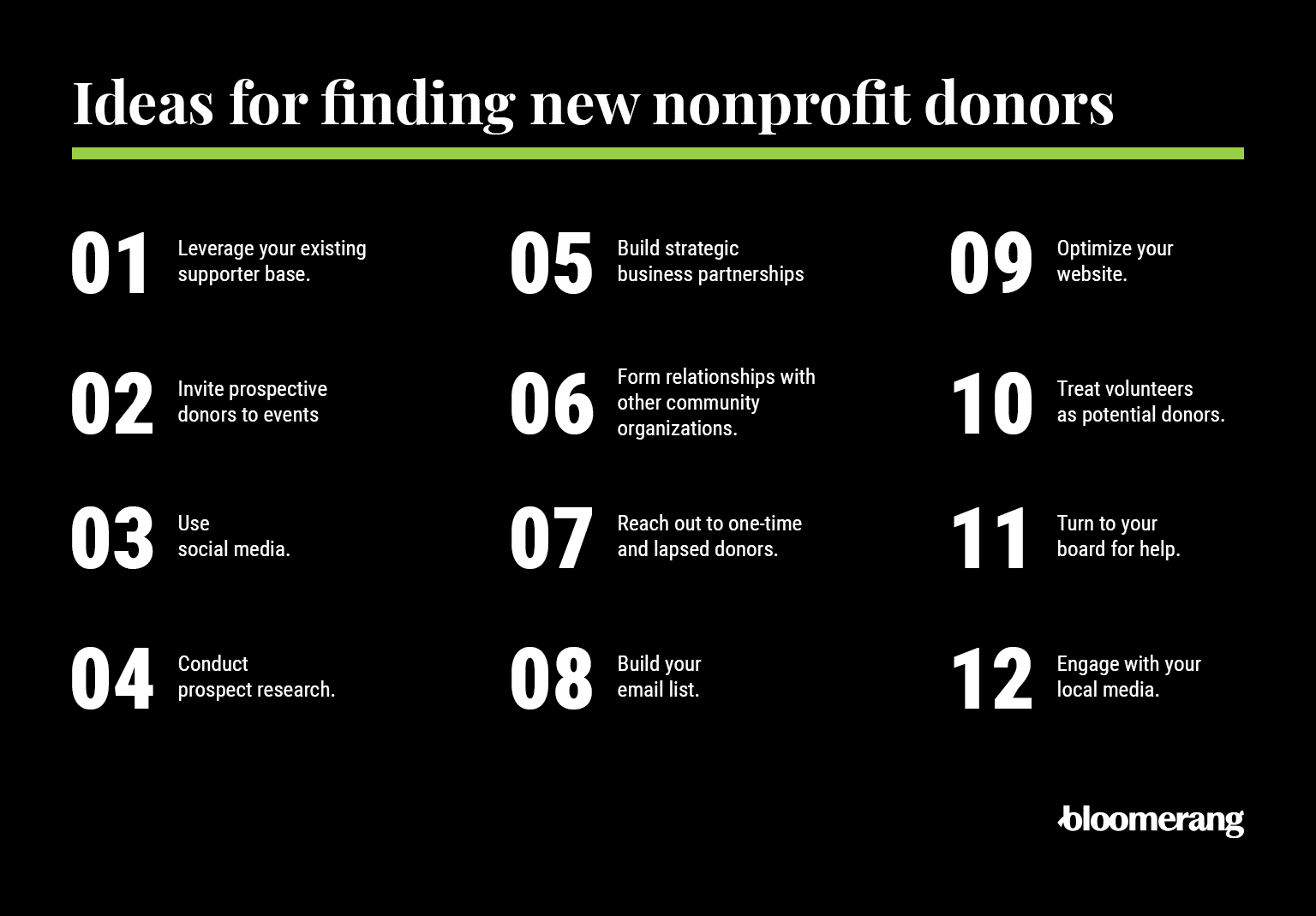
The best ways to find new donors for your nonprofit include:
- Leveraging your existing supporter base
- Hosting getting-to-know-you events
- Building corporate partnerships
- Using online tools like social media and prospect research
Combining several of these strategies—both in person and online—creates a sustainable donor acquisition pipeline that grows over time.
Connecting with new donors is critical to expanding your supporter base and raising more for your mission. The Fundraising Effectiveness Project's 2025 year-end data makes the urgency clear:
Donor numbers declined by 3.6% year-over-year in 2025, with micro and small donors ($1–$100) showing the steepest losses even as total giving grew 5%. This points to a shrinking, more concentrated donor base—a structural shift that makes broad-based grassroots support harder to sustain, especially heading into year-end campaigns.
New donors bring fresh funding and engagement to your nonprofit. When you properly steward these relationships, first-time givers can become lifelong supporters of your cause. The 13 strategies below are organized into two categories: how to find donors in person and how to find donors online.
Whether you’re looking to learn how to find donors online or how to connect with your local community to recruit new support, these tips are a step in the right direction for your donor acquisition strategy.

How to find donors in person
1. Leverage your existing supporter base.
Your current supporters, including donors, volunteers, advocates, and peer-to-peer fundraisers, are some of the strongest advocates for your cause because they’re already invested in seeing your mission succeed. Ask them to spread the word about your organization amongst their family members and friends.
Incentivize supporters to promote your cause. For example, offer a free branded t-shirt to volunteers who bring a friend to a volunteer opportunity or to donors who invite a loved one to a fundraising event.
Ensure supporters have access to the resources they need, such as links to your nonprofit’s About page or information about your current fundraising priorities, so they can support your most pressing needs.
2. Invite prospective donors to getting-to-know-you events.
Donor research from BWF found that an organization’s most dedicated donors are typically individuals who:
- Know multiple people at the nonprofit
- Are friends with fellow donors
- View giving as a part of their identity and strongly connect with the nonprofit’s donor community
Getting-to-know-you events can be the perfect way to foster these relationships between donors and your nonprofit and strengthen bonds with your community.
These events can be tours of your facilities, panels with guest speakers, or informal meet-and-greets and coffee chats at your nonprofit’s headquarters. These experiences should offer information about your organization’s mission, services, goals, and ways to get involved.
Send follow-up emails to attendees to gather feedback and introduce them to additional engagement opportunities. Reference specific information you learned or interactions with them during the event to show them that you appreciate their involvement and care about forming a real relationship.
3. Build strategic partnerships with businesses.
Corporate partnerships offer win-win benefits for nonprofits and businesses. Nonprofits receive valuable fundraising and volunteer support, while businesses get a PR boost.
You can receive direct donations, in-kind donations, matching gifts, volunteer grants, and other fundraising support from businesses. These initiatives are highly lucrative but often untapped resources for nonprofits. According to Double the Donation’s corporate giving research, about $4-$7 billion in matching gift funds go unclaimed annually. Plus, 84% of survey participants say they’re more likely to donate if a match is offered, demonstrating how corporate philanthropy programs can motivate new donors to get involved.
You can also engage employees in workplace volunteering. Ask your corporate partners to spread the word about your mission or engage with these prospects directly at your events and volunteer opportunities.
4. Form relationships with other community organizations.
Similarly to corporate partnerships, forming relationships with other community organizations, like associations, civic clubs, and other nonprofits, can benefit your organization in multiple ways. You can cohost fundraising events with these organizations, share fundraising resources, and leverage both organizations’ marketing platforms to reach a wider audience of potential new donors.
Look for organizations whose missions align with yours. For example, an animal shelter and a veterinary association may work together to host an event that funds pet adoptions and teaches new pet owners how to care for their animals properly.
5. Treat volunteers as potential donors.
42% of volunteers participate in a volunteer program before deciding to donate to an organization. This statistic shows that volunteering can be a way for potential supporters to learn more about your cause and determine whether they want to support you financially as well as through volunteer work.
Use a trusted CRM system with volunteer and donor data to identify the highest-engaged volunteers. Then, steward your nonprofit’s volunteers by showing them gratitude and explaining the impact of their volunteer work. Next, send them low-commitment donation requests to gauge their interest. For example, you might ask them to contribute a $20 donation to your summer crowdfunding campaign. If they take you up on your offer, you’ll know that they may be receptive to future fundraising opportunities.
6. Turn to your board for help.
Nonprofit board members are often highly engaged in their communities, serving on multiple boards, volunteering, and forming business partnerships. These individuals can be effective ambassadors for your cause, sharing your mission with their family, friends, and colleagues.
Equip board members with talking points and resources they can use to encourage those in their networks to donate, such as your nonprofit’s annual reports or Form 990.
7. Transform donors into ambassadors.
Contact your most loyal, long-term donors to see if they’d be interested in joining your ambassador program. Host training sessions for these donors and provide them with talking points, strategies, and resources to promote your cause effectively.
Offer incentives for joining your program, such as gift cards or free branded merchandise. Present the opportunity as a way for dedicated supporters to take their involvement to the next level and grow their leadership and public speaking skills.
How to find donors online
8. Use social media to find donors online.
Build your nonprofit’s presence on social media sites like Facebook, LinkedIn, X, TikTok, and Instagram.
However, don’t overwhelm yourself with managing too many networks at once. Instead, be strategic with social media. Profile your ideal donor and determine their preferred social networks.
For example, Instagram is your best option to target young donors ages 18-24. On the other hand, Facebook is the preferred social media platform for Gen X donors (ages 45-60).
Create a posting schedule and have your board, volunteers, and staff share your posts with their followers. Actively engage with followers by answering their questions, tagging them in photos and videos, and commenting on and resharing posts they make about your organization.
9. Conduct prospect research to connect with new major donors.
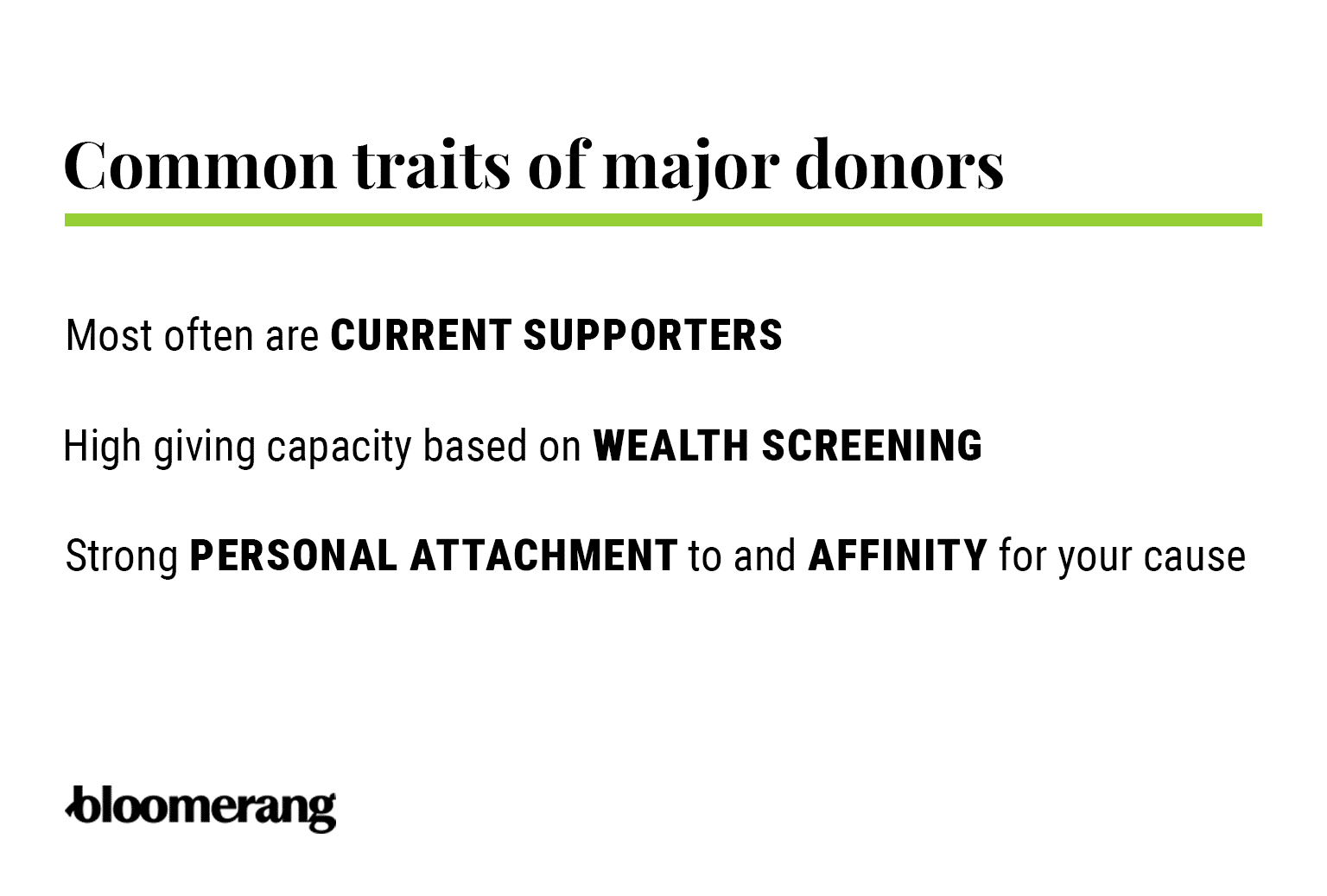
Use your internal donor database and external resources to identify prospective major donors who exhibit warmth toward your organization and the capacity to contribute a larger donation.
Look at the annual reports, donor recognition lists, and newsletters of similar organizations and compile a list of their donors. Ask board and staff members if they know anyone on these lists. If so, ask them to share information about your organization and invite this individual to attend one of your events or sign up for your newsletter.
However, remember that prospects will most often come from your nonprofit’s existing donor pool. Prioritize prospects who exhibit both wealth indicators (real estate and stock ownership, large previous charitable gifts, etc.) and philanthropic indicators (previous donations to your organization or similar nonprofits, a history of political giving, etc.).
10. Reach out to one-time and lapsed donors.
Your one-time and lapsed donors may still be interested in giving to your organization, but perhaps you’ve fallen off their radar, or they don’t know the best way to engage with your nonprofit regularly.
Reach out to these donors with various ways to continue their involvement, such as your monthly giving program, peer-to-peer fundraising opportunities, or upcoming fundraising events. Additionally, thank these donors for their past contributions and expressly mention their donation amounts and impact to show them the value they’ve already added to your organization.
11. Build your email list.
Email is a highly effective fundraising tool. In fact, according to the Global Trends in Giving report, 33% of donors in the U.S. and Canada say email is the communication channel that most inspires them to contribute—more than any other platform.
Collect email addresses during community events and volunteer opportunities and via your social media channels. Create a welcome series for new subscribers that introduces your organization’s mission, describes your impact on the community, and offers engagement opportunities.
Additionally, ensure your website includes a simple email registration form for visitors to sign up for your newsletter.
12. Optimize your website.
Statistics show that over half of all nonprofit website traffic comes from mobile devices, so your site must be mobile-friendly to help you engage new and current supporters alike online. Also, use your website to entice visitors with a “pop-up” offering free information and resources. Send interested individuals a welcome email and relevant informational emails over several weeks.
Finally, ensure your online donation form is easy to find and fill out. 63% of donors prefer to give online with a credit or debit card, so ensure your form can process multiple card types.
Use various call-to-action buttons and links on your homepage to attract visitors to your donation page. Then, only ask for necessary information, such as names, contact information, and payment information, to make it as convenient as possible to complete.
13. Engage with your local media.
Reach out to your local newspaper, TV station, and radio station with fascinating stories from your nonprofit’s work or beneficiary community. These news outlets often run human interest stories about people overcoming hardship or communities coming together to support those in need, and your nonprofit can be an excellent fit for those PR opportunities.
Where should nonprofits look first to find new donors, according to a fundraising expert?
Claire Axelrad, J.D., CFRE, advises:
Start with who you know. This is just common sense. And it’s also supported by psychology. One of Robert Cialdini’s six principles of influence is “commitment and consistency.” It’s also known as “foot in the door.” Those who’ve already made the decision to engage with you—whether as a donor, volunteer, event or program attendee—are more likely to repeat. It’s appreciably more difficult to get people to reach a new decision than to repeat an old one.
Look next at who your current constituents know. When it comes to a six degrees of separation connection, first degree connections are the easiest to make. So, reach out to your networks—all the folks who’ve previously indicated they value what you do. Or you can launch a peer-to-peer campaign. This strategy leverages another one of Cialdini’s principles: “social proof.” When folks believe their peers approve of you they’ll be more likely to approve of you as well. It’s a built-in decision-making shortcut.
Finally, demonstrate your relevance by showing up in places where people who already share your values show up. Monitor today’s news stories. Demonstrate a need people agree is an important issue—one they’d like to see addressed. Use online marketing to present your ongoing work as responses to pressing problems. Use LinkedIn groups and Facebook Live to begin and join in discussions. It’s a great way to demonstrate thought leadership and get your message across.
How Bloomerang helps you find and steward new donors
Finding new donors and building a reliable donor pipeline takes time and dedication. Bloomerang’s donor database simplifies the process by offering all the data you need to identify and steward new donors at your fingertips. With Bloomerang, your nonprofit can:
- Conduct wealth and philanthropic screening in your donor database through a DonorSearch integration to identify top donor prospects.
- Segment supporters based on shared characteristics to send personalized messages to each group.
- Leverage clean data to support your outreach efforts—Bloomerang automatically checks for and corrects duplicate records, outdated addresses, and birth year updates.
- Grow your donor network with built-in email marketing tools, templates, and scheduled email sends.
- Evaluate donors’ feelings about your nonprofit through satisfaction surveys.
- Send yearly giving statements to thank donors for their ongoing support.
Turn donors into lifelong supporters
Use a combination of these engagement strategies to ensure you’re reaching various new donors across your numerous communication platforms.
Once you find new donors for your nonprofit, your stewardship strategy should immediately kick in. Send personalized thank-you messages, show donors the impact of their gifts, and invite them to engage in additional activities your organization offers, like volunteer events or peer-to-peer fundraising challenges.
With these strategies, you can transform your new donors into long-term supporters. Then, these supporters can recruit other new donors by sharing their fulfilling experiences, creating a cyclical process.
For more information on finding new donors and stewarding them effectively, check out these additional resources:
- Donor stewardship: key tips to build relationships. Use this guide to help you build a strong donor stewardship plan that turns new donors into lifelong supporters.
- Cultivating donor retention to grow your giving garden. Take a deep dive into the current state of donor retention and learn how to improve your nonprofit’s donor retention rate with this eBook.
- Donor welcome series email templates. Cultivate lasting connections with new donors with these email templates.
FAQs: Finding donors for nonprofits
What is the best way to find new donors for a nonprofit organization?
The most effective approach combines multiple strategies: activating your existing supporter base through word-of-mouth, hosting getting-to-know-you events, forming corporate partnerships, and using online tools such as social media and prospect research. No single tactic is sufficient—combining in-person and digital strategies reaches the widest possible audience and produces the most sustainable results.
How can I find major donors for my nonprofit?
Major donors are best identified through prospect research that evaluates both wealth indicators (real estate ownership, large prior charitable gifts, stock holdings) and philanthropic indicators (donations to similar nonprofits, board service history, political giving). Use a CRM with built-in wealth screening—such as Bloomerang with its DonorSearch integration—to surface high-potential prospects from within your existing donor pool, where most major gift relationships begin.
How can I engage volunteers as potential donors?
Research shows that 42% of volunteers donate to an organization after volunteering with it first. To convert volunteers into donors: thank them specifically for their contributions, demonstrate the measurable impact of their work, and make a low-commitment initial donation ask (such as a small gift to a current crowdfunding campaign). If they respond positively, they are likely receptive to larger future asks.
What are corporate matching gift programs and how do they help nonprofits find donors?
Corporate matching gift programs are company-sponsored initiatives in which employers match their employees' charitable donations to eligible nonprofits—often dollar for dollar. Approximately $4–$7 billion in matching gift funds go unclaimed each year (Double the Donation). Additionally, 84% of donors say they are more likely to give when a match is offered, meaning these programs actively motivate new donors to contribute for the first time.
How does social media help nonprofits find new donors online?
Social media platforms allow nonprofits to reach prospective donors based on demographics, interests, and behaviors. Instagram is most effective for reaching donors ages 18–24; Facebook is the top platform for Gen X donors (ages 45–60). By posting consistently, sharing beneficiary stories, and encouraging staff, board members, and volunteers to amplify content, nonprofits can significantly expand their organic reach and attract donors who would not otherwise discover them.
Why is a mobile-friendly website important for nonprofit donor acquisition?
Over 50% of nonprofit website traffic comes from mobile devices (M+R Benchmarks). If your website and donation forms are not optimized for mobile, visitors are likely to leave before completing a gift. A mobile-friendly site with a fast-loading, simple donation form directly increases online donation conversion rates.
What are in-kind donations?
In-kind donations are non-monetary contributions—such as goods, professional services, equipment, or the use of facilities—given by individuals or businesses to support a nonprofit's work. In-kind gifts can reduce operational costs and supplement a nonprofit's budget without requiring cash outlays from donors.
What role do board members play in donor acquisition?
Board members are among a nonprofit's most powerful donor acquisition assets because they are typically well-connected in the community and carry personal credibility. When equipped with clear talking points, annual reports, and shareable resources, board members can introduce your organization to entirely new networks of prospective donors who would otherwise be out of reach.
How important is email for finding and retaining nonprofit donors?
Email is the top digital fundraising channel for nonprofits in the U.S. and Canada. According to the Global Trends in Giving Report, 33% of donors say email is the communication channel that most inspires them to contribute—more than social media, direct mail, or any other platform. Building and consistently nurturing an email list is one of the highest-return donor acquisition investments a nonprofit can make.
How can local media engagement help my nonprofit find new donors?
Local newspapers, TV stations, and radio programs regularly feature human-interest stories about community organizations. Earning media coverage in these outlets puts your nonprofit in front of audiences who don't follow you on social media or know your website exists. A compelling story about a beneficiary's experience or a community initiative can inspire entirely new audiences to donate.