


In a recent study on generational giving by Bloomerang, the most popular reasons donors cited why they stopped giving to a charity were (ranked by popularity):
- I did not trust that my donation was used wisely
- I no longer felt connected to the nonprofit
- I could no longer afford to donate
- I had a negative experience with the nonprofit
- The nonprofit asked me for a donation too frequently
The good news? While you can’t change a donor lacking the financial resources to give, you can change EVERYTHING else.
Four of these five reasons donors stop giving are 100% in your control.
What’s the solution? It’s shockingly simple – stewardship.
Only stewardship can build a donor’s trust and confidence that you used their gift wisely, make them feel connected to you, and ensure positive experiences. Stewardship also prevents donors from ever feeling like you’re asking too frequently. If you properly steward your donors, there’s no such thing as giving fatigue.
Stewardship should be viewed as a revenue center and not a cost center, because it’s cheaper to keep your existing donors than to acquire new ones.
Roger Craver, author of Retention Fundraising, breaks down nonprofit donor retention rates:
- 60-70% chance of acquiring an additional gift from an existing donor.
- 20-40% chance of obtaining an additional contribution from a recently lapsed donor.
- Less than 2% chance of receiving a donation from a prospect.
(Note: Roger Craver’s baseline figures come from his 2014 publication, Retention Fundraising; for current broader context, recent benchmarks from the Fundraising Effectiveness Project show overall annual donor retention at 43%, with first-time donor retention at 18.9%).
The current giving landscape—why donors are pulling back now
Economic uncertainty and inflation have reshaped household budgets, directly prompting supporters to step away. Everyday givers are feeling the financial squeeze, forcing many families to re-evaluate their discretionary spending and pause charitable contributions.
This personal strain is reflected clearly in macro-level sector data. Latest reports from the Fundraising Effectiveness Project (produced in partnership with Giving USA and the GivingTuesday Data Commons) indicate a 3.6% decline in small-dollar donations of $1 to $100. While major gifts continue to push total sector dollars up, the grassroots base of everyday donors is shrinking.
The key takeaway for nonprofits is that an economic pause isn’t a permanent departure. By maintaining active, thoughtful stewardship during lean times, offering non-monetary ways to stay involved, or simply thanking them for past gifts, you keep donor relationships warm so givers return when their financial situations improve.
Why donors quietly unsubscribe before they lapse
Nonprofits spend a lot of time worrying about donor acquisition. But imagine for a second that every supporter had a “Cancel My Donation” button—just like unsubscribing from a streaming service.
Some would click immediately after making a gift, never planning to return. Others would stick around for a while, but eventually, something would make them second-guess their commitment. Maybe they didn’t feel appreciated. Maybe they didn’t see the impact of their gift. Maybe they just forgot they were even supporting you in the first place.
If donors could cancel with one click, would they?
Here’s the thing: They already do. Most donors stop giving after their first gift—not because they don’t care, but because they don’t feel connected.
The good news? Donor engagement isn’t about chasing the next gift—it’s about building a relationship that makes donors want to stick around. And like any strong relationship, it starts with showing up for them—not just when you need something.
5 engagement principles that keep donors from hitting cancel
Losing donors isn’t inevitable. It’s usually the result of poor communication and a weak connection. Here are five essential engagement principles that build trust, show impact, and keep supporters committed for the long haul.
1. Don’t show up only when you need money.
Ever had a friend who only calls when they need a favor? Annoying, right? That’s how donors feel when they only hear from you at fundraising time.
🚫 What makes donors hit “cancel”?
- Months of silence between fundraising campaigns.
- Generic mass emails that feel like they could go to anyone.
- A never-ending cycle of donation requests without any real updates.
✅ What makes them stay?
- Personal, meaningful touchpoints that aren’t tied to an ask.
- Invitations to behind-the-scenes updates, Q&As, or special content.
- Recognition that feels real—not just a transaction.
💡 Why it works: Donors aren’t just funding your mission—they want to feel like they’re part of it. Treat them like insiders, and they’ll stick around.
2. Make transparency a conversation.
Would you keep paying for a service if you had no idea what you were getting in return? That’s how donors feel when they don’t see the impact of their gifts. But transparency isn’t just about financials—it’s about trust.
🚫 What makes donors hit “cancel”?
- A once-a-year impact report that’s too long to read.
- No real-time updates on how donations are being used.
- A vague sense that their gift “probably” made a difference.
✅ What makes them stay?
- Instant feedback—let donors see the impact of their gifts in real time.
- A visual approach to impact: quick updates, dashboards, or progress meters.
- A simple, clear way for donors to understand how they’re helping.
💡 Why it works: 48% of donors say regular updates make them more likely to give again. When people trust that their money is making an impact, they stay engaged.
3. Make giving feel worth keeping.
People keep paying for Netflix because they love the content. They stay loyal to their favorite coffee shop because it makes them feel good, and they love the vibe. What if supporting your nonprofit felt the same way?
🚫 What makes donors hit “cancel”?
- A forgettable giving experience that doesn’t spark emotion.
- No sense of connection beyond the transaction.
- An impersonal “thank you” that feels like an afterthought.
✅ What makes them stay?
- Surprise and delight moments. A handwritten note, a personal video, a thoughtful check-in.
- Donor storytelling. Let supporters see themselves in the mission.
- Celebrating milestones. Acknowledging donor anniversaries or lifetime giving, not just one-off gifts.
💡 Why it works: Giving should feel rewarding—not like an obligation. The more people enjoy being part of your organization, the more likely they are to keep coming back.
4. Listen, don’t just talk.
When customers feel unheard, they switch brands. When donors feel unheard, they stop giving. People want to invest in places where they feel valued—and that means more than just sending a thank-you email.
🚫 What makes donors hit “cancel”?
- One-way communication: Nonprofits that only talk at donors, never with them.
- No room for feedback or meaningful engagement.
- A transactional relationship where donors don’t feel like partners.
✅ What makes them stay?
- Inviting donors to shape the future. What programs matter most to them? What impact do they want to see?
- Crowdsourcing ideas. Instead of assuming what donors care about, ask them.
- Turning appreciation into a two-way conversation.
💡 Why it works: Donors who feel personally invested give more over time. Make them feel heard, and they’ll stick with you.
5. Treat donors as community members.
The nonprofits that keep donors for life don’t treat them like ATMs. They treat them like people. Supporters want to feel like they belong to something bigger than themselves.
🚫 What makes donors hit “cancel”?
- Feeling like they’re just one of thousands on a list.
- A giving experience that feels like a one-time event.
- No deeper sense of involvement beyond their donation.
✅ What makes them stay?
- Fostering a true sense of community. Donors don’t just give—they advocate, participate, and engage.
- Making generosity feel like a movement. The best nonprofits inspire, not just ask.
- Inviting donors to be part of something ongoing.
💡 Why it works: People don’t just want to support causes—they want to belong to them. Create that feeling, and they’ll never “unsubscribe.”
How to keep donors loyal for life
If you want donors to stick to you like glue, you need to craft a stewardship plan—essentially a set of business rules for donor engagement—that outlines key actions, like thank-you phone calls, and assigns responsibility to specific staff members, such as the Development Director or Executive Director.
You can download this free stewardship template to get started.
Be careful NOT to organize your stewardship efforts by the amount of a donor’s gift. Instead, organize your stewardship around the donor’s longevity—are they a new donor, a monthly donor, or a returning lapsed donor?
The greatest gift you can give your donors is the gift of being known by you, so all your communications need to show them that you know who they are. New donors should get a new donor welcome call and a new donor thank-you that calls them out as such, for example:
Dear John,
I’m overjoyed to see such a generous first-time gift from you and am honored to welcome you into our donor community.
When it comes to new donors, you need to roll out the red carpet, as this template shows. Warmly welcome new donors and set the expectation that they’re part of something special.
New monthly donors should receive a monthly donor welcome kit and an end-of-year appeal celebrating their monthly giving.
Lapsed donors should get a lapsed donor welcome-back thank-you call and thank-you letter that celebrates their return.

Next up? Getting to know your donors better. Make personal thank-you calls, conduct a brief new-donor survey, and invite them to a behind-the-scenes tour or a donor cultivation event. Even if they don’t come, the invitation is still the cultivation!
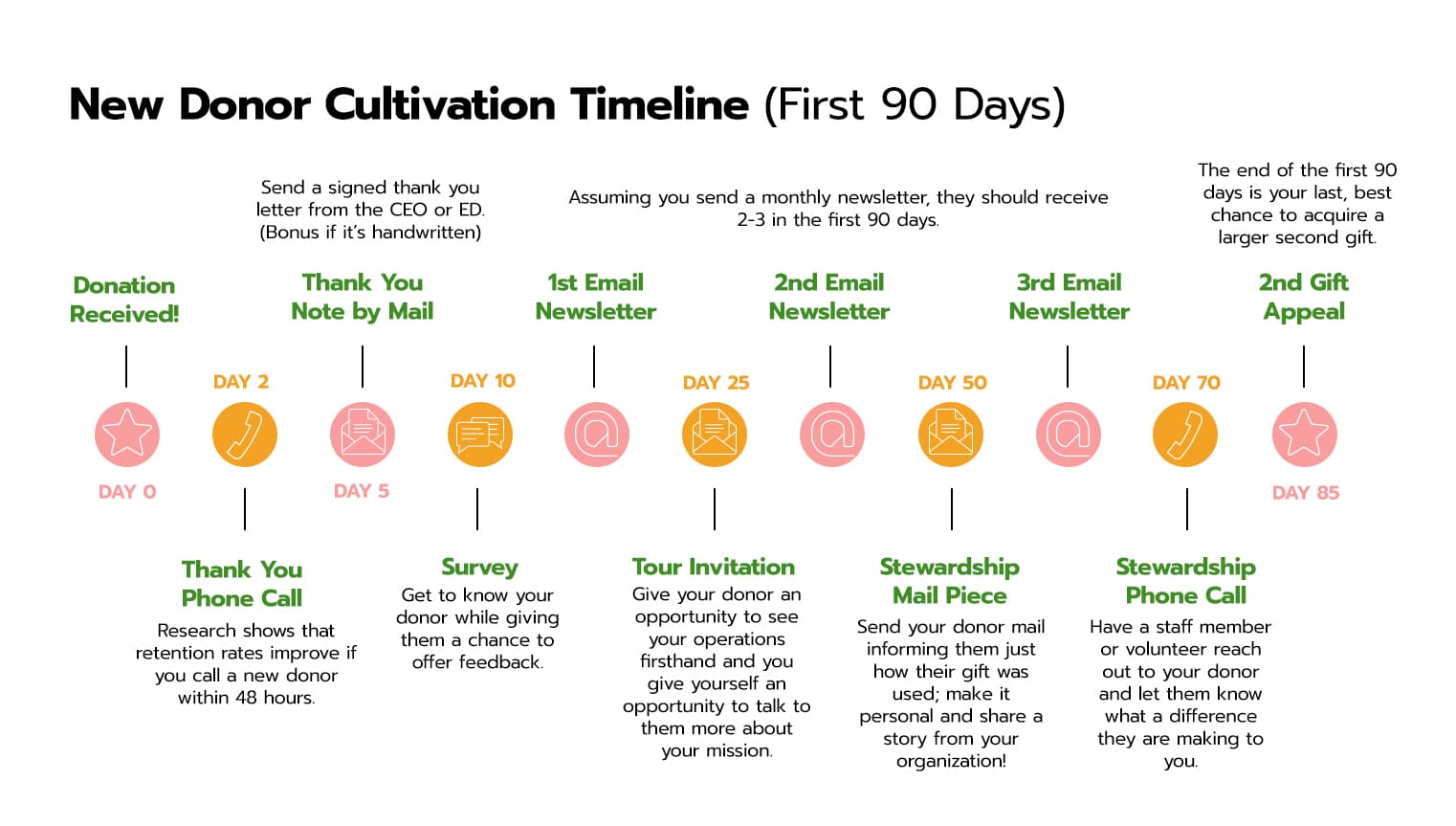
How to surprise and delight donors using milestones
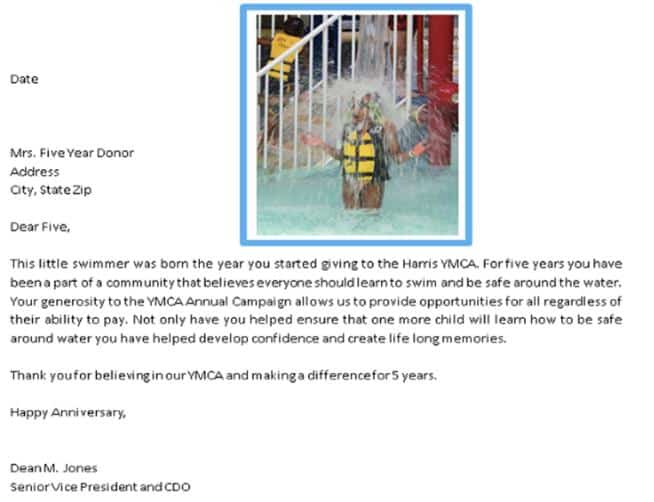
The anniversary of your donor’s first gift to you is rarely something they’ll remember, but it’s a golden opportunity to stand out as the thoughtful, caring charity you are!
Generational breakdown: how churn reasons vary by age
While the top five reasons for donor attrition apply across the board, Bloomerang’s Generational Giving Report reveals that different age groups stop giving for vastly different underlying reasons. Understanding these generational nuances allows nonprofits to tailor their stewardship strategies rather than using a one-size-fits-all approach.
1. Baby Boomers: affordability & trust drive departures
The primary reasons Baby Boomers stop giving are household budget constraints (77%) and a loss of connection or trust (36%).
As Boomers transition to fixed retirement incomes, they naturally tighten their giving portfolios and evaluate nonprofits with a far more critical eye, with over 50% viewing charitable giving through a business-accountability lens.
To fix this through stewardship, organizations should prioritize financial transparency in annual reports and introduce legacy or planned giving options for supporters who still want to advance the mission without immediate cash outflows.
2. Gen X: pragmatism & financial transparency
Gen X donors churn primarily due to rising living costs (48%) and skepticism over how funds are managed.
Caught in the “sandwich generation” between caring for aging parents and supporting children, Gen X givers are highly pragmatic with their discretionary funds and are among the most likely to vet an organization’s financial health online before renewing support.
A strong stewardship fix involves providing direct, concise breakdowns that show exactly how past gifts were allocated, with quarterly impact updates that resonate best with this group.
3. Millennials: loss of connection & demand for tangible impact
Millennials walk away when they feel a lack of personal connection (57%), need to reprioritize funds toward family (21%), or face broader financial strain (48%).
Although Millennials represent the fastest-growing donor segment, they support specific causes rather than traditional institutions, meaning they quickly reallocate their funds if a nonprofit fails to demonstrate clear outcomes.
The ideal stewardship fix is to offer digital-first updates, monthly story-driven impact reports, and recurring giving options that fit comfortably into subscription-style household budgets.
4. Gen Z: transactional asks & poor communication
Gen Z donors churn when they feel ignored or over-asked, with 70% desiring non-fundraising updates alongside a strong preference for non-monetary generosity.
Only 27% of Gen Z donors stop giving due to financial inability—the lowest of any generation—meaning they leave primarily when treated like transactional ATMs or when non-cash support is undervalued.
Nonprofits can fix this by building true community through monthly updates focused solely on mission progress—without a donation ask attached—and by offering micro-volunteering or advocacy opportunities to keep them engaged during lower-income years.
The last word: What would make a donor stay forever?
If your donors had a cancel subscription button, would they use it?
The best way to improve donor retention isn’t to ask more—it’s to engage better. The nonprofits that keep supporters for the long haul aren’t the ones with the best fundraising tactics. They’re the ones that build something worth staying for.
Take a fresh look at your donor engagement. What’s one small change you can make today that keeps supporters from hitting “unsubscribe”?