Donor Stewardship: How to Build Relationships That Last





Donor stewardship helps your organization build ongoing relationships with your donors by showing appreciation for their gift. According to Giving USA 2026, individual giving grew in 2025, bolstered by a strong stock market. However, researchers noted that consumer sentiment was low, which may have deterred some individuals from giving. These trends highlight the ongoing importance of retaining your current donor base by building trust through thoughtful donor stewardship.
This guide covers:
- What is the donor stewardship process?
- How to use the donor pyramid to facilitate stewardship
- How to build a complete donor stewardship plan
- 4 best practices for enacting your donor stewardship plan
- Donor stewardship program roles and responsibilities
- Donor stewardship tools
- How AI supports donor stewardship
- Use Bloomerang to optimize donor stewardship
- Frequently asked questions about donor stewardship
What is the donor stewardship process?
Donor stewardship is the act of building relationships with supporters after they donate to your nonprofit. This process involves thanking donors, learning about them as individuals, and demonstrating their impact through follow-up communications.
What is the difference between donor stewardship and cultivation?
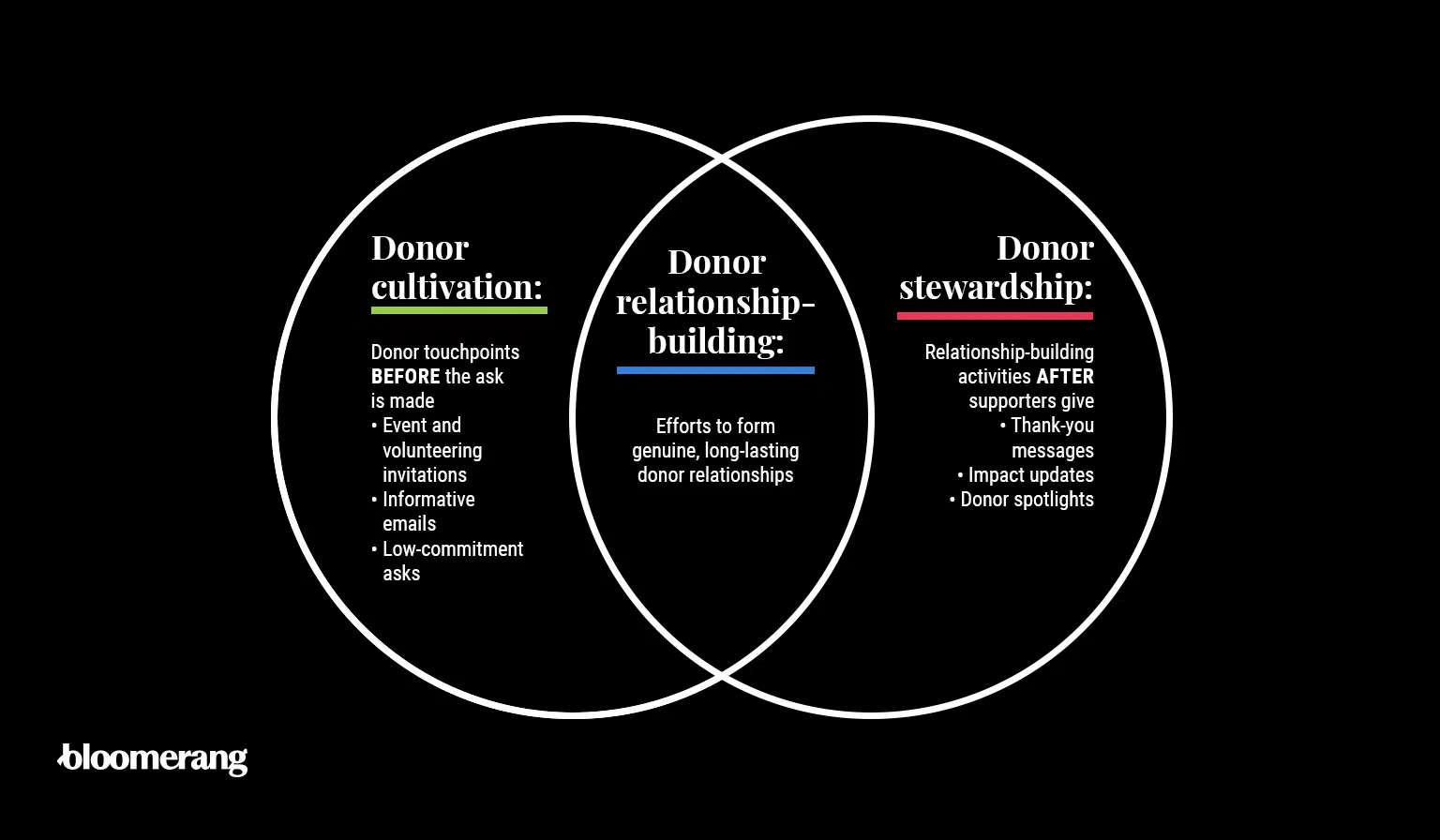
You may have heard the term "donor cultivation" used interchangeably with "donor stewardship." Both of these terms fall under the umbrella of donor relationship-building, but they differ in key ways:
- Donor cultivation involves touchpoints with donors before you make the ask.
- Donor stewardship involves relationship-building activities after supporters give.
Stewardship focuses primarily on maintaining relationships with donors after they donate to express gratitude and secure long-term support.
What is the difference between donor stewardship and donor relations?
Donor relations are your organization’s comprehensive actions to promote long-term engagement and high-value interactions with your donors. Donor stewardship and donor relations are often used interchangeably, but stewardship is a subset of donor relations. Donor relations include all of your organization’s communications and relationship-building with your donors, while stewardship’s primary focus is honoring your donors’ gift intentions.
How does donor stewardship impact donor retention?
Your donor retention rate measures how many donors continue to give to your organization over time. Donor retention research shows that acquiring a new donor can be 5-10 times more expensive than retaining an existing one. By investing in donor stewardship and current donor relationships, you can retain their support, strengthen your community, and limit donor acquisition costs.
How to use the donor pyramid to facilitate stewardship
The donor pyramid is a way to visualize your donors' composition. Depending on your organization’s size, your pyramid may look different from other organizations’ pyramids. A common donor pyramid structure includes major and legacy donors at the top, then mid-level or recurring supporters, small or low-frequency donors, and event attendees, volunteers, and prospects at the bottom.

Your stewardship goal should be to move donors up the pyramid. That way, you’re not only retaining donors but also increasing their value to your organization. Remember, the donor pyramid is a concept to guide stewardship rather than a hard-and-fast rule.
What is the purpose of the donor pyramid?
The donor pyramid helps you understand how your donors are distributed by value to your organization. In general, you can use the pyramid to target segments of your supporters with certain stewardship techniques. These techniques should be designed to move your donors up the pyramid, thus increasing their value.
The pyramid is a tool for analyzing your donors in very general groups. To create the most personalized stewardship techniques, segment your donors even further within your pyramid.
What kind of donor pyramid should you create?
Your pyramid will depend on your nonprofit’s donor data. Most donor bases don’t form a perfect pyramid. Determine how you’d like to define your broad donor categories by gift amounts.
Then, further segment your donors into different increments, such as the frequency of their gifts. These broad categories will determine the visual layout of your donors.
Ultimately, the “pyramid” is more of a concept than a shape. Your pyramid should change as you focus on transitioning your donors upward.
How can you use the donor pyramid?
Your donor pyramid is a model that can help you better understand how and when your donors transition to higher giving levels. It shows where your organization is, so you can craft a targeted strategy to improve your stewardship.
For example, you can pair your pyramid with a timeline that demonstrates how long it took your donors, on average, to reach their current levels. You may discover that it takes an average of five years for your small donors to become mid-level donors. You can use that information to craft a targeted stewardship strategy by assessing your past stewardship efforts and setting new stewardship goals, such as a three-year transition timeframe.
This example shows how you can use the donor pyramid to assess your nonprofit’s current standing and set reasonable, data-driven stewardship goals.

What donor groups should you target?
Your strategy will depend on your organization, but these donor groups can be a strong place to start:
- Transitional donors: These donors are usually loyal mid-level donors with greater giving potential. They are transitional because they slowly increase their gift size or have given consistently. You can speed up the process by paying these donors special attention.
- New donors: All donors are valuable to your organization, and stewarding new donors is vital for retaining them. The more specific your new donor stewardship strategy is, the better. Even a $20 online gift warrants an email acknowledgment with opportunities for further engagement or upcoming events.
- Major donors: Major donors are already at the top of the pyramid, but you still need to steward them to maintain and increase their current giving. Most stewardship efforts are concentrated on these donors; however, ensure your organization recognizes the value of high-level stewardship to other donor groups as well.
How to build a complete donor stewardship plan
The donor stewardship cycle is a continuous flywheel that transforms first-time givers into lifelong champions. To ensure no donor falls through the cracks, you need a comprehensive plan. Follow these six steps to build a strategy that successfully identifies, cultivates, and retains your supporters.
Step 1: Segment your database & identify potential
Donor segmentation allows you to create the most meaningful and relevant stewardship strategy by grouping donors based on specific traits. How you segment your donors will determine how you communicate with them and how often.
Here are some helpful donor segments you can create:
- Average gift size: This can be granular ($5,000) or general (mid-level donor).
- Gift frequency: Knowing how often your donors give helps you create a stewardship schedule that appeals to their generosity.
- Demographics: Factors like age and gender can indicate how your donor may respond to communications, though they should be used as general guidelines.
- Communication preferences: Understanding how your donors prefer to communicate helps you reach them effectively.

This first stage is also about uncovering the potential already within your database. By harnessing a CRM equipped with advanced wealth insights (such as Bloomerang's integration with DonorSearch), you can fast-track top prospects by identifying their giving capacity. You can also rely on AI tools, like Penny, to instantly analyze your supporter history and surface hidden opportunities without hours of manual data digging.
Step 2: Build your stewardship matrix and calendar
Once you have your segments, map out your plans for the year. Begin planning your outreach around scheduled annual events or major fundraising campaigns (like year-end appeals) so your recognition letters don't overlap with your asks. Schedule your outreach sparingly across multiple channels.
Your calendar should account for:
- Outreach: Mission updates or personal touches (like birthday cards) sent without an ask.
- Stewardship events: Ranging from casual cookouts to formal galas based on donor preferences.
- Recognition programs: Scheduled public shoutouts (e.g., in newsletters or on social media).
- Goals: Target deadlines to keep your stewardship efforts on track.
Create a donor stewardship matrix
A stewardship matrix charts your general stewardship actions based on a donor’s giving level. It is a fantastic tool to accompany your calendar and enhance your annual fund strategy. Here’s an example of what this might look like:
Pro Tip: Build this matrix out in Excel by adding columns for "Who is Responsible?" (e.g., Development Coordinator) and "Timeline" (e.g., Within 48 hours). Remember, this matrix is a baseline; the handwritten notes and calls in the higher tiers are where personalized outreach truly shines.
Step 3: Craft a donor communications strategy
Your communication strategy should keep donors engaged without bombarding them. Before making an ask, it’s essential to nurture the relationship and create authentic connections. You can do so by taking these steps:
- Scale with Journey Automation: Trigger perfectly timed, personalized email and task workflows based on a donor’s specific behavior (such as their first-ever donation to a specific campaign).
- Use donor-centric language: Run your appeals through a communications audit tool to check that you are using a highly empathetic, donor-centric "you" tone. The word "you" should appear at least twice as much as "we."
- Diversify your channels: Connect with donors through direct mail, phone calls for special projects, automated emails, social media shoutouts, and relatable in-person interactions.
Step 4: Execute the gift cycle (thank, recognize, and report)
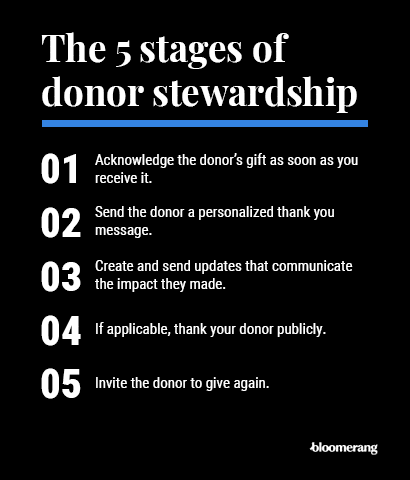
When your nonprofit actually receives a donation, your plan is put into action. Ensure you follow these sequential steps for every gift:
1. Update profiles: Use this early stage to add new donors to your database or update current profiles based on the gift.
2. Say thank you immediately: Promptly thank your donors by their preferred name and title. To truly raise the bar, consider sending a personalized video acknowledgment.
3. Confirm intentions: Confirm your donor’s intentions regarding their gift so you can manage their expectations and ensure their funds help the cause they care about most.
4. Recognize the donor: Balance tradition with innovation. Establish clear guidelines for donor walls, honor rolls, donor profiles, and naming rights. Always ask permission before publicly recognizing donors.
5. Report the impact: Send specific, emotionally driven updates featuring a recipient of your aid. Let the donors see exactly how their gift resulted in positive change.
Step 5: Deepen engagement and re-cultivate
Once a donor has been properly thanked and updated, stewardship seamlessly transitions right back into cultivation. Get your donors interacting face-to-face with your organization. Tailor activities specifically for donor stewardship, such as:
- Personal invitations: Send invites to annual events utilizing their preferred names.
- Exclusive events: Host intimate gatherings that give major donors access to your leaders.
- Fellowship activities: Create VIP areas at general events (even virtual ones!) for donors to bond with one another.
- Articles of interest: Have officers send relevant articles to donors based on their personal interests.
- Volunteer opportunities: Let donors experience your behind-the-scenes work.
Keep a close eye on your donors' engagement meters and real-time engagement scores. By using predictive AI insights, you can automatically spot emerging patterns, such as when a donor is ready to be nudged toward a recurring gift or is at risk of lapsing. When it’s time to solicit the next gift, review their past giving history to effortlessly tailor your ask amounts. Finally, remove all friction by directing them to mobile-first donation forms with flexible payment options.
Step 6: Evaluate your donor data
Stewardship should increase your funding and retention rates. If your efforts aren't helping you reach your goals, they might be costing your organization money. Look into your information once every month or so to see what’s working and what’s not by:
- Surveying donors: Gather communication preferences, feedback on their donation experience, and general recommendations.
- Tracking metrics: Check your fundraising software to see whether donation amounts or recurring gifts have increased since implementing your new plan.
- Analyzing segments: If a specific segment shows no increase in fundraising, consider redefining its parameters.
- Using your CRM: Track your stewardship efforts to see which campaigns performed best so you can replicate their success.
4 best practices for enacting your donor stewardship plan
1. Process gifts quickly
Once your organization receives a gift, immediately confirm receipt and implement the gift in a timely manner.
Send donation receipts ASAP so that your donors know their gift has been received. Most online giving software can automate this process. The more personal your receipts are, the better your donors will understand the impact of their gift. For example, a receipt that thanks a donor for their contribution to a specific campaign shows that your organization is putting the gift toward its intended purpose.
2. Tell a story
Nonprofit storytelling involves showing how your donor’s gift has impacted the life of a specific person, community, or animal that your nonprofit supports. Make your donors the heroes of the story by showing how their gifts have made a difference.
Write thank-you letters that focus on your donor and the people that they want to help. Use donor-centric language, using “you” at least twice as much as “we.” Structure your letter so that you introduce the recipient(s) of your nonprofit’s aid, explain how your donor helped them, and allow the recipients of your nonprofit’s work to speak for themselves.
3. Create giving societies
Creating exclusive memberships incentivizes your donors to give more to your organization and stay involved with other donors who care about your nonprofit’s work.
Donors who give a specified amount or pay an annual membership fee may be invited to join your giving society. The giving society should hold special perks for members, such as free parking at events or exclusive promotional items. But ultimately, your giving society should focus on a community of philanthropy.
4. Host stewardship events
Hosting stewardship events allows you to thank your donors in person and demonstrate what it means to be a part of your organization.
Invite specific groups of donors to your events. For example, you may host a major-donor gala or a mid-level-donor cookout. Focus on gratitude, and do not ask for more donations, but demonstrate your appreciation with a special video reel or a speech from a recipient of your nonprofit’s aid. Bringing your donors together can motivate them to stay invested.
Donor stewardship program roles and responsibilities
The roles and responsibilities involved in donor stewardship will vary depending on your organization's size. Some organizations will integrate stewardship efforts into other donor relations roles, while others may have a separate stewardship department that manages and reports on donor funds.

Director of Donor Relations
Depending on the size of your nonprofit, your director of donor relations may be fully responsible for your donor stewardship program as well as other donor relations programs, or they may maintain a broader role in which they oversee your program and your stewardship officer.
Your director of donor relations keeps everyone focused on the primary goal of building stronger donor relationships.
Stewardship Officer
Your stewardship officer is a vital player in pulling together donor stewardship profiles, ensuring your donors are properly thanked, creating stewardship reports, updating stewardship processes, and maintaining your stewardship schedule.
Your stewardship officer not only maintains your program but helps it grow. Your officer will work with your major gifts officers, board members, and committees to ensure that stewardship is being properly executed.
Major Gift Officers
Your major gifts officers will play a key role in your stewardship efforts by building relationships and trust with major donors. They’re in charge of your in-person or written communications with your major donors, and they can help implement and execute your stewardship program.
Stewardship should stem organically from your cultivation efforts. Your major gifts officers spend a lot of time with your major donors, so a solid stewardship program should integrate them into your overall plan.
Board Members
Board members are the face of your organization. They’re used to recognize your donors and demonstrate their appreciation for the gifts your nonprofit has received. Signing letters or even meeting with high-level donors are part of your board’s responsibilities.
Donors tend to respect board members' positions, so leveraging your board to show your nonprofit’s appreciation is a highly effective way to cultivate long-term donors.
Donor stewardship tools
Essential resources—like online giving software, stewardship matrices, mobile strategies, and CRMs—play a pivotal role in cultivating strong donor relationships.
Online giving software
Online giving software allows you to set up donation pages on your website, receive and process donations easily, automate donation receipts, and capture donor information. An online giving platform is useful for collecting donor information and setting their stewardship expectations.
For example, you can provide multiple giving options on your online donation forms, and with each option, explain how those funds will be used to further your mission (ex: $50 will feed a child for a month). That way, your donors can anticipate the nature of your updates and feel satisfied that their funds were used as your donor intended.
Mobile fundraising tools
Mobile giving helps you steward your donors by providing convenience. Most people use mobile devices for one purpose or another—optimizing your giving pages and nonprofit’s website for mobile helps you reach your donors where they already are.
Introducing your donors to mobile technologies like text fundraising can help you cultivate your donors into frequent givers. Frame the conversation around your gratitude and your desire to make giving easier for your loyal donors!
Donor database or CRM
Many organizations will want to invest in a donor database or CRM to streamline interactions with donors through donor profiles, especially now that more options are available to nonprofits of all sizes. Donor databases are a comprehensive means of tracking donor relationships, recording data, and segmenting donors into key groups.
Smaller or newer nonprofits may choose to use calendar software to track their stewardship efforts rather than invest in a full-fledged donor database. Calendar software can be used to schedule specific stewardship meetings, events, and interactions.
However, more and more nonprofits are switching to a dedicated CRM, especially since there are now CRMs available at every price point and feature level.
How AI supports donor stewardship
Embracing artificial intelligence doesn't mean losing the human touch. In fact, it means giving your team the time and capacity to deepen authentic human connection. With an intelligent AI partner like Penny built directly into your donor database, you can effortlessly handle the science of stewardship.
Penny analyzes your complete supporter history in seconds to automatically segment donors by their engagement and giving potential. When it comes to outreach, Penny crushes writer's block by generating first-draft content for personalized thank-yous and stewardship notes tailored to each supporter. She even helps with scheduling and guiding your next steps, so you always know exactly when to reach out to your champions. By taking on this administrative lift, Penny frees you to focus on the art of relationship-building.
Use Bloomerang to optimize donor stewardship
Effective donor stewardship combines tried-and-true strategies with robust software solutions. You need a partnership built for long-term success. Enter the Bloomerang Giving Platform: a unified ecosystem built for purpose.
By bringing your fundraising, donor CRM, and volunteer management into a single centralized platform, Bloomerang gives you a 360-degree view of every supporter. The platform includes the following tools to deliver personalized, timely outreach:
- Donor journey automation
- Interactive dashboards
- Dynamic segmentation
- AI partner, Penny
We help you turn every gift into a lasting relationship so you can confidently raise the bar on your goals and take your impact to the next level.
Frequently asked questions about donor stewardship
What are examples of stewardship activities?
Examples include sending prompt, personalized thank-you notes, making heartfelt phone calls, sharing regular impact updates, hosting exclusive appreciation events, and providing automated annual giving statements that celebrate a supporter's total impact.
What are the four pillars of donor relations?
A savvy donor relations strategy is generally built on four key pillars:
- Acknowledgment: Promptly thanking the donor for their gift
- Stewardship: Ensuring the gift is used exactly as intended and reporting back on its impact
- Recognition: Celebrating the donor publicly or privately, based on their preferences
- Engagement: Inviting them to interact with your cause in new ways, like volunteering or attending events
What's the difference between donor engagement and donor stewardship?
Donor engagement is the broad spectrum of how a supporter interacts with your organization, such as opening emails, attending events, or volunteering. Donor stewardship specifically refers to the relationship-building process that happens after a gift is made, focusing on thanking the donor and demonstrating the real-world impact of their generosity.
What is a stewardship donation?
While "stewardship" usually refers to the actions your nonprofit takes after receiving a gift, a "stewardship donation" can sometimes refer to a contribution made by a donor specifically because they feel deeply connected, valued, and well-informed about how their past gifts were used.
Wrapping up
Ultimately, we recommend approaching donor stewardship with curiosity and a willingness to meet your supporters where they are. Explore these additional resources for more support in building out your stewardship approach:
- 19 Top Nonprofit CRM Software Solutions to Manage Supporters in 2026. Explore top CRM software options that can help you track donor data for personalized stewardship.
- Major Gift Fundraising: Strategy Guide for Nonprofits 2026. Learn more about major gift fundraising strategies, from prospect research to long-term retention.
- Donor Segmentation: Complete Guide for Nonprofits 2026. Segmenting donors is a great way to send them messages that are more relevant to their interests.