Annual Appeal Letter: How to Write & Send One Successfully




An annual appeal is a nonprofit's yearly fundraising campaign that solicits donations to support ongoing operations and programs through the annual fund. Done well, it's one of the highest-impact fundraising activities your organization will run all year—driving donor retention, deepening relationships, and generating flexible revenue that keeps your mission moving forward.
This guide covers everything you need to send a successful annual appeal: what it is, the best time to send it, a step-by-step writing framework, a ready-to-use checklist, and five strategies to maximize results.
Key takeaways
- An annual appeal is a nonprofit's yearly fundraising campaign that solicits donations to support ongoing operations and programs through the annual fun.
- The best time to send an annual appeal is late November through December, coinciding with year-end giving and tax-deductible donation deadlines.
- Successful appeals combine personalization, compelling storytelling, and a clear call to action to drive donor engagement and retention.
- Approximately 30% of annual giving occurs in December, making year-end appeals critical to fundraising success.
- Multi-channel outreach—including direct mail, email, and social media—maximizes reach and response rates.
An annual appeal is a targeted fundraising effort conducted by a nonprofit organization to raise money for its annual fund, which is.the pool of flexible, unrestricted dollars that covers everyday programs and operational costs.
Unlike capital campaign appeals (which fund a specific project) or event-based appeals (which drive event attendance), the annual appeal is an ongoing, relationship-driven ask. It typically involves sending a compelling appeal letter or message to existing donors and prospective supporters, reminding them of your mission, sharing your impact, and inviting them to give again.
Sending an annual appeal letter is one of the most important fundraising initiatives your organization carries out each year. It's your chance to share your successes, celebrate the role your donors have played in your mission, and make a direct, heartfelt fundraising ask. For many nonprofits, the annual appeal generates some of the largest individual donations received in a given year, which is why strategy matters.
- Different types of annual appeals
- How to write an annual appeal letter
- 5 strategies to boost annual fundraising success
- Frequently asked questions
What are the different types of annual appeals?
Not every appeal takes the same form. Understanding your options lets you choose the right approach for each segment of your donor list.
By understanding these different types of annual appeals, nonprofit organizations can tailor their fundraising appeal letters and strategies to maximize donor engagement and raise money effectively throughout the year.
When is the best time to send an annual appeal letter?
The best time to send an annual appeal is late November through December, coinciding with year-end giving and tax-deductible donation deadlines.
This timing aligns with the holiday giving season when donors are most motivated to contribute. According to nonprofit industry research, approximately 30% of annual giving occurs in December, with about 10% of all donations made in the final three days of the year. Sending your appeal during this window maximizes visibility and urgency, encouraging donors to make tax-deductible gifts before the calendar year closes.
How to write an annual appeal letter
Sending a compelling annual appeal letter can go a long way toward boosting your organization's donor retention rate, which means you'll be able to count on sustainable support from donors in the years to come.
That's why we put together a template that takes you through the process of crafting an engaging and compelling appeal letter.
Follow these tips to ensure that your letter is as effective as possible:
Five steps to writing an effective annual appeal letter
Step 1: Start With a Compelling Opening
Grab the reader's attention in the first one or two sentences with a powerful story, a surprising statistic, or an emotional hook that is directly connected to your mission. Donors receive many appeals; your opening must make them stop and read.
Step 2: Share Your Impact Through Storytelling
Include a specific story about a real person, community, or situation your organization has helped. Concrete, human-centered stories make your impact feel tangible. Research consistently shows that narrative activates deeper engagement in readers than statistics alone—use both, but lead with the story.
Step 3: Connect the Donor to the Impact
Show donors exactly how their previous contributions made a difference. Phrases like "Because of your gift last year, we were able to…" acknowledge past support and build the emotional case for giving again. Donors who feel seen and valued are far more likely to renew.
Step 4: Make a Clear, Specific Ask
State exactly what you need and what that donation will accomplish. Specific, outcome-tied asks outperform vague ones every time. For example: "A gift of $50 provides meals for a family for one week" is more actionable than "Please donate today." Offering two or three suggested giving amounts—anchored to concrete outcomes—also simplifies the decision for donors.
Step 5: Close With Gratitude and Urgency
Thank donors sincerely for their partnership, reinforce any deadline (year-end tax deadline, matching gift window, etc.), and provide clear, frictionless instructions for how to give. Always include a P.S. line—studies show it is one of the most-read elements in any direct mail letter. Use it to reinforce urgency or call out a matching gift opportunity.
Once you've completed this process and feel like you're ready to do a final review of your letter, ask yourself the following questions:
- Is your appeal letter easy to read? If your appeal letter is too wordy or complex, donors may fail to read it all the way through and miss your call to donate. One way to check for readability is to use a resource like the Flesch-Kincaid grade-level test to evaluate what you've written. You should also make sure that your formatting helps with readability. For example, use short paragraphs and bullet points to break up text blocks. This will make it easier for people to scan your letter and quickly digest what they need to know.
- Did you write the letter with the donor in mind? The more donors feel like you value them, the more likely they are to continue supporting your mission. One way to make them feel valued is by using second-person pronouns like "you" more often than you use first-person ones like "I" and "my." You can and should talk about the work you're doing, but you should do it through the lens of how the donors have made that work possible.
- Is the appeal compelling? Your letter should appeal to donors on an emotional level, whether by telling a story about a community member whom they helped with their donations or by sharing what they can help you accomplish by making another donation.
- Does your letter include a clear call to action and ways to donate? Your call to action should compel donors to give as soon as they're done reading the letter, which means you need to create an ask that is urgent and specific. For example, instead of writing "Donate now," you should write something like "Give now and provide shelter to 30 families in need." Make sure you also give your supporters all of the information they'll need in order to make their donations. If you're sending an email, include a link to your online donation page in your message. If you're using direct mail, include a website URL at the bottom of your letter that takes them to your donation page and a pre-addressed return envelope to allow donors to send in a check or cash if they'd prefer to give that way.
- Does the appeal express your appreciation for your donors? Your appeal should show donors that you appreciate them. Reference the recipient's previous involvement with your organization and let them know what you've accomplished because of their past support. Even if your supporters can't make a donation right away, they should finish reading the letter and feel like they've played an important role in helping you carry out your mission.

5 strategies to boost annual fundraising success
Once you've written your annual appeal letter, you need to get it to the right donors at the right time. That means you need to develop a strong marketing and outreach plan that will help you connect with donors and make your case for support.
Here are five things you can do to reach your donors and encourage them to support your cause:
1. Use the right tools.
The best strategies and initiatives are the ones that are supported by the best tools.
Here are just a few of the software solutions that will help you fundraise more effectively:
- Donor database: A donor database is a tool that lets you store important supporter information in one place. This data includes things like a donor's name, contact information, donation history, and other details that will help you craft a personalized appeal letter. At Bloomerang, we also provide all of our nonprofit customers with access to segmentation tools, wealth screening tools, an online giving platform, and more.
- Online giving tools: One of the most important things that your software solution should provide you with is the ability to create unlimited donation pages and donation buttons, as well as other features that make it easy for your donors to make a donation online. You can buy another software solution that will function as an online giving solution, but some solutions also function as an online giving platform or offer online giving tools. For example, the Bloomerang Giving Platform offers tools that will help you host peer-to-peer campaigns.
- Email marketing platform: You likely don't have time to reach out to your donors individually. By using an email marketing platform like Mailchimp or Constant Contact, you'll be able to easily send personalized emails and acknowledgements to different segments of supporters, which will help you reach more of your donors, deepen your relationships with them, and save you time.
- Direct mail provider: You'll also need a way to send your supporters your annual appeal letters via direct mail. A direct mail provider can help you send out letters quickly and efficiently.
- Social media management tools: Did you know that 87% of donors who give for the first time from a social media source will also make their second donation from a social media source? Social media scheduling tools save you time by allowing you to plan out your posts well in advance and maintain an active social media presence.
By investing in solutions that help you work more efficiently, you'll free up time to focus on the tasks that help you move your mission forward in other ways. You can learn more about the software solutions that you can invest in via this Bloomerang post.
2. Write an appeal that acknowledges current events.
By writing an appeal that acknowledges current events, you show supporters that you're paying attention to and adapting to urgent needs. This will make your call to action even more compelling.
For instance, if your organization addresses the effects of climate change, you could incorporate a recent study about the impact of climate change on native species and how donors can help fight habitat loss. Or, if you work to improve healthcare services in underserved communities, you might share information about the impact of the COVID-19 crisis on the people affected and what your nonprofit can accomplish if your supporters make a donation.
Take a look at how the International Rescue Committee changed its homepage to call attention to the conflict between Russia and Ukraine and the impact it's had on people in conflict zones. By addressing this current event right on the homepage, the IRC shows its commitment to helping the most vulnerable people now.
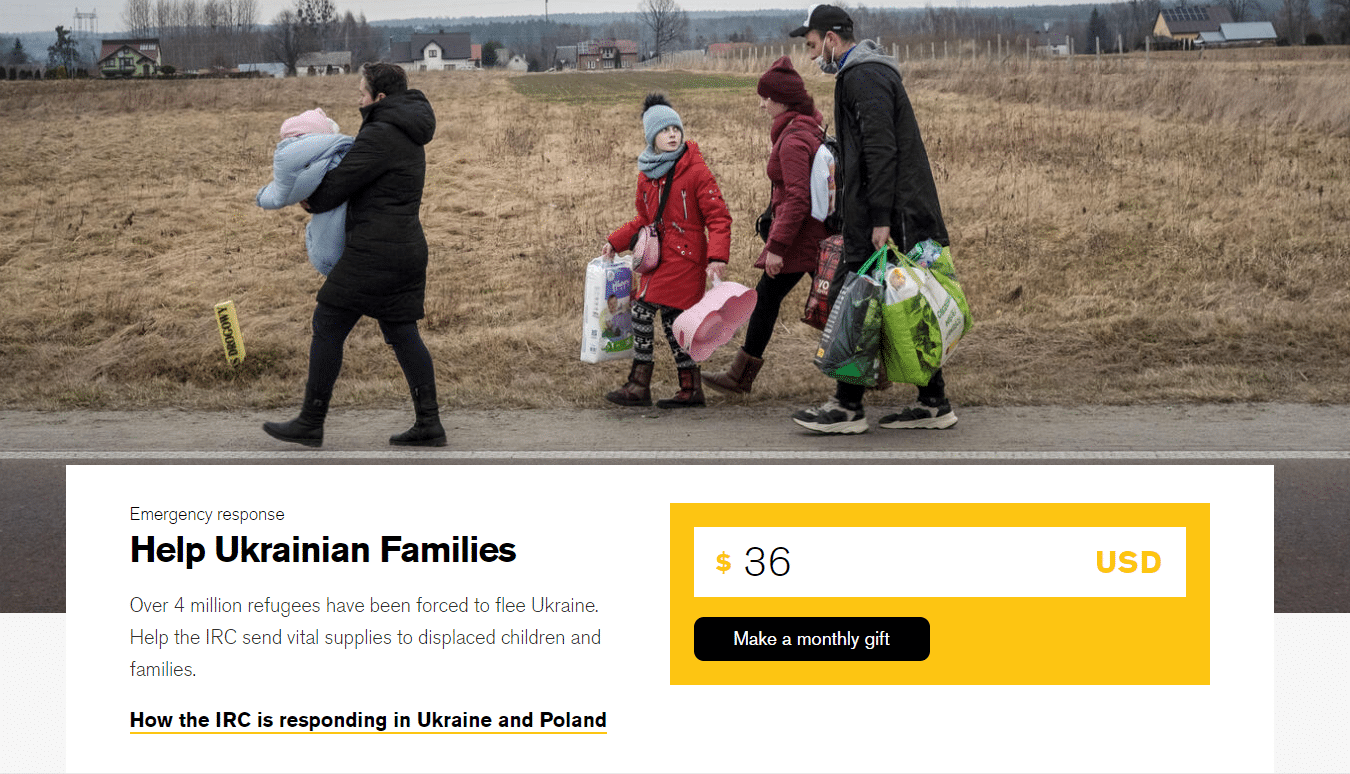
As with our recommendations above, this adds a sense of urgency to your call to action and will inspire supporters to give sooner rather than waiting until a future date to donate.
3. Tell stories that illustrate your nonprofit's impact.
A story is an incredibly powerful tool for engaging your audience and inspiring them to take action. By sharing stories that show the impact your nonprofit has on the communities you're trying to serve and the issues you're trying to address, you're giving donors an easy way to visualize the impact they can have when they give to your organization.
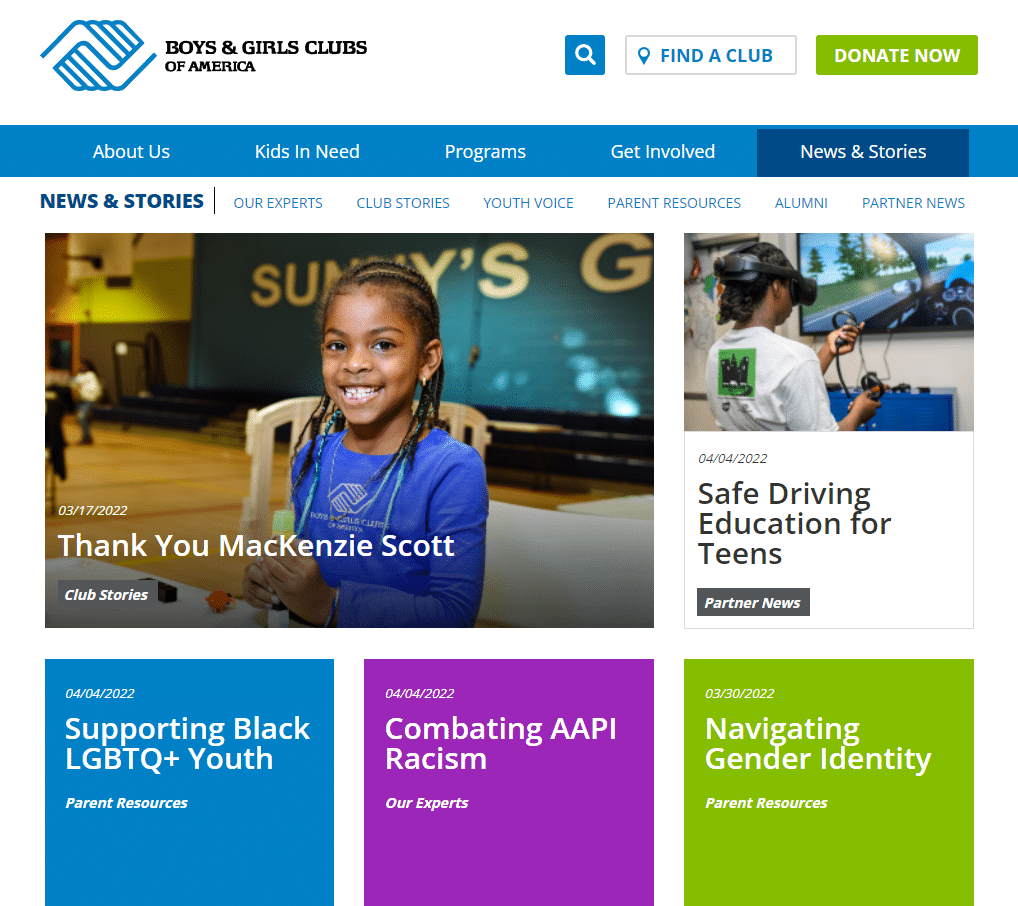
For instance, check out the Boys & Girls Clubs of America's robust news and stories section on their website. This offers a space for everyone involved in the organization's mission—including parents, youths, alumni, and staff—to make the work the nonprofit does more personal.
There are other approaches you can take to show your nonprofit's impact in a tangible way. For instance, try interviewing your constituents, staff members, volunteers, donors, board members, and stakeholders. When possible, include photos and videos and share these in your appeals. Or, share your fundraising metrics with your audience. You might share how many new volunteers you've welcomed onto your team in the last year, or highlight how many donors took advantage of corporate philanthropy opportunities over the last six months.
4. Optimize your direct mail efforts.
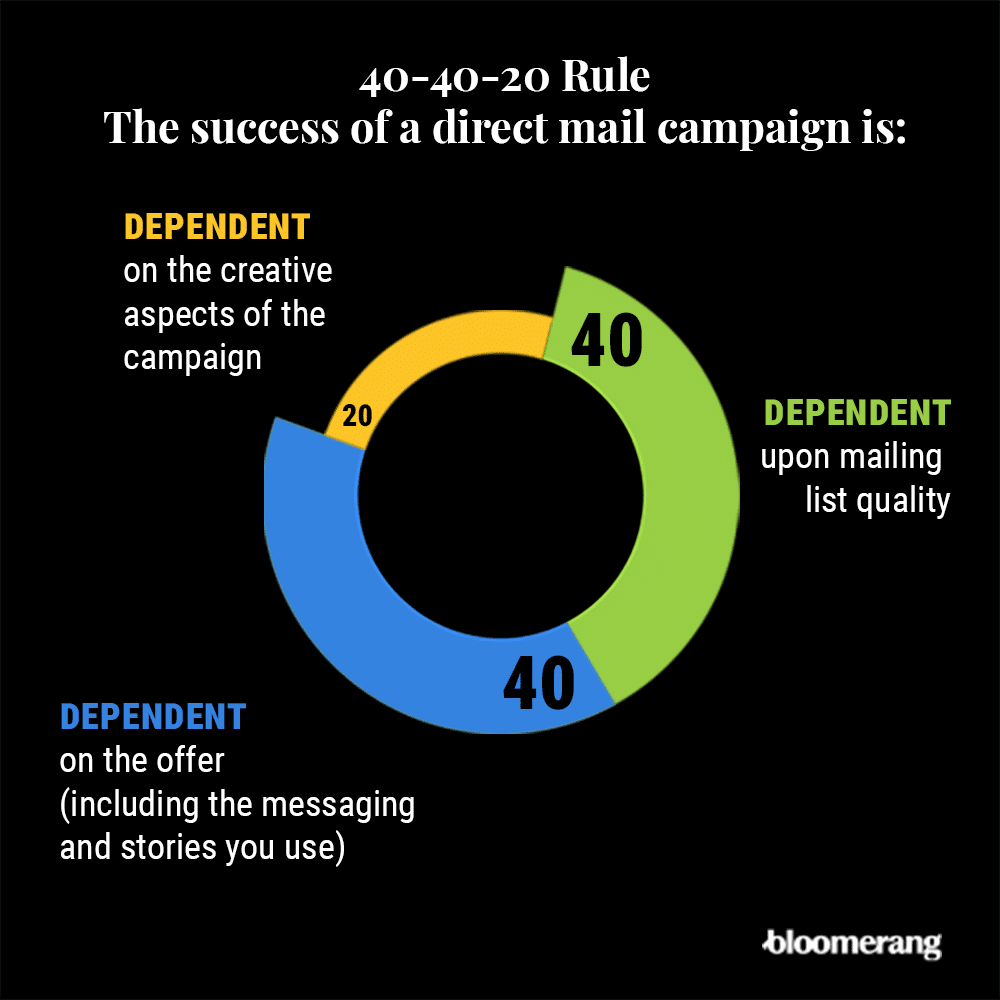
When it comes to direct mail campaigns, we believe following the 40-40-20 Rule is an effective way to raise more funds. This rule states that the success of a direct mail campaign is 40% dependent on the quality of your mailing list, 40% on how you communicate your impact (including the messaging you use and stories you tell), and 20% on the creative aspects of the campaign, such as the colors, fonts, and page design.
In order to maintain a quality mailing list, follow these data management best practices:
- Continually audit your mailing list to identify outdated, duplicate, incomplete, or incorrect information.
- Develop a process for correcting these errors, whether it's by updating old records with new information, supplementing incomplete records with third-party data appends, or eliminating/combining duplicate entries.
- Create a process for entering data in your donor database that will help minimize the work your team has to do on this front in the future.
5. Optimize your appeals so they're easy to read on mobile devices.
Research shows that half of all nonprofit website traffic comes from mobile and tablet users. That means if your annual appeals and donation pages aren't mobile responsive—easy to read and formatted for those types of screens—you could be missing out on an opportunity to connect with supporters and solicit donations from them.
Given the prevalence of this type of technology, many websites are now, by default, created to be mobile responsive. If yours isn't, find out what you need to do to update your website and any appeals you send in order to adapt to the way people are engaging with nonprofits.
Frequently asked questions: Annual appeals for nonprofits
What is an annual appeal in nonprofit fundraising?
An annual appeal is a targeted fundraising effort conducted by a nonprofit organization to raise money for its annual fund. It typically involves sending a compelling appeal letter or message to existing donors and prospective supporters to solicit donations that support ongoing programs and operational expenses.
How is an annual appeal letter different from other fundraising letters?
An annual appeal letter focuses on securing flexible, unrestricted funds for the nonprofit's annual fund—dollars that cover day-to-day operations and programs. Other fundraising letters may target specific campaigns, events, or projects, such as capital campaigns, matching gift drives, or event-based appeals.
When is the best time to send an annual appeal?
Most nonprofits send their primary annual appeal during the year-end giving season—late November through December—to capitalize on holiday generosity and tax-deductible donation deadlines. Many use GivingTuesday as a campaign launch point, followed by reminder emails in mid-December and a final push before December 31.
What should be included in a compelling annual appeal letter?
A strong annual appeal letter includes: a personalized salutation, an emotional opening hook, a specific impact story, an acknowledgment of the donor's past support, a clear and specific donation ask tied to a tangible outcome, multiple ways to give, a sincere expression of gratitude, and a P.S. line that reinforces urgency or a matching gift opportunity.
How can nonprofits create urgency in their fundraising appeals?
Urgency comes from explaining why donors should give now—such as a year-end tax deadline, a matching gift opportunity with a specific expiration date, or an immediate community need. Concrete deadlines motivate supporters to act promptly rather than setting the letter aside.
What are effective strategies for reaching supporters with annual appeals?
Using multiple channels—direct mail, email, social media, and online donation pages—consistently outperforms single-channel campaigns. Personalizing messages based on donor history and audience segmentation (using a nonprofit CRM) further improves engagement and response rates.
How can nonprofits measure the success of their annual appeal?
Track key metrics including: total amount raised, donor retention rate, response rate to the appeal, average gift size, and number of new donors acquired. A CRM with robust campaign reporting, like Bloomerang, makes it easy to analyze results and refine future strategies.
Can recurring donation appeals be part of an annual appeal strategy?
Yes. Including a recurring giving option in your annual appeal encourages donors to sign up for monthly or quarterly gifts, providing nonprofits with a predictable income stream that supports long-term financial sustainability. Recurring giving is also a low-barrier option that appeals to donors who want to give meaningfully but may not be ready for a large one-time gift.
How important is donor appreciation in annual appeals?
Expressing genuine gratitude is critical. Thanking donors for their past support—and specifically referencing what their previous gift accomplished—builds positive sentiment, increases the likelihood of continued giving, and deepens long-term donor relationships. Personalized thank-you messages that include specific impact updates are especially effective.
What tools do nonprofits need to run a successful annual appeal?
The core toolkit includes: a donor CRM or database, an email marketing platform, an online giving platform, a direct mail provider, and social media management software. The most efficient approach is a unified fundraising platform like Bloomerang that integrates all of these capabilities in one place, reducing manual work and improving data consistency.
Wrapping up
Your annual appeal letter is one of the most effective pieces of collateral you have to engage your donors in your organization's efforts to do more good in the world and earn their long-term support. Create a compelling appeal letter, and you should raise more funds and deepen relationships with donors.
If you're looking for more information on how to optimize your annual appeal letter and implement other important fundraising strategies, check out these resources:
- Donor Database: The Buyer's Ultimate Guide For 2021. Your donor database is a critical fundraising tool for learning about your supporters and the types of annual appeal outreach messages that will resonate with them. Use this resource to help guide the buying process.
- Nonprofit Strategic Planning: The Ultimate Guide + Examples. Your annual appeal letter is just one element of your nonprofit's overarching strategic plan. Learn how to make your strategic plan more effective with this guide.
- Major Gifts: The Ultimate Guide To Kickstart Your Program. Learn more about major gifts and how to start a major gift program.
- Fundraising Letter Templates. If you're looking to send out fundraising letters asking for donations, pledges, and support, you might be wondering where to start. These fundraising letter templates will get you started!