


Text-to-give is one of the easiest and fastest ways to raise donations via SMS messaging. However, many nonprofits don’t know where to start when it comes to implementing text-to-give campaigns.
This guide will explain how the process works and ways to optimize your campaigns using text-to-give platforms.

Text-to-give platforms: FAQs
What is text-to-give, and how does it work?
Text-to-give (also known as text-to-pledge or text fundraising) is a form of mobile fundraising in which donors give by sending a keyword to a text fundraising phone number.
Here’s how the text fundraising process works:
- Your nonprofit chooses a text fundraising platform or service provider.
- You select a unique keyword (such as “GIVE”) and are assigned a phone number for supporters to text.
- Supporters text the keyword to your phone number.
- Supporters either send a donation amount to be charged to their mobile carrier (text-to-give) or are sent a link to your online donation form (text-to-donate) where they can submit a gift.
Around 98% of Americans own a cell phone, making this type of fundraising incredibly effective for reaching donors on a device they use regularly.
What is text message fundraising?
Text message fundraising, often called text-to-give or text fundraising, lets your donors give by texting a keyword to a dedicated phone number. Depending on the platform you choose, donors either text a gift amount that's billed to their mobile carrier (text-to-give) or receive a link to a secure donation form (text-to-donate). Either way, your supporters can give in seconds, right from the conversation they're already having on their phone.
What is the difference between text-to-give and text-to-donate?
While the terms are often used interchangeably, text-to-give and text-to-donate differ slightly. Here’s a quick breakdown of the differences:
- With a text-to-give or bill-to-carrier campaign, donors text in a donation amount, which is applied to their next phone bill. The nonprofit receives the donation from the Mobile Giving Foundation sometime later, which means the donation isn’t instantaneous.
- By contrast, text-to-donate might take the donor a little longer to complete, but you receive the funds a lot faster. When donors text your text-to-donate keyword, they’ll receive a link to a mobile-friendly donation form. Following this link, they complete the donation form and submit their donation immediately.
Text-to-donate campaigns are most useful for urgent fundraising needs or opportunities, such as a telethon or disaster relief campaign. That’s because donors can send gifts as quickly as possible when they feel inspired to help.
You can set up the text-to-donate option to accept donations of any size using the same form, and it costs significantly less to implement than the bill-to-carrier option. Because donors give using your online donation form, you receive the donation much faster than the processing time of the Mobile Giving Foundation.

Is text-to-give a safe fundraising avenue?
Text-to-give is no different from any other form of online fundraising—its safety relies on the quality of the platform or service you use to carry out the campaign. Your text-to-give campaigns will be safe when you use secure fundraising tools and a reputable service provider. Be sure to look for a text-to-give provider that offers measures like:
- PCI compliance
- Fraud detection
- Data encryption
These aspects will make your text fundraising transactions secure and build donor trust.
What is the best text-to-give platform for nonprofits?
The best text-to-give platform depends entirely on your organization’s size, budget, and specific fundraising goals. For example, Bloomerang Fundraising is the best for comprehensive fundraising and CRM integration, while GiveWP is suitable for WordPress users. For a deeper dive into features, pricing, and how different platforms stack up against one another, check out the full comparison table later on in the piece.
Can small nonprofits use text-to-give?
Yes, nonprofits of all sizes (including small nonprofits) can use and benefit from text-to-give. Naturally, a nonprofit’s size often impacts its budget, which may dictate what kind of text-to-give platform it can afford. Luckily, there is a wide range of price and feature options, making text-to-give a very accessible fundraising tool for all nonprofits.
Is text-to-give free?
While most text-to-give campaigns incur standard payment processing fees, there are several free or low-cost platform options available for nonprofits to help minimize overhead.
Although free options are a great starting point for organizations on a tight budget, they often come with limitations that can bottleneck a growing nonprofit. Free text-to-give platforms typically offer fewer customization options, meaning you may not be able to fully brand the mobile donation page with your organization's colors, logos, and impact stories.
Additionally, free tiers often lack advanced features, such as seamless integrations with your primary CRM, automated email follow-ups, and dedicated customer support. Some free platforms also rely on a donor tipping model to cover their operating costs, which can occasionally create friction or confusion for donors during checkout.
Benefits of text message fundraising platforms
There are many reasons your nonprofit should use text-to-give tools. These platforms help you:
- Capitalize on the widespread use of cell phones to provide a direct, immediate channel for donor engagement.
- Make giving more accessible by allowing your donors to contribute to your cause without needing a computer or visiting your organization in person.
- Reach a broader audience while encouraging spontaneous giving.
- Communicate with your donors quickly—it takes an average of 90 seconds to respond to a text. The faster your donors are able to respond to your donation appeal, the more likely they are to complete a donation.
- Segment your donors to target specific audiences for different campaigns. This allows you to customize your messages to your supporters to increase the likelihood of their response.
Top 9 text-to-give platforms
Leveraging a text-to-give or text fundraising platform is much more efficient than texting your donors manually or on an ad-hoc basis. You can reach a wider audience, track your campaign progress, and save your team plenty of time.
To maintain donors’ trust, find a secure text-to-donate platform that makes the giving experience as easy as possible. Consider these nine top providers and the features they offer to streamline the process:
| Platform | Best for | Pricing |
|---|---|---|
| Bloomerang Fundraising | Nonprofits that want text fundraising built into their CRM, with outbound texts, pledge reminders, campaign reports, and segmented lists | See pricing |
| Snowball | Organizations that also want text-to-bid, text-to-tithe, or text-to-ticket options alongside text-to-give | $55/month premium plan |
| Donorbox | Nonprofits that want repeat donations and a simple shortcode tied into the Donorbox fundraising system | $19/month (standard keyword); $50/month (custom keyword) |
| OneCause | Urgent, event-driven fundraising with interactive features like a live fundraising Scoreboard | Contact OneCause |
| Tatango | Organizations focused solely on SMS fundraising with automated, trigger-based messaging | Contact Tatango |
| GiveWP | WordPress-based nonprofits that want text-to-give paired with Venmo, Apple Pay, and Google Pay | $79/year add-on |
| Handbid | Auction and event fundraising that needs keyword-based Text2Give tied to registration or auction links | Plans start at $1,396 (includes core auction and event software) |
| Give Lively | Nonprofits that want unlimited text campaigns and a free short code option to keep costs low | Free (transaction fees apply) |
| Tithe.ly | Churches that want two-way messaging and personalized, interest-based texts for their congregation | $19/month |
1. Bloomerang
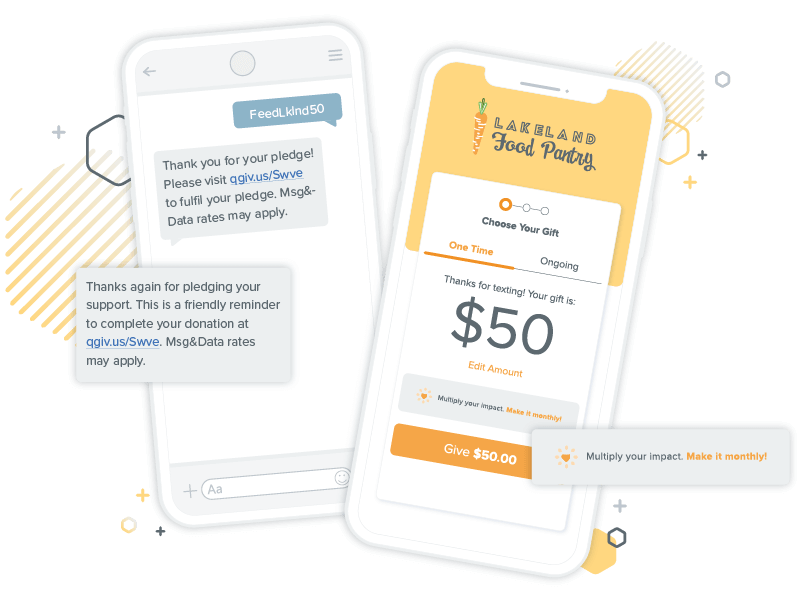
Bloomerang Fundraising prioritizes high response rates and speedy donation turnaround times. Engage supporters with features like:
- Outbound texts with quick updates, news, and donation reminders to keep supporters engaged
- Pledges and automated pledge reminders to ensure donors fulfill their giving intentions
- Campaign reports to track progress and adjust your approach as needed
- Segmented donor lists to send relevant information to specific audiences
The best part of Bloomerang Fundraising’s feature, Text Fundraising, is that it integrates with Bloomerang’s CRM. All donations received through Bloomerang’s text fundraising platform will be automatically recorded in your Bloomerang donor database. This makes follow-up and donor stewardship much simpler because you can track who donated, how much they gave, and when.
Pricing:
Bloomerang Fundraising’s pricing can be found here.

2. Snowball

Through Snowball’s text-to-give platform, donors can give using an email address or mobile donation page. Beyond just text-to-give, Snowball offers the following forms of text fundraising:
- Text-to-bid, which simplifies the mobile bidding process at auction events
- Text-to-tithe, which churches can use to gather charitable offerings
- Text-to-ticket, which organizations can use to make it easier to buy tickets for fundraising events
Pricing:
Text-to-give is available as part of Snowball’s $55 per month premium plan, which also offers access to the Snowball CRM, unlimited campaigns, and more.
3. Donorbox
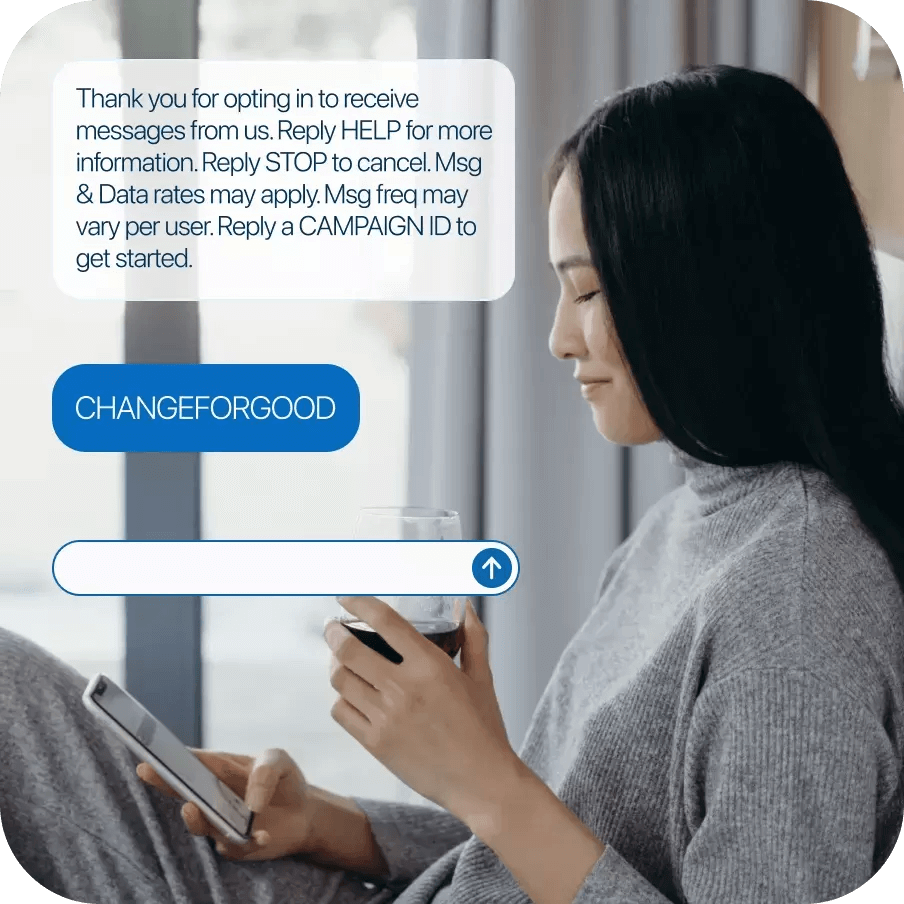
The Donorbox text fundraising platform makes it easy for donors to give using a mobile device and become recurring supporters. The platform offers features such as:
- Repeat donation option that allows donors to give again without having to fill out the donation form
- Integration with the Donorbox fundraising system to manage all fundraising activities from one platform
- Simple shortcode option that’s easy for donors to remember when they go to make a mobile donation
Pricing:
The Donorbox text-to-donate functionality is available as an add-on for $19 per month for a standard keyword and $50 per month for a custom keyword. Learn more about their pricing plans.
4. OneCause
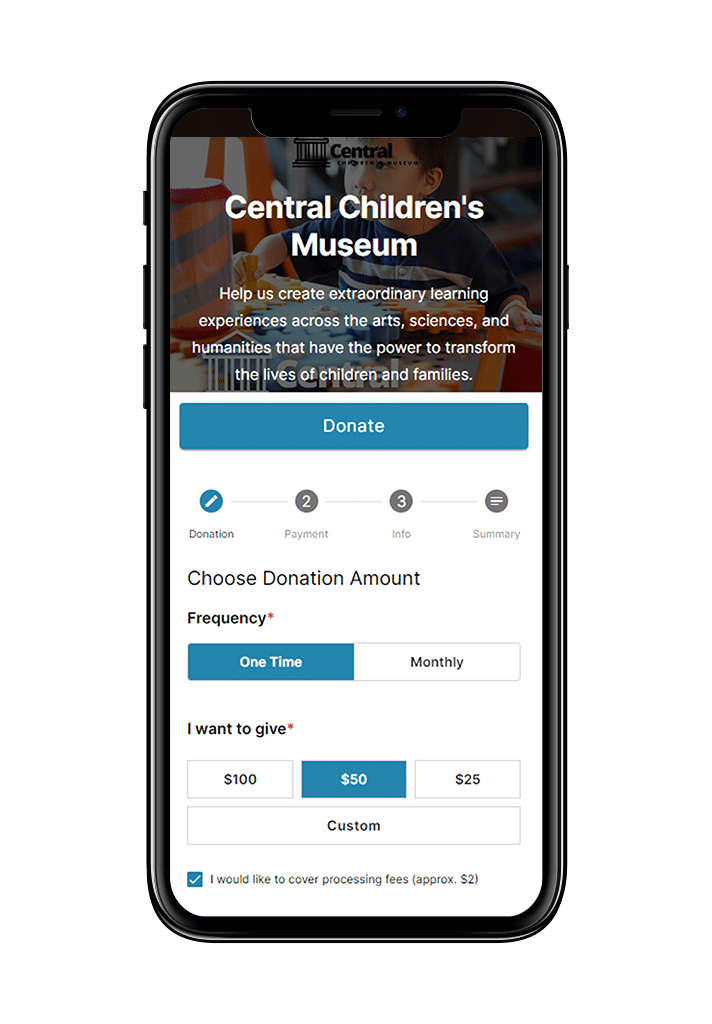
OneCause offers a versatile text-to-give platform that helps nonprofits access donations in times of urgent need. Drive mobile giving using the platform’s:
- Intuitive interface that makes it easy to set a campaign goal, manage campaigns, and collect donor data
- Interactive fundraising features to make events more exciting, such as a fundraising Scoreboard
- Simple, secure payment processing that enables donors to cover processing fees
Pricing:
Contact OneCause for pricing information.
5. Tatango
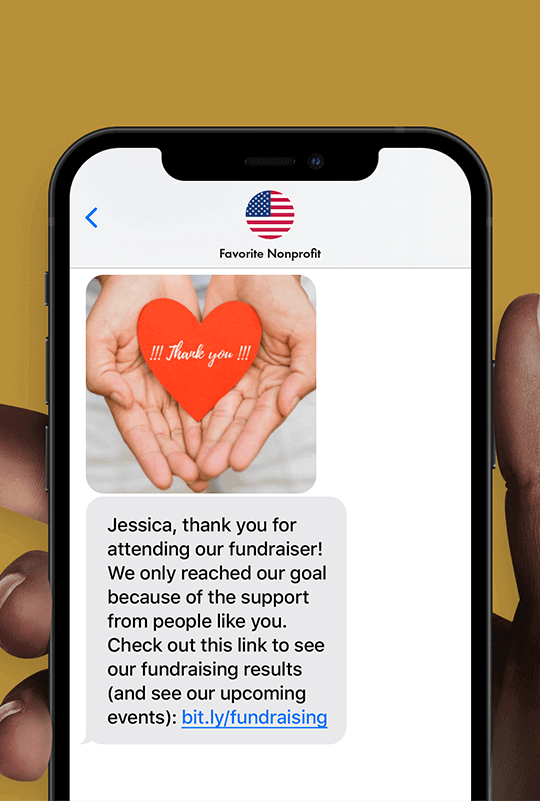
Tatango is a platform solely dedicated to SMS fundraising. This marketing software offers features such as:
- Automated messaging based on event triggers, such as mid-event donation reminders
- Robust support services from the Tatango Team
- Easy integrations with other software solutions or apps, including a variety of CRMs and marketing software
Pricing:
Contact Tatango for pricing details.
6. GiveWP
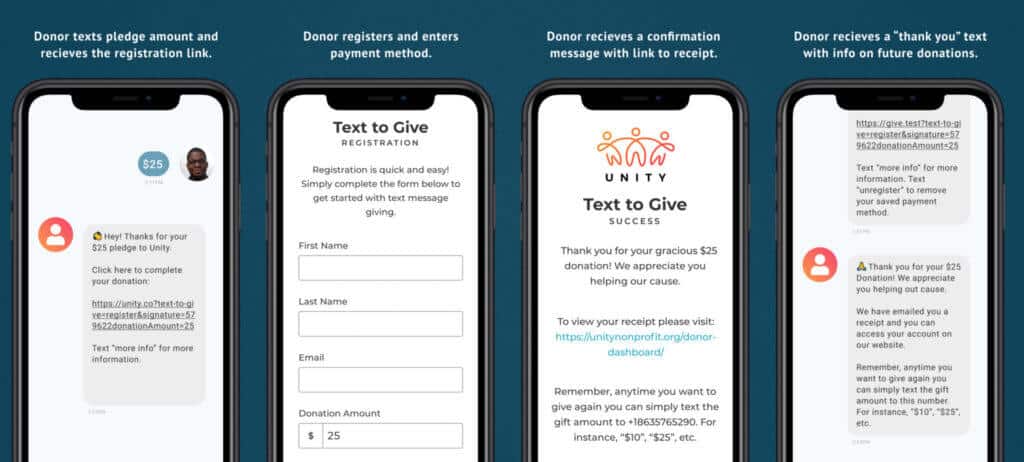
GiveWP is a WordPress donation plugin that offers a variety of fundraising features, including a text-to-give add-on. Using this text-to-give option, your nonprofit can benefit from features like:
- Integration with WordPress to create a seamless flow between your online donation page and text-to-give platform
- Multiple giving options including Venmo, Apple Pay, and Google Pay
- Ability to customize your SMS messages to apply to any campaign type
Pricing:
GiveWP’s text-to-give add-on is available for $79 per year.
7. Handbid

Handbid’s keyword-based Text2Give tool is designed to engage donors and drive more gifts at events. Raise revenue with user-friendly features such as:
- Short codes for simple text-based giving
- Ability to send multiple types of links, including event registration pages, virtual auctions, or merchandise fundraisers
- Integrations with Handbid’s existing donor profiles and payment information
Pricing:
Plans start at $1,396 for Handbid’s core product, their auction and event software, which includes Text2Give.
8. Give Lively

Give Lively offers a text-to-donate platform that enables donors to text a custom code and give via a secure, mobile-optimized fundraising page. This platform offers useful tools like:
- Unlimited text campaigns with as many unique text codes as you need
- A free short code option to help reduce costs
- Options to share your short code widely via your website, social media, printed handouts, and live displays at events
Pricing:
It’s free to use Give Lively, but transaction fees will apply depending on the payment method used.
9. Tithe.ly
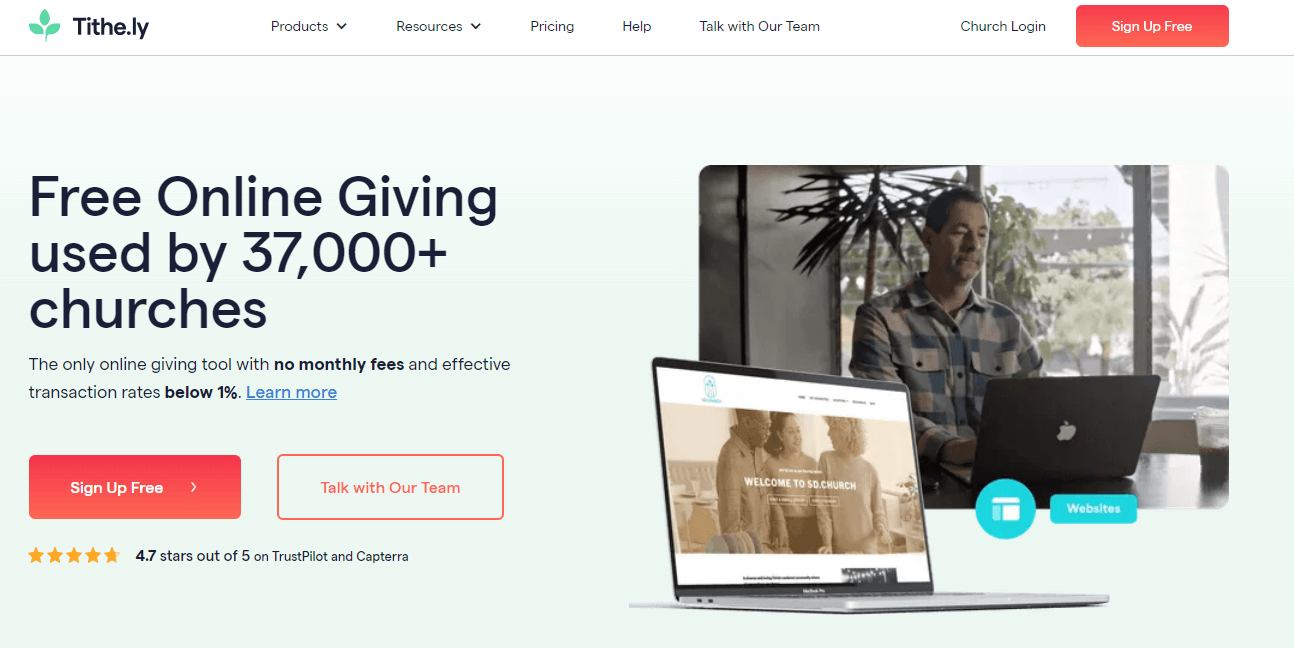
Tithe.ly is a mobile giving tool specifically designed for church fundraising. It’s a free online donation platform that offers the following features to bolster giving:
- Two-way messaging between your church and its community
- Set specific keywords that audience members can text to be added to specific lists based on their interests
- Personalized, automated messaging to appeal to congregants’ interests
Pricing:
Tithe.ly messaging is $19 per month.
Additional text-to-give platforms to consider
While these platforms are outside our top recommendations, they may fit some nonprofits’ specific needs.
Pledge
Pledge offers text-to-donate features that help activate the donation process in two clicks. For simplicity, Pledge provides a custom keyword and simple shortcode phone number to make it easy to remember all the information needed to initiate the donation process.
Pledge’s text-to-donate tools include:
- Options to customize your keyword, bounceback message, and donation amounts
- Ability to accept donations from various options, including credit cards, Venmo, PayPal, cryptocurrency, stock, donor-advised funds (DAF), Apple Pay, and Google Pay
- Recurring giving feature to enable continuous donations seamlessly
Pricing:
$5 disbursement fee to receive funds, and different processing fees for different payment methods
Givebutter
Givebutter is an all-in-one fundraising platform that serves as an excellent bridge solution for nonprofits needing to quickly launch a text-to-give campaign without a long-term software commitment. Using this text-to-give option, your nonprofit can benefit from features like:
- Fast, user-friendly setup that is ideal for short-term campaigns and pop-up events
- Built-in digital wallet integrations, including Venmo, Apple Pay, and Google Pay for frictionless checkout
- Text-to-donate capabilities seamlessly bundled with free event ticketing and peer-to-peer forms
Pricing:
Givebutter has a free option, but texting is only included in Givebutter Plus, which starts at $29/month.
Txt2Give
Txt2Give provides free text giving specifically designed for churches and nonprofits that want a streamlined, modern donor experience. Using this text-to-give option, your organization can benefit from features like:
- A frictionless donor experience that requires no app downloads, logins, or software installations
- Fast setup in approximately 10 minutes, allowing you to launch campaigns and start accepting donations almost immediately
- The ability to manage unlimited keywords for different campaigns, missions, or funds from a single, easy-to-use dashboard
Pricing:
Txt2Give is free to use for registered nonprofits and churches and operates on an optional donor-tipping model (15%) to cover platform costs. A third-party payment processing fee (2.3% + $0.30 per transaction) still applies.
How to set up a text-to-give campaign
Text-to-give tools make giving fast and convenient for your donors, even when they’re on the go! Read on to learn the steps in the text-to-give process.
1. Select a text-to-give provider
Working with a text-to-give provider helps you launch mobile giving campaigns on a larger scale. These platforms prioritize security and a positive experience for both nonprofits and donors.
Search for a text-to-give provider that offers features like:
- User-friendly interface
- Automation
- Secure donation processing
- Short timeline for access to funds
- Software support
- Clear-cut pricing
- Integration with your other fundraising tools
We’ll explore a few top options in a later section.
2. Choose a relevant keyword
Your keyword can make or break your text fundraising campaign—that’s why choosing the right term is a crucial step in the process. You’ll want a keyword that’s short, easy to spell, and won’t get changed by a phone’s autocorrect function.
For example, let’s say you’re holding a campaign to support endangered whale species. You might choose the keyword “Save The Whales 2024.” This keyword is easy to spell and remember, and it’s directly related to the purpose of the campaign.
3. Set up your donation amount and confirmation message
Donors expect a straightforward and quick experience when they make a gift with text-to-give. Consider creating a mobile giving experience that’s simple and easy.
With text-to-give, the gift is billed directly to the donor's mobile carrier. That means you'll need to decide on your donation structure upfront:
- Set a fixed amount (or a few preset options) for your keyword, since carriers typically cap bill-to-carrier gifts at a set amount (often $10) and may limit how many times a donor can give per month.
- Draft a clear confirmation (bounceback) message that donors receive immediately after texting your keyword. This should confirm the donation amount, explain it will appear on their next phone bill, and include any required opt-in language (many carriers require a one-time confirmation reply, like texting "YES," before the charge goes through).
- Include compliance basics, such as a way to text "STOP" to unsubscribe and terms/privacy links, since mobile carriers enforce strict compliance rules for bill-to-carrier giving.
4. Send automated reminders
Use your text-to-give platform to send automated messages to remind donors about your giving opportunities. Also, if you’re carrying out a text-to-pledge campaign, you can send automated reminders to fulfill pledges.
How do you launch your first text-to-give campaign? A fundraising expert's checklist.
Advice from Rachel Muir, CFRE:
Before you launch, make sure you know which kind of text fundraising you’re using.
With true text-to-give, the donation is charged to the donor’s phone bill. With text-to-donate, the donor receives a link to a mobile donation form. The terms are often used interchangeably, but the donor experiences are different.
Whichever option you choose, test it before you promote it. Recruit staff and volunteers with different phones and levels of technical comfort. Ask them to test:
- Whether the keyword is easy to spell and remember
- How quickly the reply arrives
- Whether every link works
- How the form looks on both Apple and Android devices
- Whether the gift processes correctly (if choosing text-to-donate)
- Whether the donor immediately receives a confirmation and receipt (if choosing text-to-donate)
- Whether the gift and donor information flow into your CRM correctly (if choosing text-to-donate)
Better yet, ask someone who knows nothing about the campaign to try it without instructions. If they get stuck, your donors will too.
To get you inspired, here’s my favorite text-to-give campaign, courtesy of Sofii, the Showcase of Fundraising Innovation and Inspiration and the Swedish Childhood Cancer Foundation.
How to choose a text-to-give platform
As you can see, there are multiple robust platforms that offer text fundraising, but you should do some research before committing to one. Here are a few key features to look for when choosing your text fundraising platform:
- Outbound texts: Outbound texts from your nonprofit to your supporters are a great way to engage and connect with them. Choose text fundraising tools that offer outbound text messages to easily share key news and updates about your campaign.
- Pledges: Make sure donors can also text pledges to your text fundraising number so they can complete their gift later. Text-pledging capabilities are useful when you’re asking your donors to pledge a gift during an in-person event. However, pledges are only valuable if donors follow through. Use text fundraising to send automatic reminder messages and track and report on unfulfilled pledges. You can automate messages to notify supporters of campaign deadlines or urge them to make their gift recurring after they’ve given.
- List subscription: With list subscriptions, your supporters can opt in to receive texts from you. Segment your subscribers to send targeted texts that are relevant to their specific interests.
- Live event component: Text fundraising often goes hand in hand with a live event, so make sure your text fundraising platform can connect directly to your event. For instance, display a campaign thermometer at your event so attendees can track your fundraising progress in real time. This shows donors how much they’ve given already and can motivate them to give more.
- Ease of use: Your text fundraising platform should be easy for both you and your donors to use. Setting up a text fundraising campaign shouldn’t put your team behind schedule. And your text-to-give experience should be simple for your donors to follow.
- Responsive design: Your donors don’t want to wait for your donation page to load when they text to donate. Look for a text fundraising platform that helps you make mobile-friendly donation forms to increase donation completion rates.
- Pricing: Budgets are crucial for nonprofits, so you want to choose a text fundraising platform that fits into your financial plan. Pricing can include the base cost for a set amount of outbound messages, overage costs, application fees for text-to-give, and processing fees for donations.
- Multiple payment options: Different donors prefer to give through different payment methods. Review the payment options offered by your text fundraising platform, as well as how quickly your organization can retrieve the donated funds.
- Customer support: If you’re new to text fundraising, a good customer support team can help you set up your campaign, as well as train your team to use the platform and track your campaign progress.
Best practices to make the most of your text-to-give platform
There are a few strategies you can use to make your text-to-give campaign successful. Follow these best practices to maximize your return on investment (ROI):

Create clear instructions
If you want your donors to adopt text-to-give technology, make it easy for them. Write clear instructions for how to use text-to-give and share those directions with your supporters in your appeals.
Consider including screenshots of each step so donors visualize what they’re supposed to do. Better yet, create a video that shows them how to create their text-to-donate pledge and complete their gift in real time.
Test the text-to-give process
Test out the mobile giving process with your nonprofit’s staff or volunteers before promoting it to your full community. Gather their feedback on what works well and any areas that may need improvement. This will help ensure a smooth rollout when you’re ready to promote this giving option to supporters.
Promote text-to-give opportunities
Spotlight your text-to-give opportunities using your blog posts, social media posts, and even in your direct mail communications.
Start the process by first distributing your keyword to your savviest donors who are most likely to jump on board. Then, cast a wider net by sending out your keyword with your written or video instructions to other donors who may also be interested in using this giving channel.
Monitor your progress
While it’s possible to set it and forget it, text fundraising can require tweaks to stay effective in the long run. Diving into your data can provide valuable insight into what’s working and what’s not.
Be sure to monitor incoming donations and your total donation amount for text fundraising. If momentum starts to slow down, try out new outbound messages or new cross-platform marketing techniques to secure more gifts.
Additional text-to-give resources
With this guide, you should be ready to start a text-to-give or text fundraising campaign ASAP! Choose an effective text-to-give platform and a catchy keyword, and start promoting your campaign across multiple marketing channels.
Looking for additional resources to help support your modern fundraising strategy? Start with these:
- 19 Incredibly Easy Online Fundraising Ideas and Expert Tips. Promoting your text-to-give option alongside your online fundraising campaigns is an effective way to raise more funds. Use this guide to plan an engaging online campaign.
- 30 Best Practices to Optimize Your Nonprofit Donation Page. Your mobile donation form should be simple and easy to use. Follow the tips in this guide to design a better giving page.
- 15 Top Online Fundraising Platforms to Ramp Up Donations. Your online fundraising platform will help keep all digital fundraising activities centralized. This resource highlights top options for nonprofits.