

In a sector where every dollar counts, donor retention is the lifeblood of your mission. Yet, for many nonprofits, keeping supporters engaged remains a challenge. This guide cuts through the noise, offering the benchmarks, formulas, and actionable strategies you need to stop the revolving door of giving and build lasting, sustainable relationships.
What is donor retention?
Donor retention is a measure of how many donors continue to donate to your organization. Nonprofits with a high donor retention rate have long-term supporters who come back year after year. Nonprofits with a low donor retention rate must continually acquire new donors or larger gifts to keep up.

What is a good donor retention rate?
A “good” donor retention rate depends on what donor group you’re measuring. Here are the average donor retention rates for different donor types, pulled from Fundraising Effectiveness Project data. At or above these percentages would be considered a good retention rate for each group:
- The average donor retention rate across the nonprofit sector is always around 45%.
- The average first-time donor retention rate is usually around 20%.
- The average repeat donor retention rate is usually around 60%.
- The average monthly donor retention rate is usually around 90%.
A good donor retention could also depend on your nonprofit’s goals. For example, let’s say your goal this year is to increase your GivingTuesday donor retention rate from 10% to 20%. If you end up increasing your rate to 22%, that would be considered strong retention.
The current state of donor retention
The Association of Fundraising Professionals (AFP) and the Center on Nonprofits and Philanthropy at the Urban Institute worked together to establish and maintain the Fundraising Effectiveness Project (FEP). The Fundraising Effectiveness Project provides a platform for these organizations to conduct research that helps nonprofits improve their fundraising results faster.
Each quarter, FEP releases its findings, including changes in average donor retention rates over time. The most recent report for Q1 2026 shows that retention rates held steady at around 18% compared to Q1 2025.
Compared with Q1 2025, retention rates decreased across all donor-size segments except micro donors. This downward trend was most pronounced among supersize donors ($50,000 and above), which saw a year-over-year decline of 0.7 percentage points. While micro donors ($1-$100) were the only group to improve (+0.1 p.p.), they still have the lowest year-to-date retention rate overall at just 10.0%.
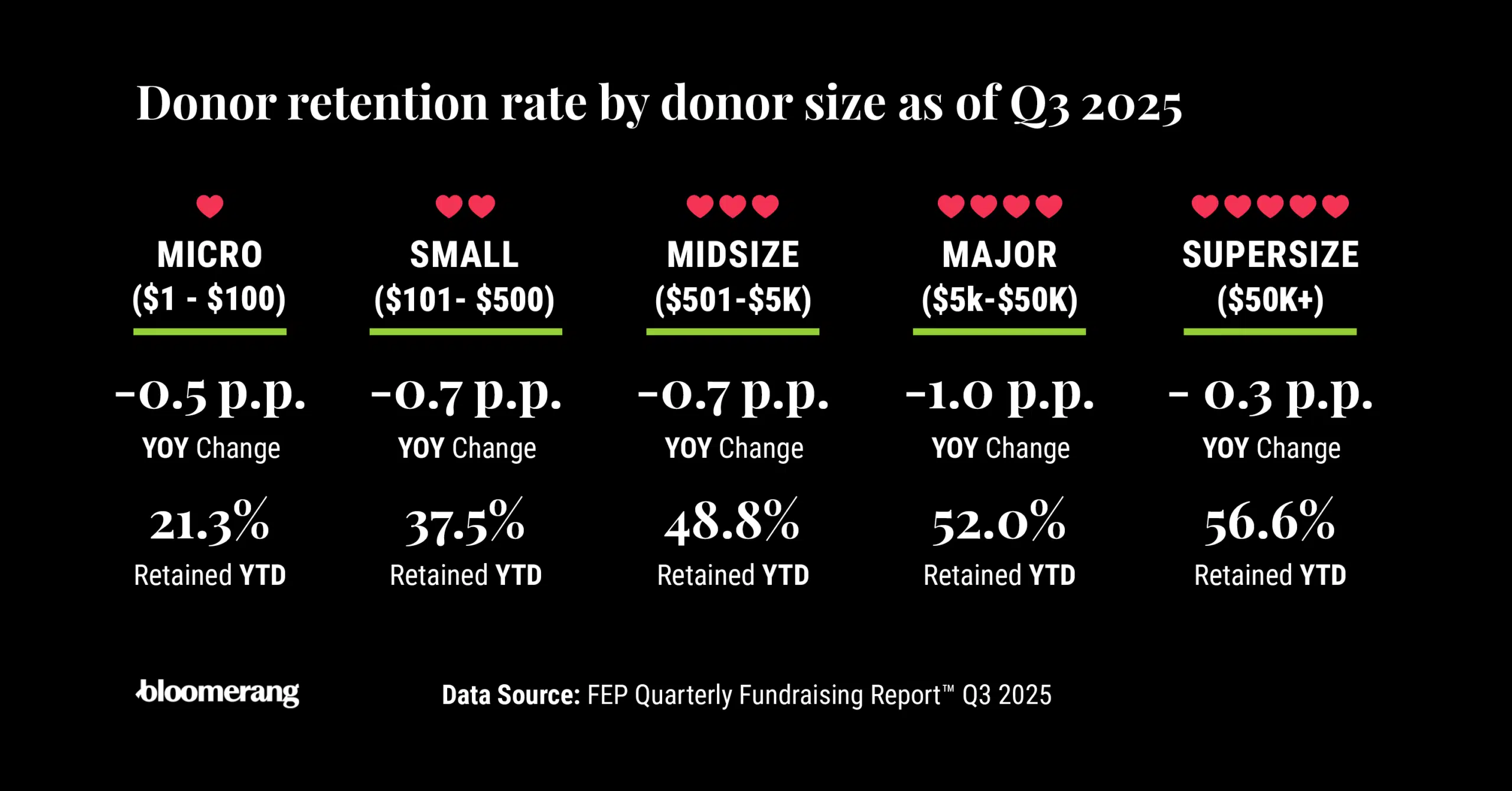
Interestingly, retention did not strictly increase with gift size; major donors ($5,000-$50,000) actually retained at a lower rate (29.2%) than midsize donors (31.6%). This data illustrates the need for effective donor retention strategies for donors of all sizes.
The golden rule of donations
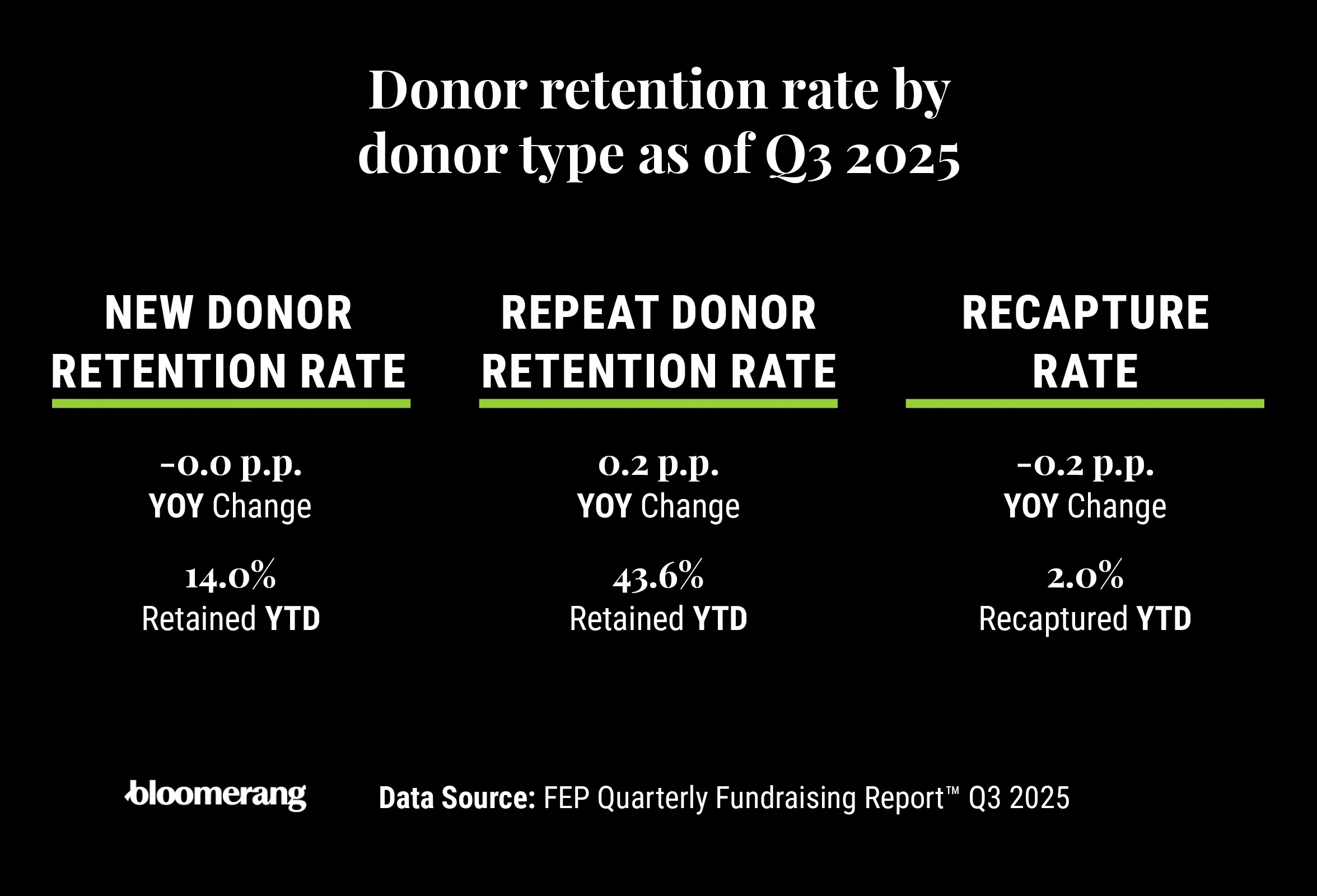
The FEP reports also explore donor frequency, specifically for new and repeat donors. New donor retention rates are even lower than the national average for all donors. However, if you can get a second donation (also known as the golden donation), your retention rates increase dramatically because repeat-donor retention is much higher.
According to FEP, the new donor retention rate decreased slightly by 0.1 p.p. to 7.1% year-to-date, while the repeat donor retention rate increased slightly by 0.2 p.p., reaching 25.8% year-to-date. While there was little year-over-year change in these retention rates, the stark difference between the percentages of new and repeat donors retained underscores the importance of soliciting a second gift to support long-term retention.
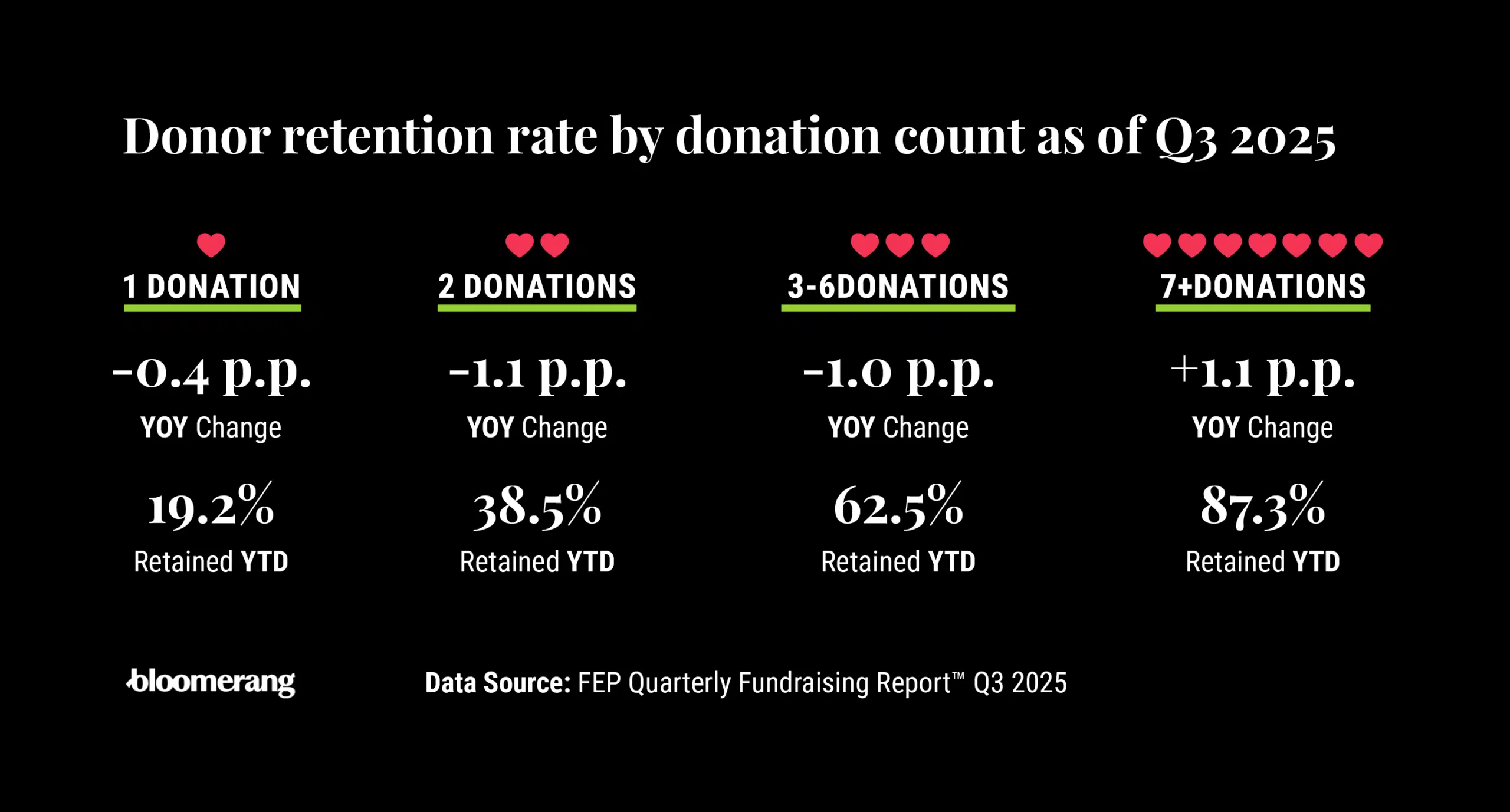
The report also shows that donors who contribute more frequently are more likely to give again. The data show a one-time donor retention rate of 7.4% year to date, a two-time donor retention rate of 19.4% year to date, a three- to six-time donor retention rate of 44.6% year to date, and a seven-plus-time donor retention rate of 88.1% year to date.
Again, soliciting a second gift can exponentially increase donor retention, as can soliciting subsequent gifts. Nonprofits that focus on receiving that golden second donation naturally increase their average donor retention rate (more than doubling it!) due to this higher repeat-donation rate.
“This quarter's findings suggest encouraging signs in retention and stewardship, even as new donor acquisition remains a challenge. The opportunity now is to build on that momentum during the year-end giving season by focusing not only on acquiring donors, but on strengthening donor stewardship and creating clear pathways for deeper, long-term engagement.”
– Ann Hale,
Executive Vice President of the AFP Foundations for Philanthropy
How to calculate your donor retention rate
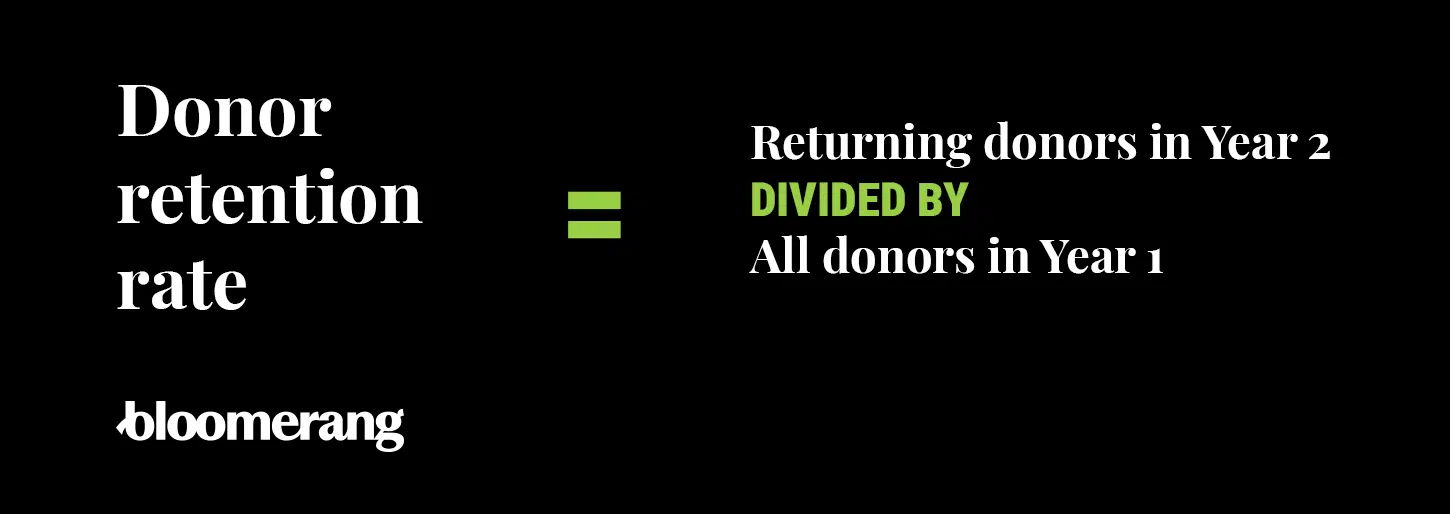
Calculate your nonprofit’s donor retention rate by dividing the number of repeat donors this year by those who donated last year. For example, if you have 159 donors who gave again this year but had 300 who gave last year, your donor retention rate would be 53%.
It can become tiresome to calculate this equation by hand. We recommend investing in software that will automatically track your retention rate each year. This way, you’ll not only get today’s retention rate but also an overview of how well your retention rate is improving over time.
Bloomerang’s free donor retention calculator
You can also use our free donor retention calculator below to visualize how your donor retention rate can impact your fundraising revenue. Simply plug in basic information about your fundraising efforts and current donor retention rate to see how increasing donor retention can boost your fundraising campaigns.
Why does your donor retention rate matter?
Maybe this is the first time you’ve ever thought about your donor retention rate, or maybe you’ve had a pretty good idea of what your rate is, but don’t think it’s anything to be worried about.
If you don’t consider donor retention, you’ll risk a higher attrition rate (the rate at which you lose donors). Take a look at how unchecked donor attrition can harm your organization over time:
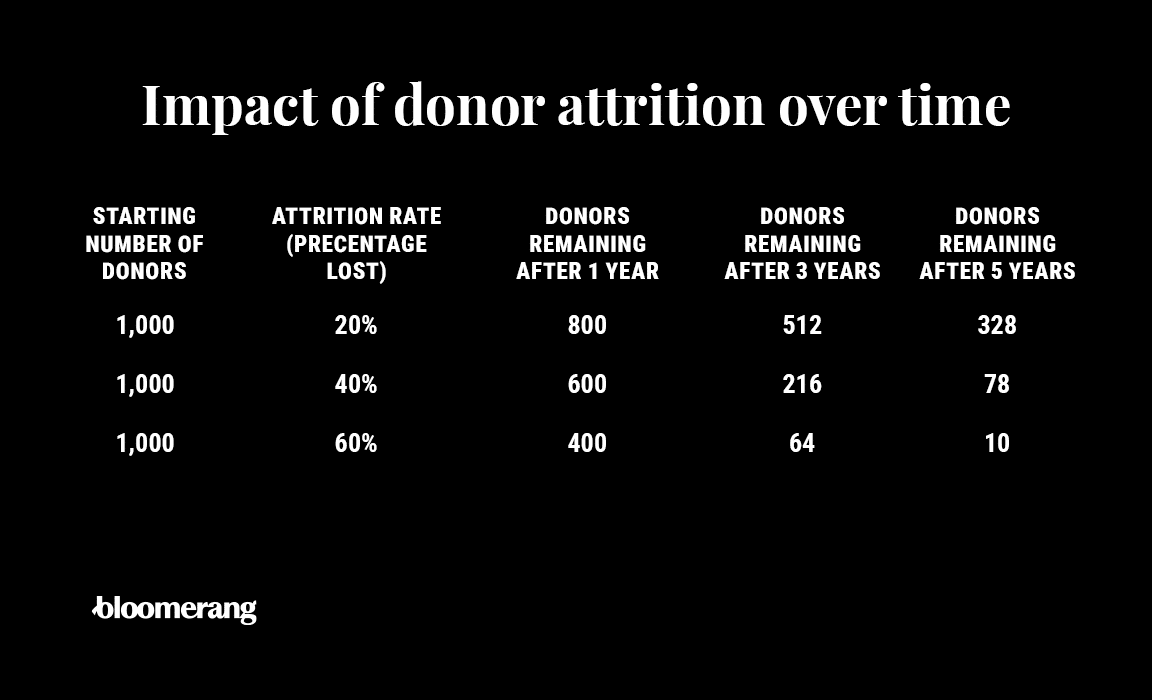
You can see how quickly your pool of donors could evaporate, meaning increasingly less funding for your nonprofit. Just a small change in your donor retention rate (for instance, 10%) can cost your organization thousands of dollars!
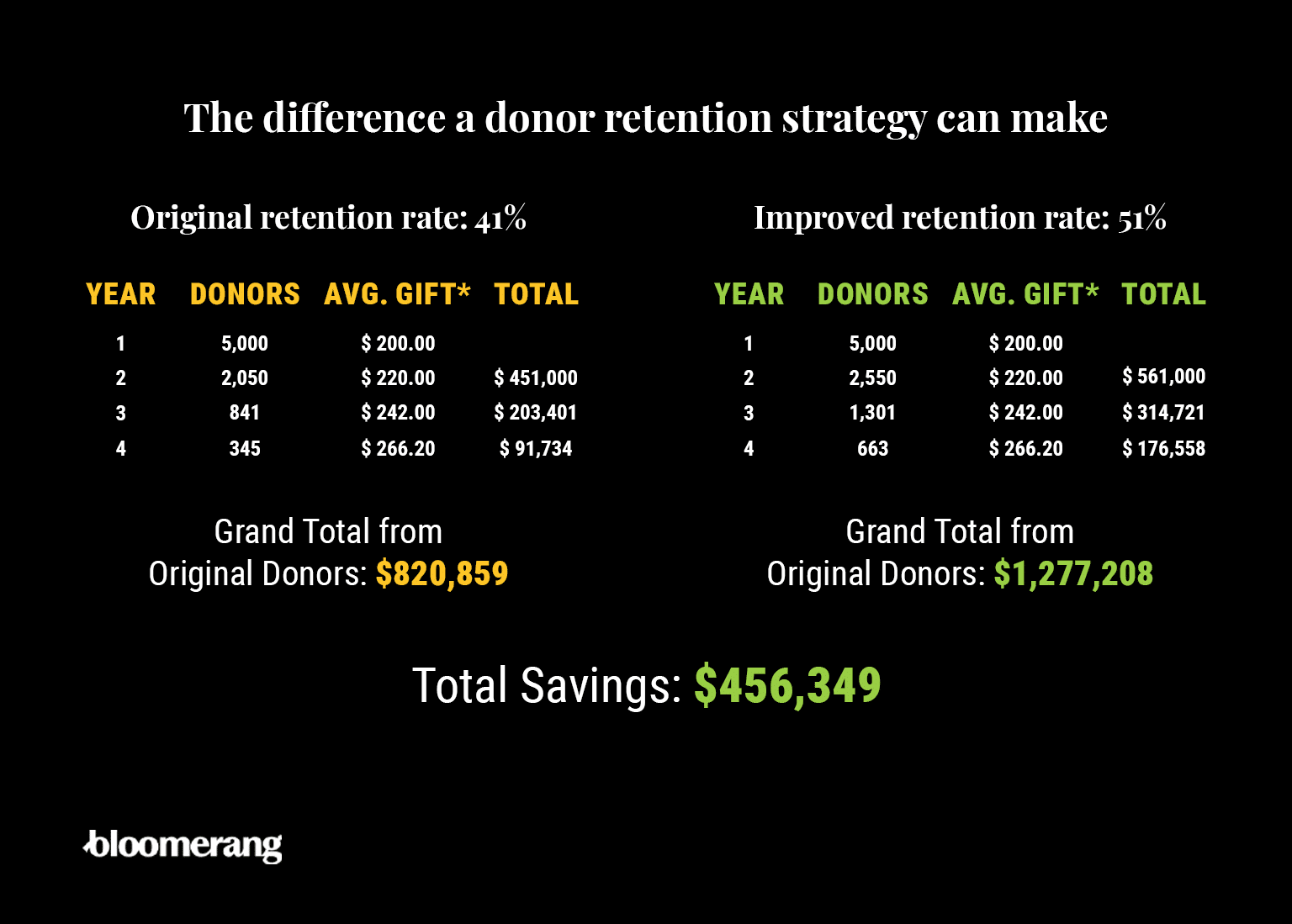
Once they’re gone, they’re (almost all) gone.
Maybe you’re thinking, “Okay, so what if donors don’t give in consecutive years? They might come back someday.”
Think again.
According to FEP’s most recent data, the number of recaptured lapsed donors has decreased by 1.1 p.p. year over year, meaning it’s increasingly difficult to gain back support from former contributors.
You cannot rely on this small recapture rate to compensate for low donor retention, which is why it’s crucial to retain donors from the beginning of their relationship with your organization.
Why donor retention matters more than ever
If a new donor gives only once—as nearly 70% do—then you’re often left with a loss on your initial investment to gain that new donor. The true benefit of acquiring a donor can only come when you retain that donor over the long term.
While acquisition will always be important, nonprofits must focus on ways to keep new and existing donors coming back year after year.
How to track donor retention in your donor database
Most modern donor management systems and CRMs (like Bloomerang) include built-in reporting tools to automate retention metrics. However, if you need to run custom database queries or generate tailored reports, following a standardized filtering process ensures your data remains accurate and consistent year over year.
1. Select your standard reporting period.
Choose a consistent timeframe for both baseline and comparison periods. Most organizations evaluate retention across full calendar years, fiscal years, or specific repeating campaign dates.
2. Filter by unique primary donor IDs.
Query records using unique donor identification numbers rather than names to ensure accurate matching, preventing duplicates or errors caused by alternate spellings and household accounts.
3. Filter revenue types to exclude non-donor transactions.
Exclude transactions that distort donor engagement metrics, such as soft credits, unfulfilled pledges, in-kind contributions, and event ticket purchases, focusing strictly on direct charitable gifts.
4. Segment by donor lifecycle stage.
Break down your query results by lifecycle stages—such as first-time donors, multi-year repeat donors, and major gift donors—to identify specific areas of retention strength or churn.
Top strategies to increase donor retention
1. Offer recurring gift options
Recurring gift options allow donors to make their gifts on a regular schedule. These lead to higher donor retention rates by making it easier and more convenient for donors to schedule their gifts.
With nonprofit software that offers recurring gift options on your donation forms, you can provide your donors with a variety of billing frequency options (such as weekly, monthly, or quarterly) and personalized receipts. Recurring donors tend to give more than one-time donors, so be sure to incorporate this into your strategy.
2. Set up donor accounts
Donor accounts can make a huge difference in creating a convenient giving process. Simply allowing donors to upload their payment information just once boosts the convenience they have when giving to your organization.
Donor accounts allow donors to track their recurring donations, make adjustments to their preferences, and keep their information updated with you. This is a win-win for both parties!
3. Offer different ways to give
To continue the theme of convenience for your donors, offering a variety of ways to give can also help boost donor retention. Invest in nonprofit software that allows you to offer online donation forms in addition to text fundraising, auctions, and more.
Providing different ways to give means you’re more likely to meet your donors’ needs. If they want to donate on the go, text fundraising is an easy way to do so. If you want to plan a large event and incorporate a silent auction into the festivities, guests will love the opportunity to browse your items and bid for a greater cause.
4. Learn from your donor data
Tracking your donor data is important for calculating metrics such as donor retention rate and lifetime value. Learning from your donor data beyond these metrics is essential for performing personalized outreach and retaining your donors.
Your nonprofit fundraising software should integrate with a constituent relationship management (CRM), also known as a donor database, that tracks all your donations and individual donor information, enabling you to leverage this data in your fundraising strategy.
Pinpointing trends in giving and following up with lapsed donors, for instance, can be streamlined with the right source of donor data. Make sure you are paying attention to yours.
5. Re-engage year-end donors
Following a year-end campaign, you’ll likely have picked up many new donors from events like GivingTuesday and other forms of marketing. It’s important that you build lasting relationships with these donors so they come back to support you for years to come.
Keep up your engagement by showing appreciation right away and personalizing your outreach. Connect with your donors through social media, interact with them, and encourage them to continue supporting your mission. Your year-end giving campaign doesn’t have to end with donors slipping away after the giving season.
Bloomerang: built to help you retain more donors
As your nonprofit focuses on improving its donor retention, it’s important that you have the best tools to track your donor retention rate and communications with supporters. What better place to do this than a donor database?
Bloomerang CRM is designed specifically with donor retention in mind. We don’t write a single line of code into our product without asking: Will this help retain more donors?
We’re committed to helping nonprofits achieve retention rates above the sector’s average, lower fundraising costs, and increase the lifetime value of donors in their communities.
Read on to see exactly how Bloomerang can help you retain more donors.
Monitor your retention rate
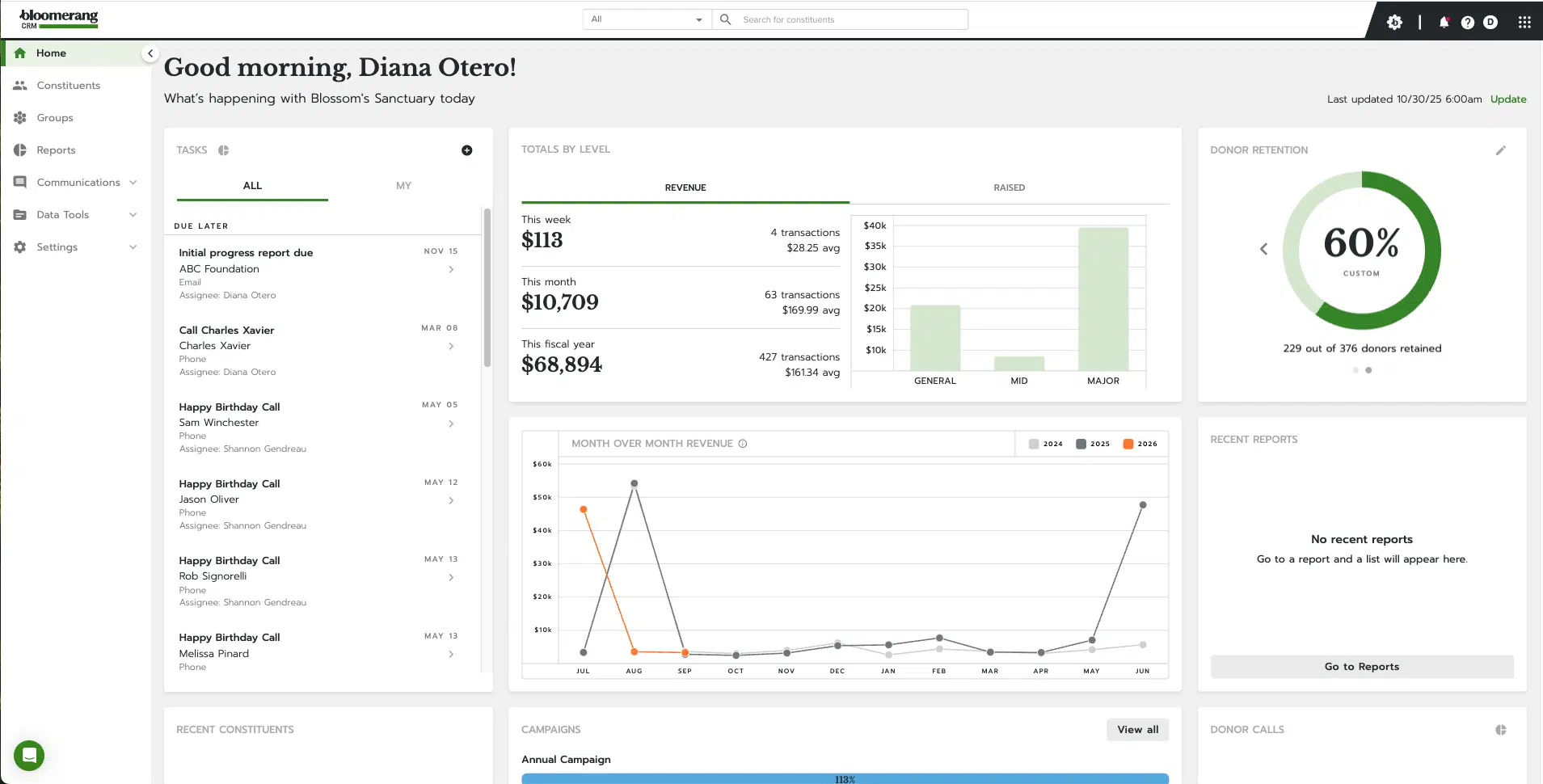
What better way to keep donors at the center of your focus than by seeing your current retention rate, updated daily, right on your dashboard? With this feature, you can easily click through to see which donors have been retained and which need additional attention.
Write to delight and inspire
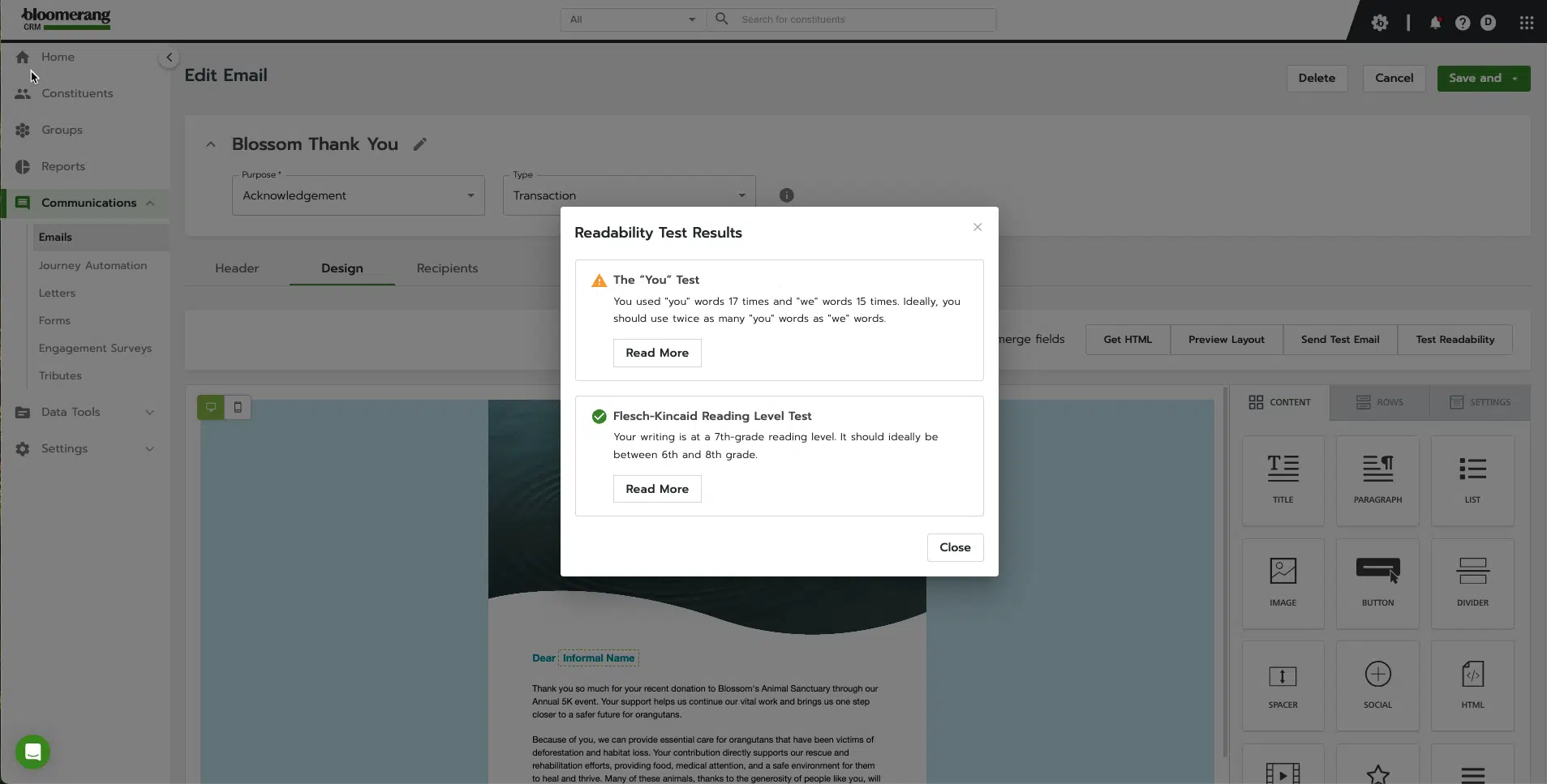
Bloomerang users can audit their written content (such as letters and emails) through a “You” test and a Reading Level test to help ensure that donor communications hit the mark every time.
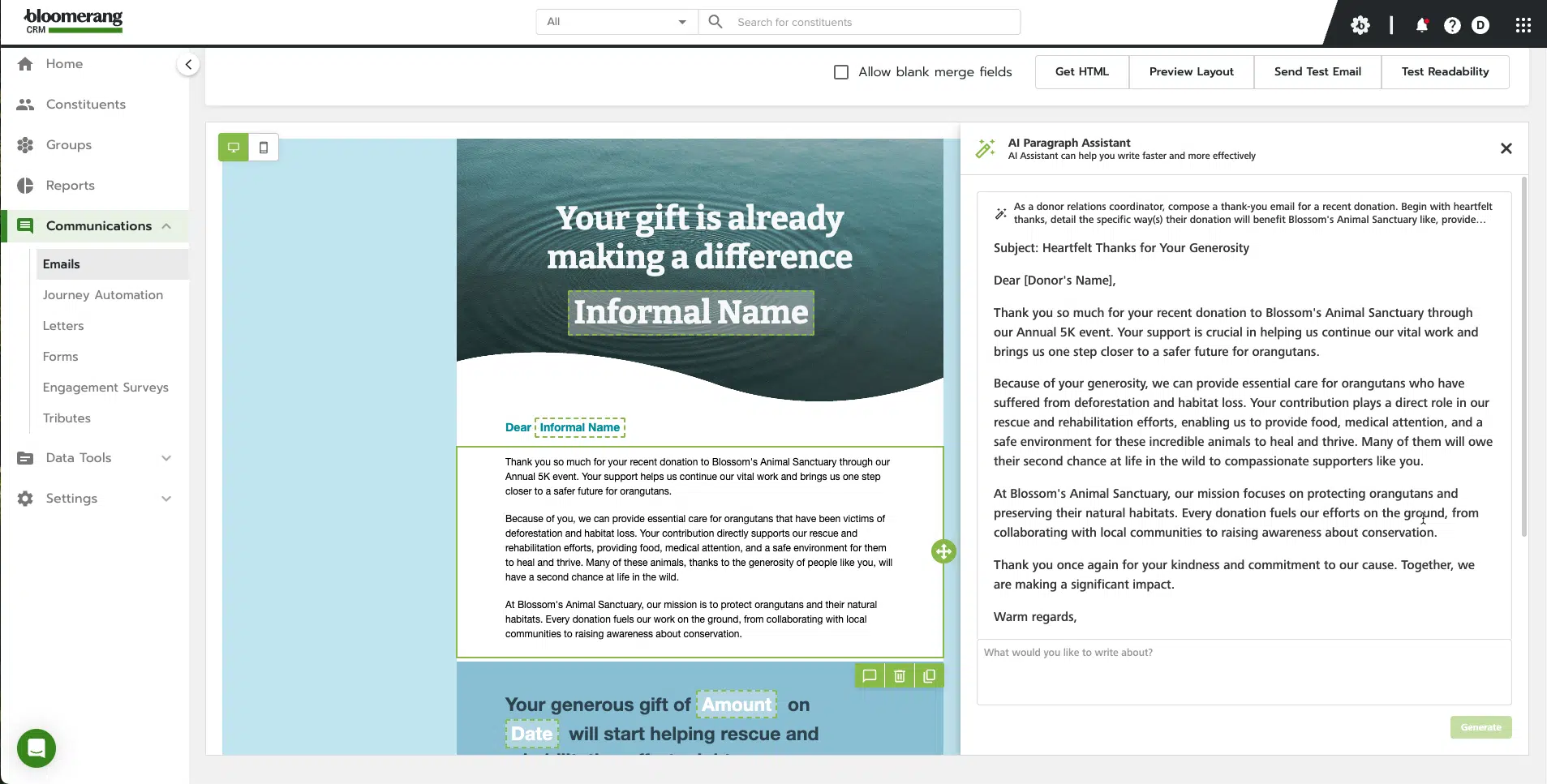
With Bloomerang’s AI-powered fundraising partner, Penny, you can instantly generate, refine, and personalize donor messages—helping you write faster while keeping your authentic voice.

Never miss an interaction
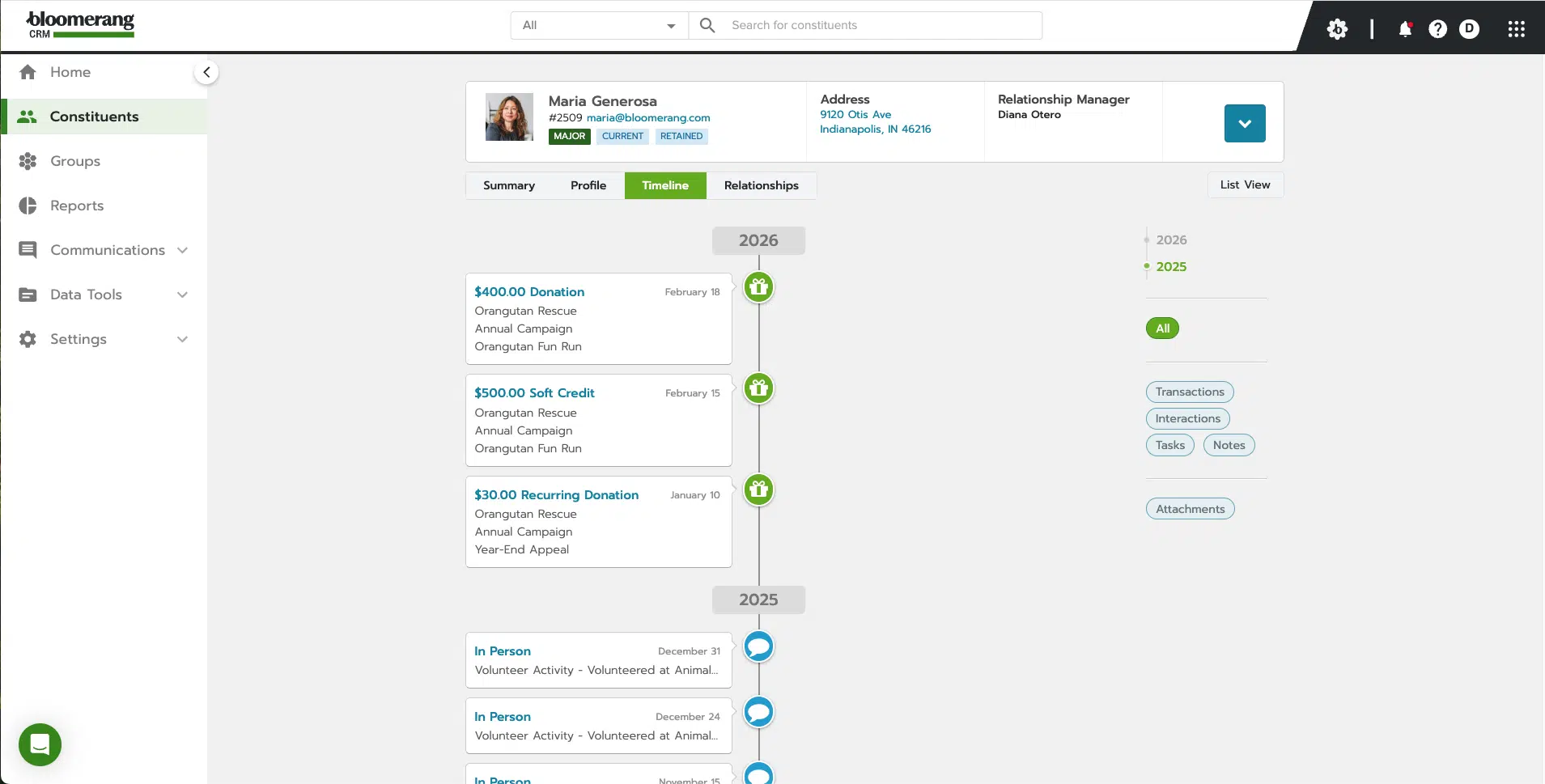
There’s no need to scour data file after data file or cluttered lists for a constituent’s history with your organization. Bloomerang’s timeline visually represents all interactions, including giving and volunteerism, while highlighting significant trends.
See how donors feel about you
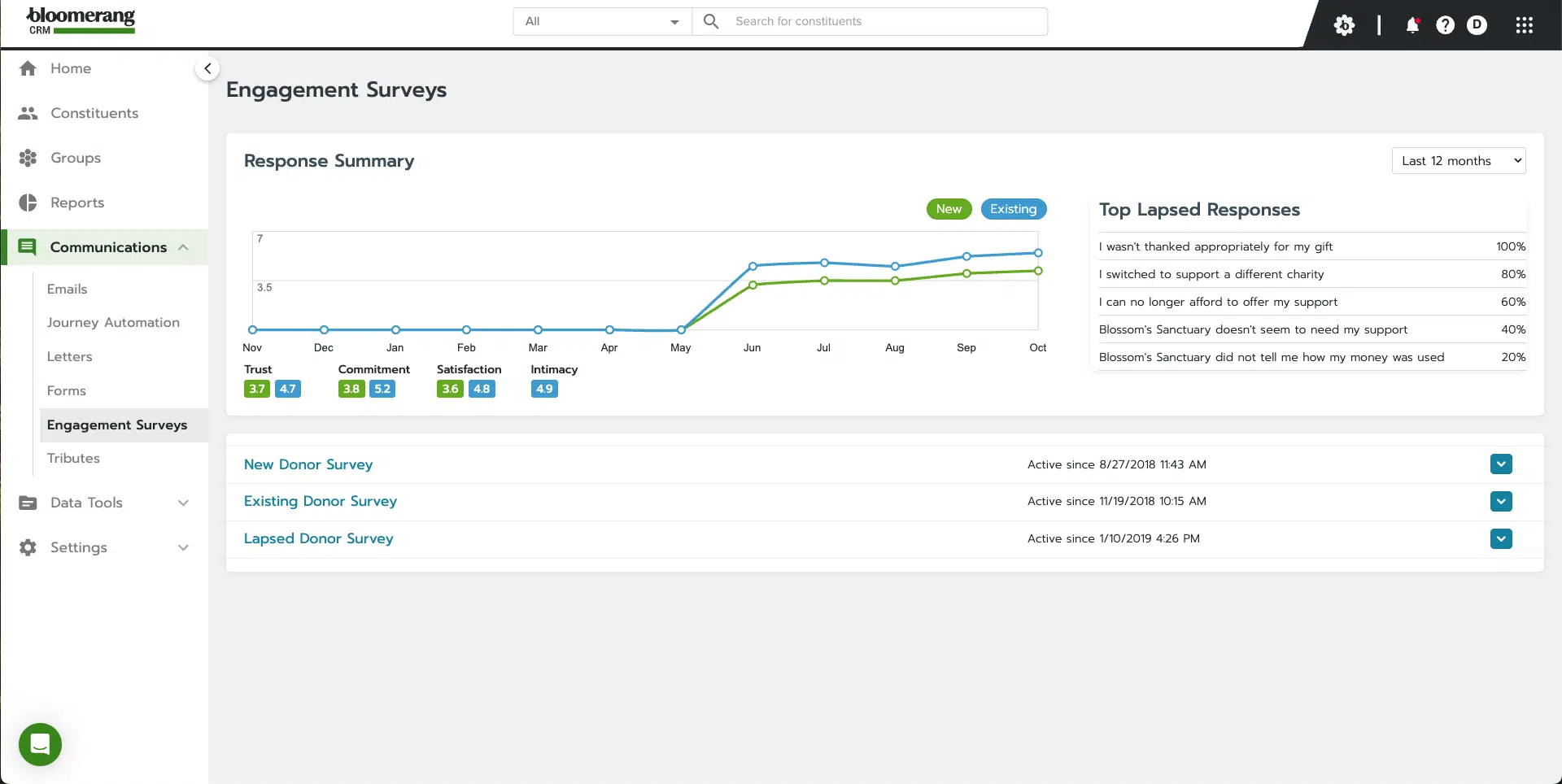
Bloomerang users can automatically send email surveys to donors that measure satisfaction, commitment, intimacy, and trust in your organization—all in one platform.
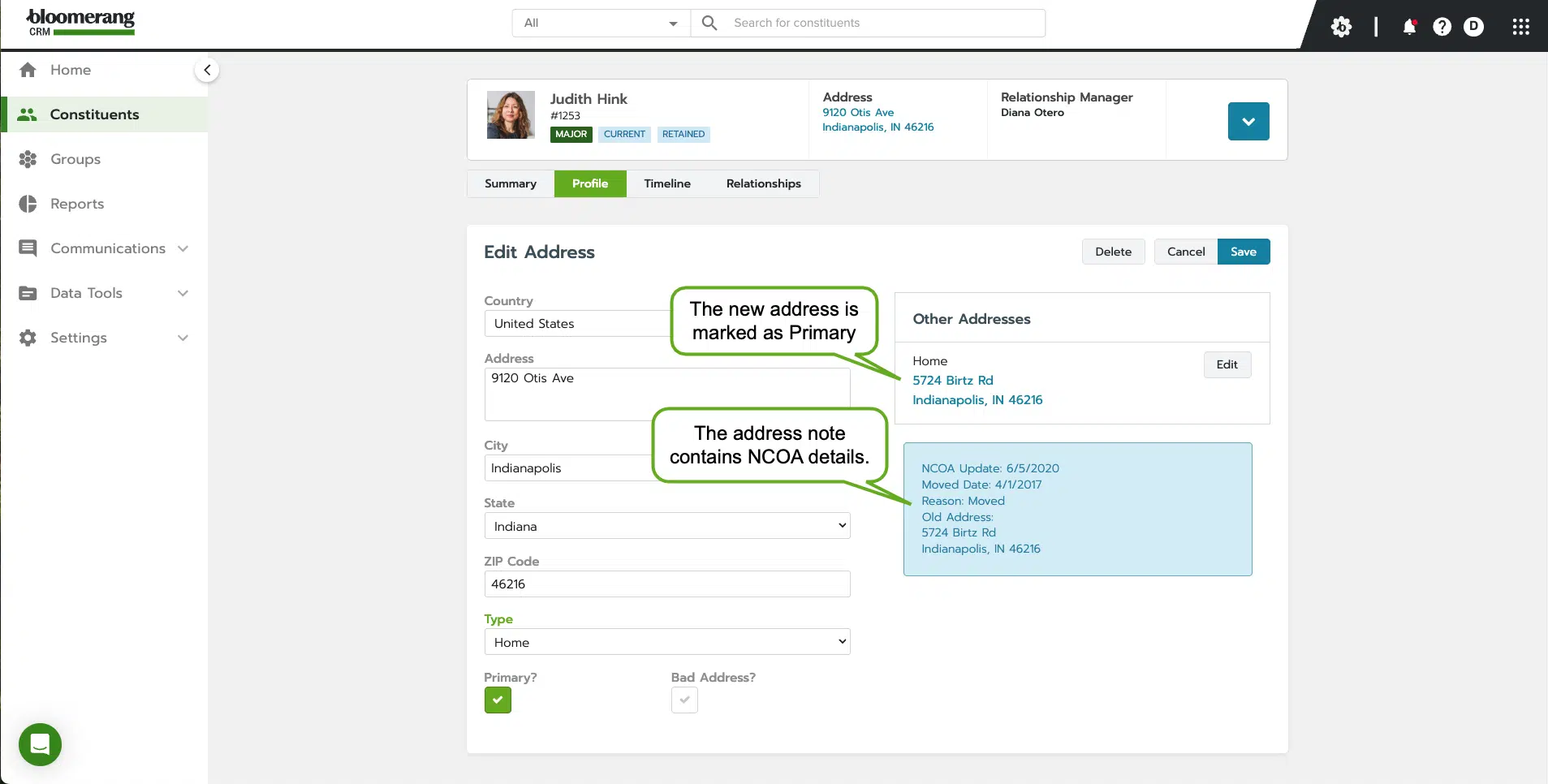
Nightly NCOA updates
No matter how much a donor loves your mission and impact, they may not proactively inform you that they have a new address. Addresses are automatically updated in the Bloomerang database, and changes are displayed in the address note.
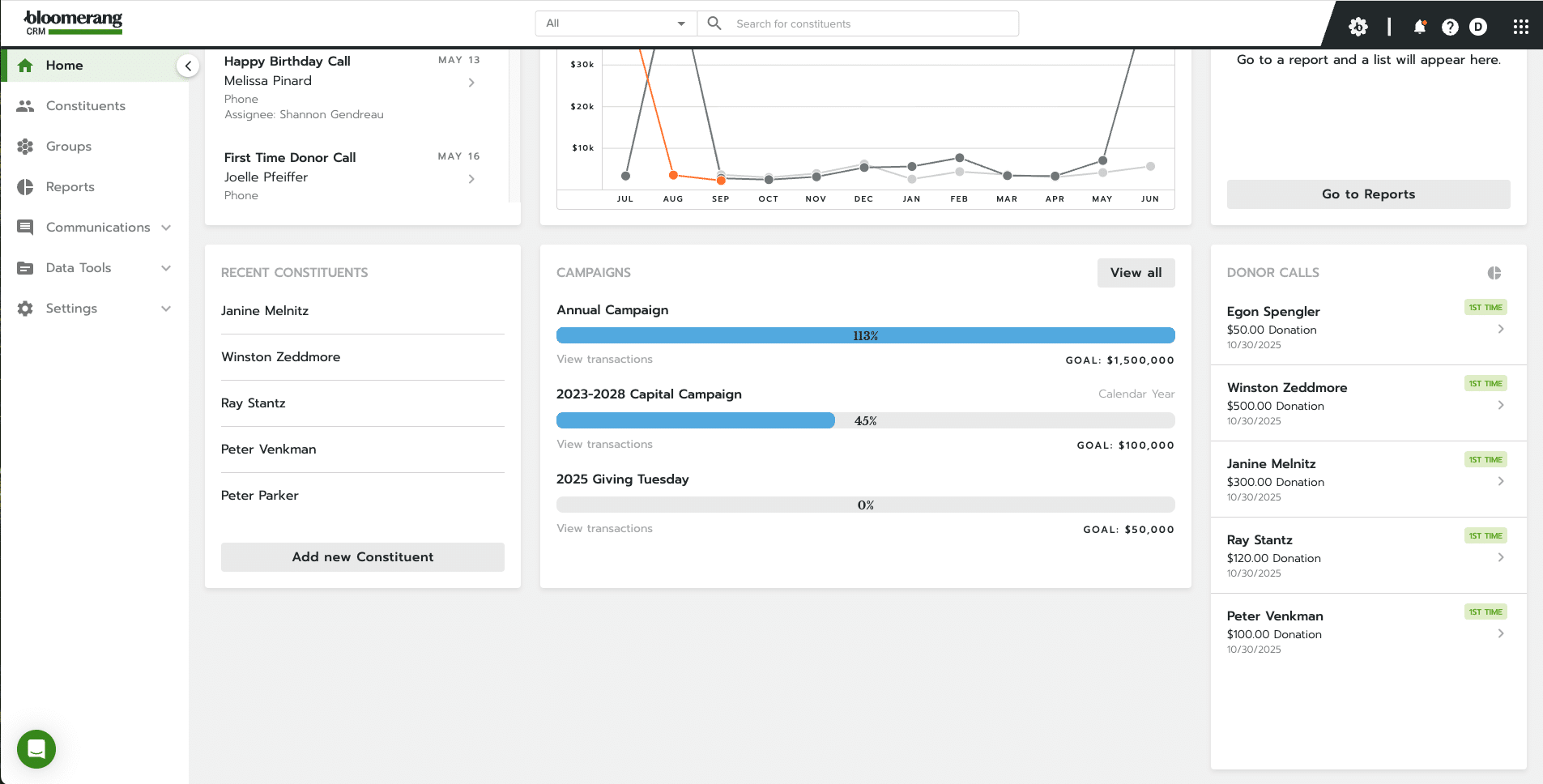
Steward first-time donors
When a constituent donates for the first time, Bloomerang considers several factors, automatically prioritizes the top five first-time donors you should call directly, and displays this information on the Bloomerang dashboard.
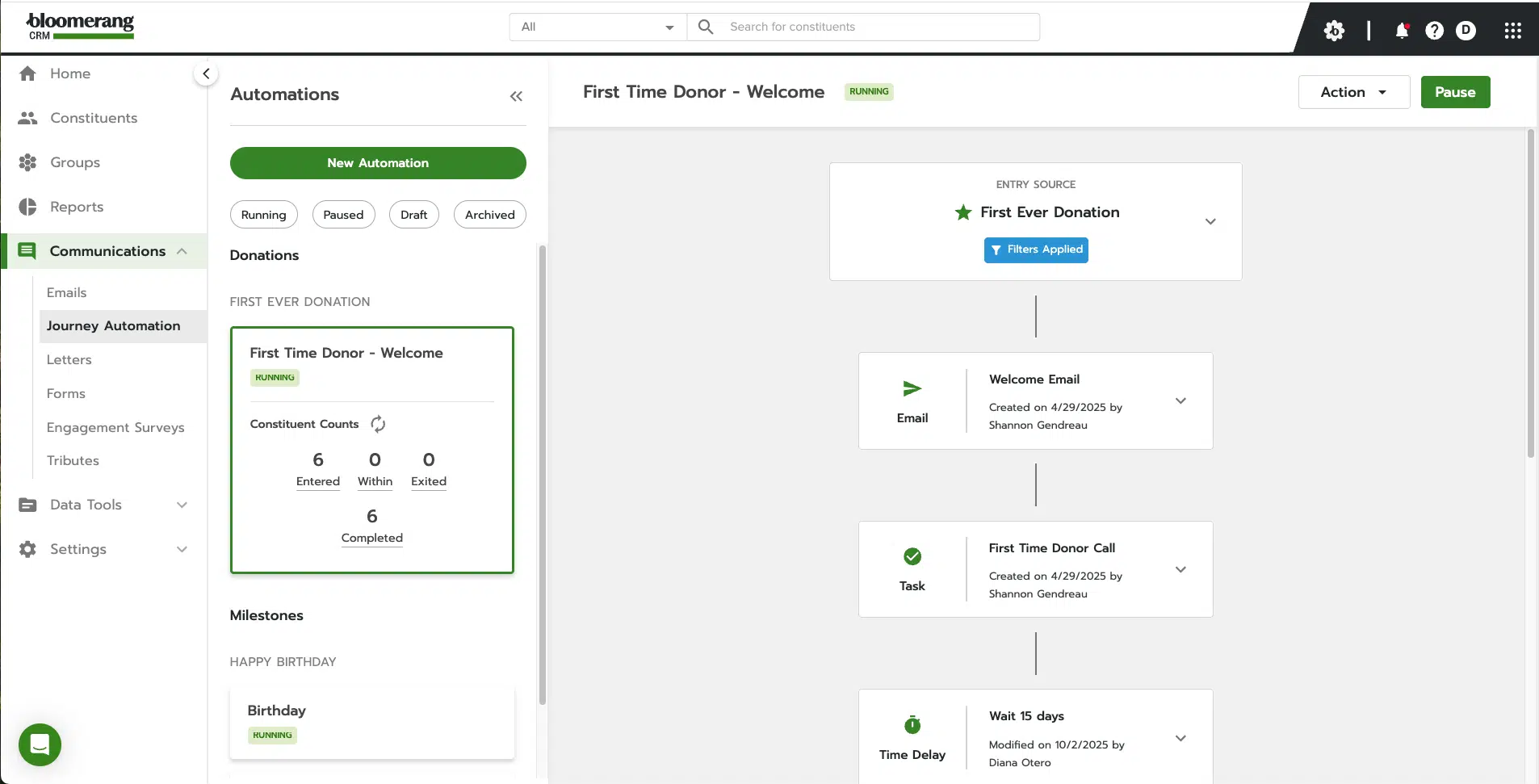
Journey Automation lets you automatically follow up with new donors through customized emails and tasks—ensuring every first-time donor feels appreciated from day one.
Donor retention: FAQs
What is the lifetime value of a donor?
Lifetime value (LTV) is simply a prediction or projection of the value of a donor before they lapse, and can help you make important decisions about your fundraising (such as how much you can afford on appeals, marketing, etc.). The higher the number, the higher the value. The more data you put into your equation, the more accurate your predictions will become.
To calculate your LTV, use the following formula:
LTV = Lifespan x Average Donation Amount x Frequency of Donation
What is donor attrition?
Donor attrition is the percentage of donors your organization loses between periods. It can negatively impact your growth strategy because acquiring new donors costs more than retaining your current ones (think of marketing outreach, direct mail, and staff spending much of their time performing prospect research).
What is the first-time donor retention rate?
The first-time donor retention rate, also known as the new donor retention rate, measures the percentage of first-time donors who give again. The average first-time donor retention rate is 23%.
How does donor retention impact long-term fundraising costs?
Acquiring a new donor typically costs 50% to 100% more than retaining an existing one. Higher retention rates lower overall donor acquisition costs, increase donor lifetime value, and stabilize cash flow, allowing your fundraising team to focus resources on stewardship rather than constantly replacing lapsed supporters.
What is the difference between a lapsed donor and a churned donor?
A lapsed donor has missed their expected giving cycle (typically 12 to 24 months without a gift) but remains in your database for re-engagement appeals. A churned donor has explicitly canceled a recurring gift, unsubscribed from communications, or remained inactive long enough to be deemed unrecoverable.
How should nonprofit organizations account for donor deaths or relocations in retention metrics?
Natural attrition, like donor death or relocation, is usually included in standard macro retention calculations for consistency. However, for internal stewardship reporting, organizations often filter out deceased or invalid contact records into a separate "unreachable" category to measure actionable retention performance more accurately.
Final thoughts
Without building up your donor retention rate, your nonprofit won’t be able to grow and develop as much as it needs to. Using nonprofit software, however, you can cultivate strong relationships with your donors and significantly boost your donor retention rate.
If you’re looking for more ways to interact with your donors and increase engagement, check out these additional resources below:
- Effective Donor Management: 7 Best Practices for Nonprofits. Donor management lays the foundation for improved donor retention. Use these seven strategies to expertly manage donor relationships.
- The Ultimate Donor Engagement Guide + Top Strategies. Engaging with donors regularly shows that you’re dedicated to building strong, genuine relationships. Bloomerang offers top strategies for staying engaged.
- The 14 Best Donor Management Software Options for 2026. Interested in purchasing new donor management software? Read this buyer’s guide first.