8 Tips for Managing Your Nonprofit's Memorial Donations



Contributing memorial donations is a meaningful way to honor someone’s life after they’ve passed away. Memorial contributions help foster positive change in the wake of loss.
Your nonprofit should have a clear strategy for managing memorial donations and building relationships with donors and the family of the deceased. When you can build relationships with families, friends, and donors, you can strengthen your nonprofit’s community and foster more legacy giving in the future.
Managing memorial donations requires sensitivity and thoughtfulness. Let’s start by taking a closer look at what memorial donations are and who they come from. We’ll cover:
- What are memorial donations?
- 8 tips for managing tribute and memorial donations
- How to recognize memorial gifts
- Memorial donation FAQs
What are memorial donations?
Memorial donations are gifts made in memory of someone who has passed away. Many family members request donations to be made to a certain charitable fund or nonprofit instead of flowers at their loved one’s funeral.
There are a few reasons why your nonprofit may receive memorial gifts:
- The person who died supported your organization during their life and had a meaningful personal connection to your cause.
- Your nonprofit’s mission is related to the reason the person passed away. For instance, family members of someone who died from lung cancer might donate to your nonprofit if your mission is to fund lung cancer research.
The person who passed away might have requested their family and friends to make memorial donations in their memory, or a family member or friend might have created a fund or fundraising initiative in their honor.
Memorial donation vs. tribute donation vs. tribute fund
While these terms are often used interchangeably, understanding the precise differences between memorial donations, tribute donations, and tribute funds is key to managing your data correctly and communicating thoughtfully with your supporters.
Memorial donation
A memorial donation is a one-time contribution made specifically to honor someone who has passed away. These are usually prompted by an obituary request (e.g., "In lieu of flowers, please send donations to...") and are tied to a family’s immediate grieving process.
Tribute donation
A tribute donation (sometimes called an honorary gift) is a one-time contribution made to celebrate a living person or a milestone. These are joyous in nature, often made in honor of a birthday, wedding, retirement, graduation, or a cancer survivor's milestone anniversary.
Tribute fund
A tribute fund (or memorial fund) is an ongoing, long-term fund established in honor of an individual (living or deceased). Instead of a single transaction, it serves as an umbrella pool that can accept multiple donations over time, often through an online, personalized landing page where family and friends can continue to contribute on birthdays, anniversaries, or annual events.
At-a-glance comparison
| Memorial donation | Tribute donation | Tribute fund | |
|---|---|---|---|
| Honoree status | Deceased | Typically living | Living or deceased |
| Occasion | Passing/funeral | Milestones, birthdays, weddings | Anniversaries, ongoing remembrance |
| Transaction type | One-time gift | One-time gift | Ongoing, multi-donor fund |
| Duration | Short-term (weeks following passing) | Short-term (tied to an event) | Long-term or permanent |
| Notification sent to | Next of kin / grieving family | The honoree themselves | Fund organizer and/or family |
Keeping these distinctions clear in your database and communications ensures you always honor every life milestone—whether in grief or celebration—with the precise level of personalized care and respect your supporters deserve.
8 tips for managing tribute and memorial donations
When your nonprofit receives memorial gifts, it’s important to respond thoughtfully and communicate openly with both the family of the deceased and donors. Follow these tips to better manage tribute and memorial contributions:
1. Involve the honoree’s family.
To begin the tribute-giving process, the family of the deceased may reach out to your nonprofit to let you know that you will be receiving gifts in honor of their loved one. If they don’t, use your donor management system to look up the name of the deceased and see if you have any contact information for a family member of theirs.
Once you’ve made contact with a family member or close friend, ask who the main point of contact or representative from the family will be. Also, determine what their preferred method of contact is, whether emails or phone calls.
You can also ask if the family would like to share information about their loved one via social media posts, emails, or blog post updates from your nonprofit. This can be a great way to show gratitude for the individual and the donors who are giving on their behalf.
Be sure to also send the family representative a memorial gift acknowledgment message to recap the donations that you’ve received in memory of their loved one. With Bloomerang CRM, you can easily automate tribute gift notifications by pulling data directly from your constituent records. This allows you to share your condolences, acknowledge gifts, and notify the family about who has donated in honor of their loved one. Bloomerang CRM lets your organization:

- Save time by automatically creating tribute notification letters using a template.
- Customize letters with a personal note.
- Track relationships between donors and the family representative.
Keeping loved ones involved through every step of the memorial donation process helps create a positive experience and strong, long-lasting bonds.
2. Allow donors to send a note to the honoree’s family.
Enable memorial donors to send a personal note to the family of the person who has passed. You can allow donors to choose from pre-made e-cards or give them the option to type a short, personalized message.
For example, the Michael J. Fox Foundation gives donors the option to notify the family after making a memorial donation.
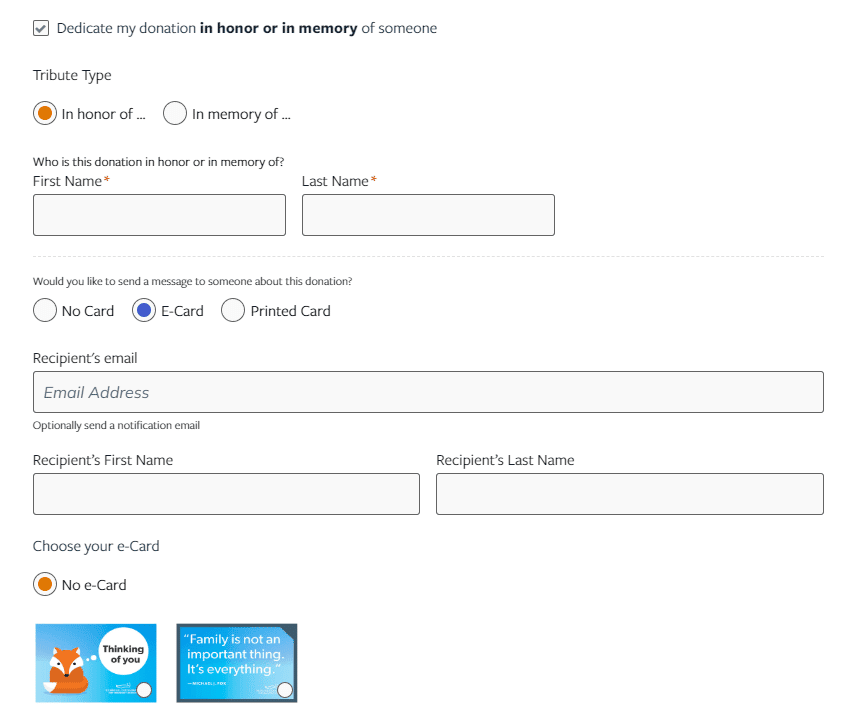
Its online donation form allows donors to choose from an e-card or a printed card that will be directly sent to the family. This provides an easy way for donors to share their condolences.
3. Send thoughtful donor thank-you notes.
Send heartfelt, personalized thank-you messages that recognize how meaningful memorial gifts are to your organization.
After someone submits a memorial donation using your online donation page, send an automated thank-you message and donation acknowledgment. This message should be personalized with:
- The donor’s name
- The gift amount and date
- The name of the person they were honoring with the donation
Make sure this thank-you note is different from your thank-you message for general online donations. The message should recognize that the donor is submitting a gift to honor someone’s life, not just to support your organization.
4. Communicate the impact of tribute donations.
Your donor thank-you notes and memorial donation page should clearly describe what your nonprofit plans to do with memorial donations you receive. Make it clear that the individual’s legacy and positive impact will carry on throughout your organization’s work.
Share the impact of donating at different levels on your donation page. For example, Ronald McDonald House Charities highlights the impact of different gift amounts on its donation page. The page highlights that a $2,500 donation sponsors a 10-day stay for a family at the Ronald McDonald House, a $1,000 donation helps stock a hospitality card, and other influential donation amounts.
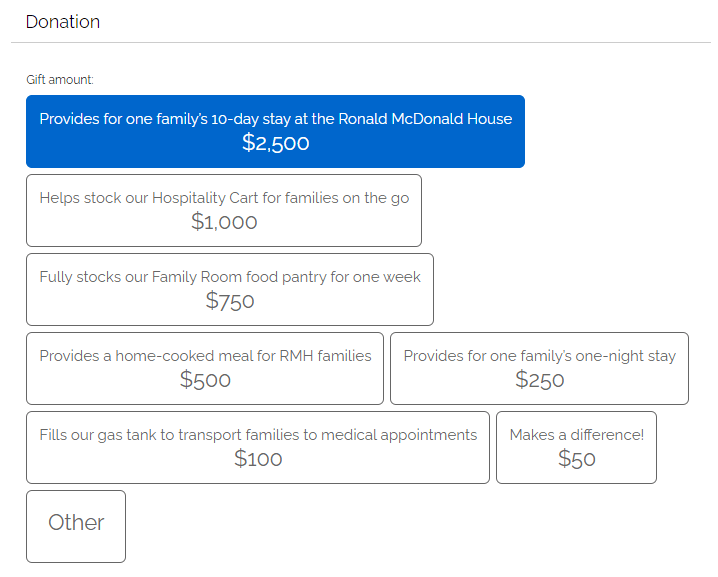
Showing donors that you plan to put memorial gifts to good use can help foster trust among these new audience members who may be less familiar with your organization. They’ll see your nonprofit as transparent and reliable, which may encourage them to donate again in the future.
5. Keep memorial donation data organized.
Create a segment in your donor management system specifically for those who have contributed memorial donations.
These donors may have just heard about your nonprofit for the first time and don’t have any other personal connection to your organization. Avoid overwhelming them with traditional fundraising appeals and other ongoing messages that your organization sends.
Instead, craft tailored outreach messages to thoughtfully and respectfully stay in touch with these individuals. For instance, you might reach out with information about how your organization used memorial donations. You can also reach out with a message of gratitude on the anniversary of the donor’s gift.
Stewarding memorial donors by communicating respectfully after they give can help your organization build long-lasting relationships.
6. Share information about your memorial donation program.
Your memorial giving options should be clearly highlighted on your nonprofit’s website and other online communication platforms. By increasing awareness of your memorial donation program, you can easily connect audience members with opportunities to give in honor of a loved one.
Promote your memorial giving options online using the following steps:
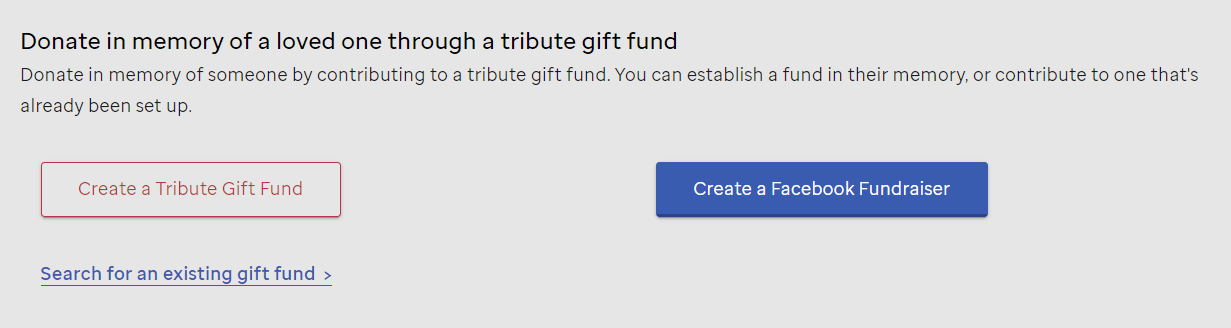
- Create a web page that explains how donors can make memorial contributions. Ensure the page offers comprehensive information about the impact of memorial donations and giving options. For example, the St. Jude Children’s Research Hospital memorial donations page offers options for making an online memorial donation, sending a mail-in donation, or setting up a tribute fund in memory of someone.
- Share information about memorial giving on your social media and within email newsletters. You can highlight testimonials from families who have had donations submitted to honor their loved ones. Share links to your memorial donation information page in your posts and email updates.
- Consider branding the program to foster awareness. You can give the program a unique name and tagline that’s different from your general fundraising campaigns. Make sure your program’s name is concise and hopeful, like “The Sunshine Fund” or “The Enduring Joy Fund.”
Your online audience members should be aware that memorial giving is one of many options they have to show their support for your cause.
7. Highlight other ways to give.
Donations aren’t the only way to honor someone after they’ve passed. Experiencing a loss can be a challenging time in life, emotionally and financially. Give audience members the option to show their support in other ways, such as:
- Volunteering. If the person who passed was a frequent volunteer, you can plan a special volunteer opportunity for their loved ones, or host a regular volunteer event in honor of the person.
- Advocacy. Provide information about your organization’s advocacy efforts that people can get involved with, such as signing or sharing petitions or sharing their stories with elected officials.
- Giving in-kind gifts. In-kind donations are another option to offer supporters that can be highly impactful for your cause. If your organization accepts in-kind donations of common supplies like toothbrushes, canned food, or cleaning supplies, people may be able to easily gather items they already have around their house.
Whether families submit a monetary donation or show their support in one of these other ways, let them know how much your organization appreciates their involvement.
8. Facilitate peer-to-peer fundraising.
Give family members and friends of the deceased the opportunity to set up peer-to-peer fundraising pages. Peer-to-peer fundraising campaigns allow audience members to create personalized donation pages and raise funds from family and friends.
Provide tips on setting up the page and sharing it on social media. For example, the American Heart Association offers audience members the opportunity to create a Heartfelt Tribute Fundraiser on behalf of their loved ones. People can set up their own free fundraising pages in three steps:
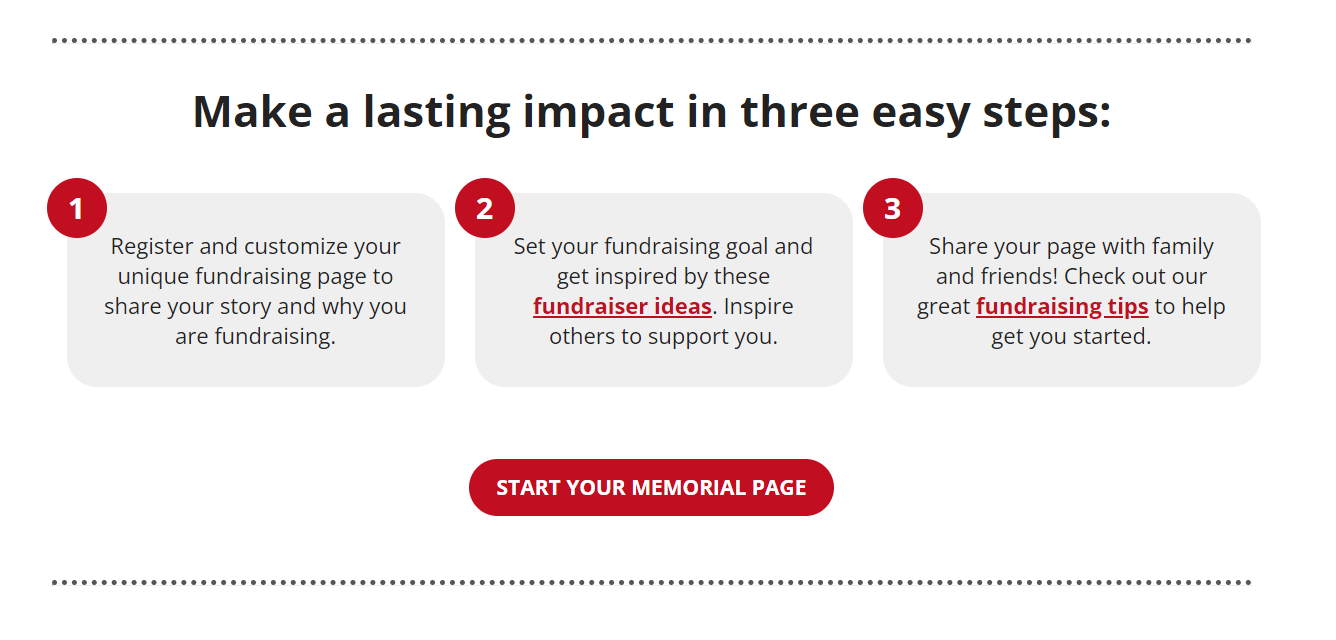
- Register and personalize their unique fundraising page with details about why they’re fundraising.
- Set a fundraising goal and develop fundraising ideas to help meet it.
- Share the page widely and ask family members and friends to donate.
Offer fundraising tips along the way, such as making the first donation themselves to jumpstart the campaign and sharing frequent progress updates.
When fundraisers reach their goal, celebrate their accomplishments by highlighting their campaign on your organization’s social media pages.
How to recognize memorial gifts
Our Ask An Expert series features real questions answered by Claire Axelrad, J.D., CFRE, our very own Fundraising Coach, also known as Charity Clairity.
We received a question from a fundraiser who wants advice on how to honor, credit, and recognize their memorial gifts.
“Dear Charity Clairity, many times when an alumni passes away, their family will choose to direct funds to our school. How should those donations be credited on our Honor Roll of Donors?
In the past, we’ve listed the “so and so memorial fund” for the total amount given in the appropriate category. Should the amount any particular donor has given to this memorial fund also be added to their cumulative giving? This would basically give credit to the same gift twice on the Honor Roll. Or should this amount not be counted toward their cumulative giving amount?”
— Don’t Want Double Trouble
Here is Claire’s response:
My first reaction to this question is “why not give double credit?”
I don’t see the “trouble” here. Your Honor Roll of Donors isn’t a legal contract. The only time I would worry about double crediting is when you’re sending letters to donors for tax purposes.
This isn’t one of those times.
Here’s where “double trouble” could legitimately come into play: A donor who gives to you through a donor-advised fund has already received an acknowledgment from the DAF and a tax deduction. You don’t want to send a second letter thanking them for their “tax deductible” donation. By the time you receive the recommended DAF distribution, there are no more tax consequences attached. You don’t want to imply to your donor they can double dip; this is just confusing to them and their tax preparer.
However, when it comes to acknowledging this donation in your Honor Roll, there’s no reason you can’t list it under the donor’s individual name (Jane and Joe Doe) and under the name of the Fund (Vanguard Charitable Fund). I would simply count up all gifts from the Vanguard Fund and list them under that category.
The same logic applies to memorial gifts IF your practice is to list memorial gifts separately from other gifts. I’m also going to recommend you count gifts by a donor within a fiscal or calendar year towards their total giving that year. Don’t, however, include payments that are not considered tax-deductible donations, such as raffle tickets, auction purchases, or the fair market value ascribed to an event.
Remember, from your donor’s perspective, all donations count. I’ve had donors routinely give $100 as tribute gifts every time a friend dies or when they celebrate a birthday or anniversary. This could easily add up to $1,000+ over the course of the year, in addition to the $1,000 they already donate. They certainly wouldn’t have been happy campers if I had only listed them as giving $1,000 donors when they knew full well they’d donated $2,000. You don’t want to inadvertently send the message that memorial gifts don’t “count.”
Claire suggests two options:
1. Memorial donations listed separately, alphabetically, but not by gift amount.
Under $1,500 individual giving level:
“Jane and Joe Doe”
Under “Memorial Gifts” alphabetically:
“Jane and Joe Doe” or “Jane and Joe Doe in memory of JJ Doe”
Personally, I’d stick with simply listing their name and not the particulars because it becomes too labor-intensive and takes up a lot of space (especially if it’s a hard copy listing). If they make multiple memorial and/or tribute gifts over the course of the year, just list them once under the “Memorials” gift category.
2. Memorial donations counted with other donations; donors listed alphabetically within the appropriate giving category.
Under $1,500 individual giving level:
“Jane and Joe Doe*”
If you wish, you can also include an asterisk after donors’ names who’ve made a memorial donation along with their regular donations. In this case you’d simply add a footnote at the bottom of your Honor Roll with language like: *includes a memorial or tribute donation.
Should you publish totals raised in someone’s memory?
The way you are listing gifts currently is a bit of apples and oranges. The “so and so memorial fund” is not a donor, yet you’re mixing it into donor listings. This also sets up a bit of an uncomfortable popularity contest if some memorial funds receive oodles of donations while others receive fairly few. How good will that make the family of the deceased feel when they see the listing? Chances are they won’t exactly feel honored—and that’s the purpose of a Donor Honor Roll, right? Just food for thought!
Memorial donation FAQs
Are memorial donations tax-deductible?
Yes, memorial donations are tax-deductible as long as they are made directly to a qualified 501(c)(3) nonprofit organization. To claim the deduction on your taxes, make sure you keep the official written acknowledgment or email receipt provided by the charity as your proof of the contribution.
Will the family of the deceased know how much I donated?
No, the charity will not share your specific donation amount with the family. They will receive a notification letter letting them know you made a tribute gift in their loved one's memory, along with your contact information so they can send a thank-you note. Your financial details remain completely private.
How long after a passing should I make a memorial donation?
It is best to make your donation within 10 to 14 days of the funeral or memorial service. This timeframe ensures the charity can notify the grieving family of your tribute in a timely manner while they are collecting condolences. However, charities will gratefully accept and process memorial gifts at any time.
Wrapping up
Managing tribute and memorial donations strategically allows your organization to receive a revenue boost while forming stronger bonds with supporters. When you have clear processes for engaging with families and accepting memorial donations, audience members will feel more comfortable engaging in this giving method to honor their loved ones.
For more information about how to improve the memorial-giving process, explore these additional resources:
- Bloomerang Launches Tribute Notifications. Engaging with families is an essential step in the memorial donation process. Learn more about Bloomerang’s tribute notification functionality in this overview.
- Peer-to-Peer Fundraising: The Ultimate Guide for Success. Peer-to-peer fundraising can be an effective way to honor someone’s life. Learn about the best practices for facilitating peer-to-peer fundraising.
- The 14 Best Donor Management Software Options for 2026. Keeping track of donor information ensures that you can properly communicate with families and memorial donors. Find out more about top donor management solutions with this guide.


![[ASK AN EXPERT] What to do when you’re notified your organization is in someone’s will](https://cdn.prod.website-files.com/6996de43eb5bbc35466bf590/69e7b7559298991c8e7136cd_Ask_an_expert_blog.webp)