
Memorial Donation Notification Letters: Guide + Templates for Nonprofits



A memorial donation notification letter is a message your nonprofit sends to the family of a deceased individual to inform them that donations have been made in their loved one's memory. Sending these letters promptly and thoughtfully is one of the most meaningful ways a nonprofit can support grieving families while strengthening its memorial giving program.
In-memory fundraisers are growing faster than any other type of peer-to-peer fundraising, which means nonprofits need a clear, dedicated strategy for acknowledging tribute gifts. This guide covers everything you need to know: what these letters are, why they matter, what to include, when to send them, and free templates you can customize right now.
What you'll find in this guide:
- What is an acknowledgement letter for donations made in memory of someone?
- Why should you send sympathy donation messages?
- What should you say in memorial donation letter?
- Memorial donation notification letter templates
Keeping families in the loop is essential to respectful memorial donation management. Let's start by taking a closer look at what a memorial donation acknowledgement letter is.

What is a notification letter for memorial donations?
A memorial donation acknowledgement letter—also called a tribute gift notification—is a message that your nonprofit sends to the family of someone who has passed away to acknowledge that your organization has received donations in memory of the individual.
Your organization might receive these gifts when the deceased had a personal connection to the nonprofit's cause, or when their cause of death is related to the organization's mission. For example, if your nonprofit funds Alzheimer's research, donors may contribute in memory of a loved one who passed from Alzheimer's disease. The letter lets the family know their loved one's memory is being honored — and that their community rallied around that legacy.
Why sending sympathy donation messages matters
Memorial donation notification letters improve your supporter stewardship efforts by informing families about the impact of tribute gifts. Here are a few reasons why your nonprofit should send memorial donation notifications:
- You can let families know who is giving on behalf of their loved one. Families may wish to know who is giving in memory of their loved one if they want to send their own thank-you messages to these individuals.
- You can show the impact of memorial gifts. Summarizing the number of gifts your organization has received in honor of someone can be very powerful for family members. When you describe the positive change resulting from these donations, families can see the positive legacy their loved ones have inspired.
- You can build relationships with families. Keeping families in the loop shows them you're dedicated to building relationships with them. These efforts can encourage them to stay involved with your organization and maybe even become dedicated supporters themselves.
Memorial donation letters differ slightly from other donation acknowledgements, so let's explore a few best practices for writing them.

How to write a memorial donation notification letter: guide for nonprofits
Keep these tips in mind when drafting your memorial gift notification messages to families:

- Track family and donor relationships in your donor management system. Using robust donor management software, you can track relationships between donors and families to ensure you're notifying the right people. For example, Bloomerang's Giving Platform automatically syncs these relationships, helping you save time when you start drafting your notification messages:

- Offer your condolences. Your memorial donation letters should lead with sympathy. Offer sincere condolences for the family's loss and acknowledge the individual's relationship to your nonprofit. For example, highlight your gratitude for the person's tireless volunteer efforts over the years.
- Highlight impact. Describe how the donations received in memory of the individual will have a lasting positive impact on your mission. For instance, explain how the donations will help purchase much-needed supplies for your volunteer program, allowing the program to expand and help more community members.
- Make it easy for the family to thank donors. Import donors' names and contact information into your memorial donation notifications to give families an easy way to contact and thank donors. Bloomerang's tribute notifications feature makes it easy to generate this list using information from your donor management system and online donation form.
- Keep it simple. Ensure your memorial donation notifications are focused and concise. The time after someone passes away can be challenging and busy for families, so your letter should be straightforward and quick to read. Avoid highlighting multiple aspects of your nonprofit's mission—keep the information limited to the impact of donations and your list of donations received in honor of the person.
In your letters, inform families you'll send occasional updates if your organization continues receiving in-memory gifts. Lastly, include the contact information for a representative from your nonprofit who can answer any questions families may have. This provides an easy way for families to stay in touch with your organization.
What should donors write when notifying families themselves?
While your nonprofit should send letters notifying families about donations made in memory of their loved ones, donors themselves may also want to reach out. Donors writing a letter to the family can include a few thoughtful elements:
- Address the family with care. Memorial notification letters are typically written to the loved one's family and include the full name of the person being honored. They may also list the names of donors and, when appropriate, donor contact information so the family can send personal thank-you notes if they wish.
- Make it personal. Donors should share a happy memory with the person they donated on behalf of or explain their connection to that person. It will bring comfort to the family to hear how much their departed loved one means to others.
- Mention your nonprofit and its mission. Tell donors how they should portray your cause. Instead of promoting your organization, donors should simply explain what your nonprofit does and how your work connects to their loved one's memory.
- Use an uplifting tone. While there is underlying grief surrounding this process, instruct donors to keep their messages as positive as possible. The goal is to provide a heartwarming message to the family about how the donor is keeping their loved one's memory alive
- Do not include donation amount. When donors write to a family about a gift made in their loved one's memory, it's standard not to include the dollar amount of individual donations in the letter to the family. A memorial message is about honoring their loved one's memory and sharing support, not focusing on the size of the gift. Instead, donors can simply let the family know a contribution was made and reflect on the impact their loved one had.
- Proofread their messages. A special message such as this one requires special attention. Have donors double-check that they've spelled all names correctly and included any personal information about the loved one and their family accurately.
By providing donors with tips to write their own memorial donation family notification letters, you empower them to share their contributions with the people closest to the deceased and make the outreach process more personal.
When is the best time to send memorial notification letters?
When someone gives in memory of a loved one, timely communication matters. Aim to send memorial notification letters within a few weeks of receiving the donation. A prompt message lets the family know their loved one is being honored and reminds them that their community continued to support them during a meaningful time.
Sharing this update quickly keeps the focus where it belongs: celebrating a life and the generosity it inspired.
Memorial donation notification letter templates for nonprofits
While you should personalize memorial donation notifications using donor management software, you can still use a template to simplify the letter-writing process.
The following templates are effective for a few reasons:
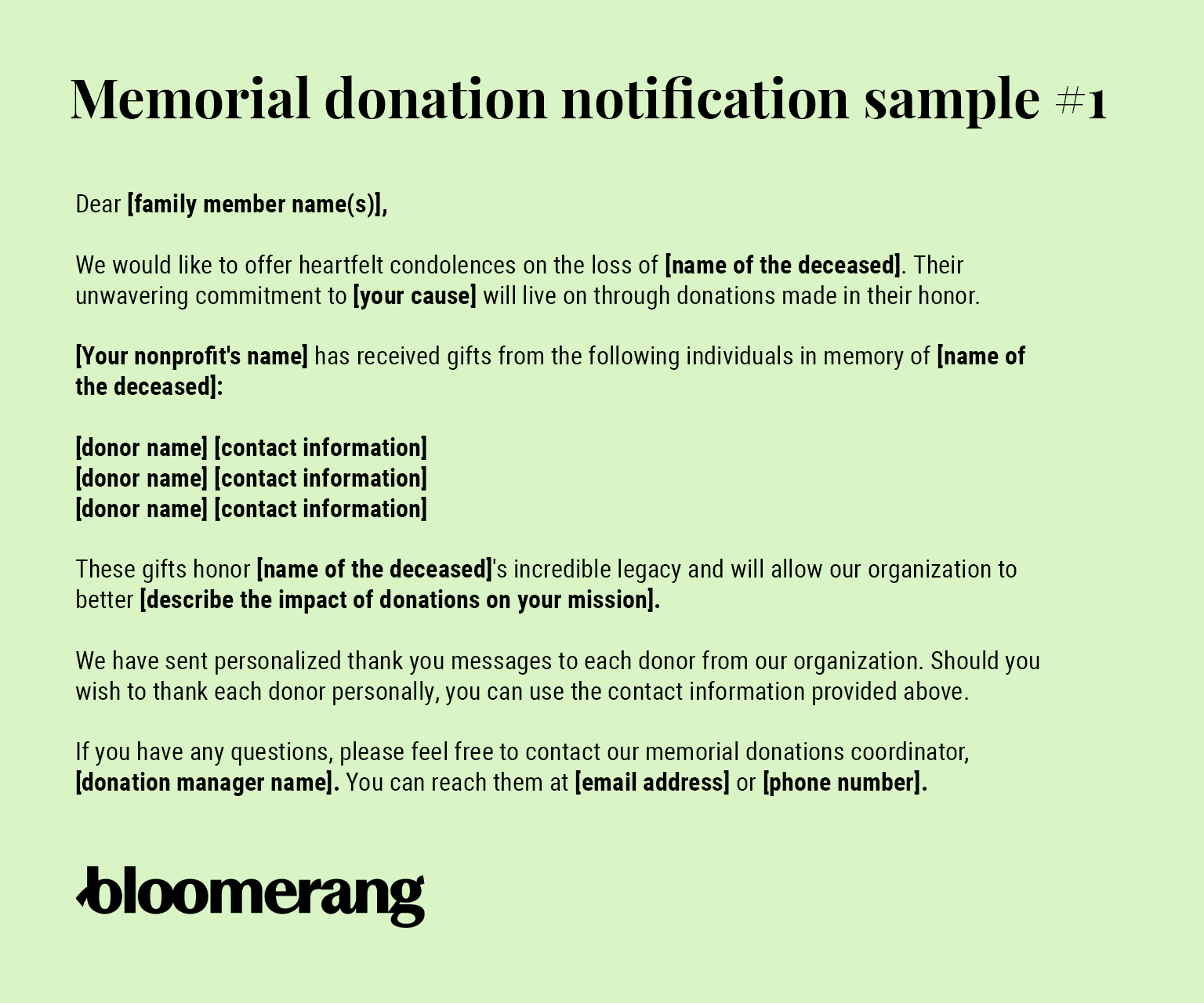
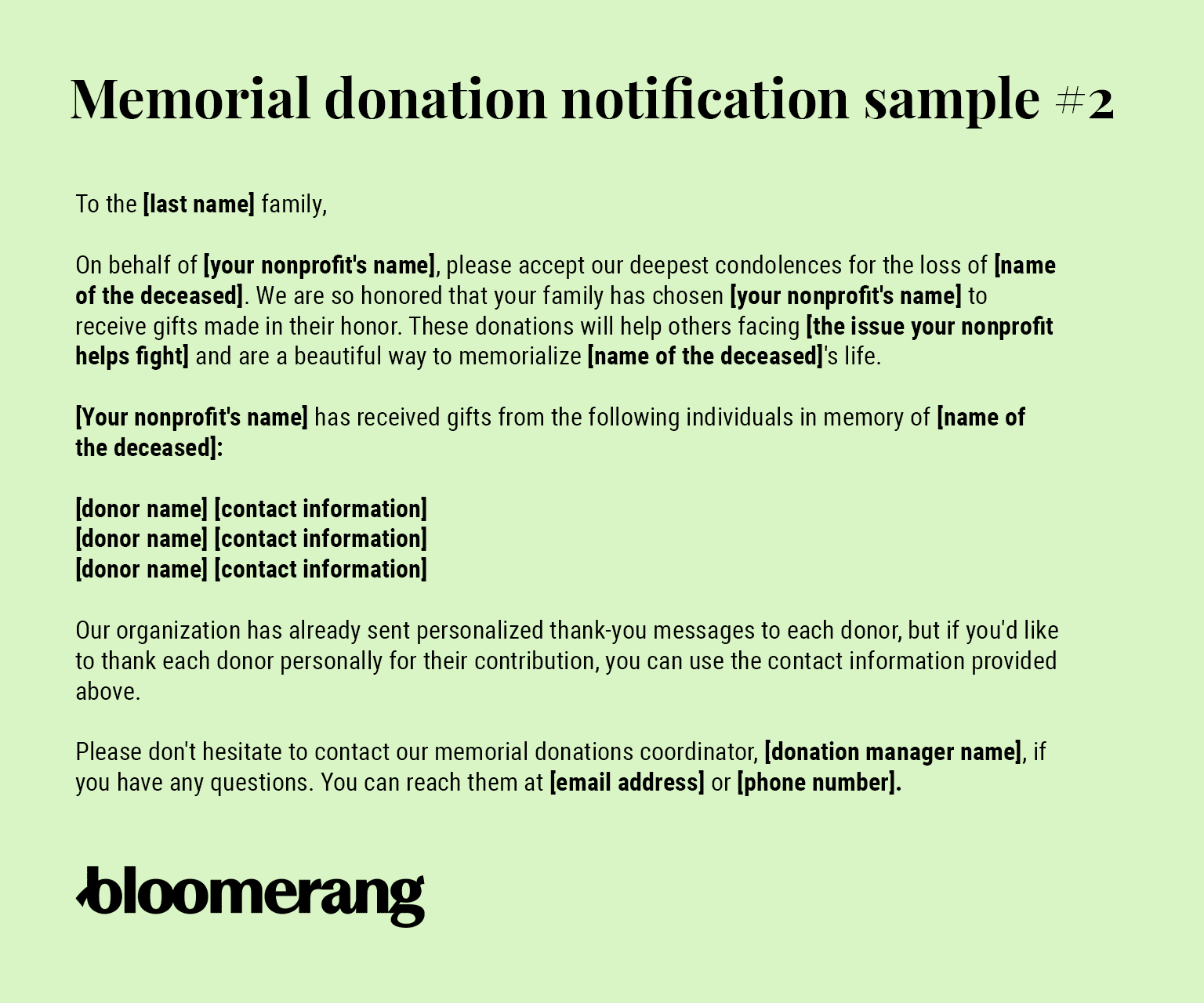
- They clearly display donors' names and contact information so families can easily follow up with them.
- They acknowledge that your nonprofit has already thanked each donor.
- They connect families with an individual at your organization they can reach out to with any questions.
- They're simple and straightforward, leaving out any unnecessary information.
Customize these templates to your nonprofit's needs, adding information about your mission and brand elements, such as your logo, fonts, and colors.
Memorial donation notification letter template #1
Memorial donation notification letter template #2
How Bloomerang simplified memorial donation notifications
Bloomerang's donor management software is built to support the entire tribute gift lifecycle — from tracking memorial donations to generating family notification letters to stewarding long-term relationships with both families and donors.
Bloomerang's tribute notifications feature automatically syncs donor and family relationships in your CRM, generates ready-to-send notification letters, and helps your team maintain personalized, ongoing communication with everyone connected to a memorial gift. The result: less administrative work, fewer errors, and more meaningful outreach for grieving families.
Learn more about Bloomerang's tools for memorial giving:
- Bloomerang Tribute Notifications — How to send memorial donation letters to families using Bloomerang's built-in feature
- How to Choose Donor Management Software + 9 Top Options — A buyer's guide to software that automates the family notification process
- Donor Appreciation: Creating a Strategy (And 22+ Ideas) — Ideas for thanking memorial donors and building lasting relationships
FAQ: Memorial donation notification letters
What is a memorial donation notification letter?
A memorial donation notification letter is a message sent by a nonprofit to the family of a deceased individual. It informs the family that the organization has received donations made in the person's memory and typically includes donor names, the impact of the gifts, and a nonprofit contact for follow-up questions.
Why is it important to send memorial donation notification letters?
Memorial donation notification letters serve three purposes: they inform families about who donated in their loved one's honor, they demonstrate the positive impact of those gifts, and they build long-term relationships between nonprofits and grieving families. Timely, thoughtful notification is a key element of respectful memorial giving management.
What should be included in a memorial donation notification letter?
Every memorial donation letter should include: sincere condolences, the name of the deceased, a list of donors (and their contact information where appropriate), a description of how the gifts will be used, confirmation that each donor has been separately acknowledged, and the name and contact information of a staff member the family can reach.
How soon should memorial donation notification letters be sent?
Best practice is to send memorial donation notification letters within a few weeks of receiving the first tribute gift. Prompt communication shows families that their loved one is being honored quickly and respectfully, while their community's generosity is still fresh.
Should the donation amount be included in the letter to the family?
No. Standard practice in memorial giving is to omit individual donation amounts from letters sent to the family. The focus of the letter should be on honoring the deceased person's memory and acknowledging community support — not on the size of individual gifts.
Can donor management software help automate memorial donation notifications?
Yes. Donor management platforms like Bloomerang can track relationships between tribute donors and honoree families, auto-populate donor lists for notification letters, and help nonprofits maintain personalized communication at scale. Automation reduces administrative burden and minimizes the risk of errors in sensitive correspondence.
What is the difference between a memorial donation notification letter and a donor acknowledgement letter?
A donor acknowledgement letter goes to the person who made the donation and thanks them for their gift. A memorial donation notification letter goes to the family of the deceased and informs them that gifts were made in their loved one's honor. Both letters are necessary components of a complete memorial giving program.




![[ASK AN EXPERT] How to Publicly Recognize Memorial Gifts](https://cdn.prod.website-files.com/6996de43eb5bbc35466bf590/69e7b7559298991c8e7136cd_Ask_an_expert_blog.webp)