Meet Penny: Bloomerang's AI Fundraising Strategist Built on Proven Nonprofit Growth Playbooks

Updated:
July 27, 2026
No items found.
SHARE:



```markdown
# Meet Penny: Bloomerang's AI Fundraising Strategist Built on Proven Nonprofit Growth Playbooks
Your development team is staring at a spreadsheet full of donor data, a calendar packed with deadlines, and a board meeting next week. You know somewhere in that data there's a lapsed major donor ready to give again, a segment ripe for a recurring gift upgrade, and a matching gift opportunity about to expire. But you don't have hours to find them.
That gap—between data overload and confident action—is exactly what Bloomerang built Penny to close.
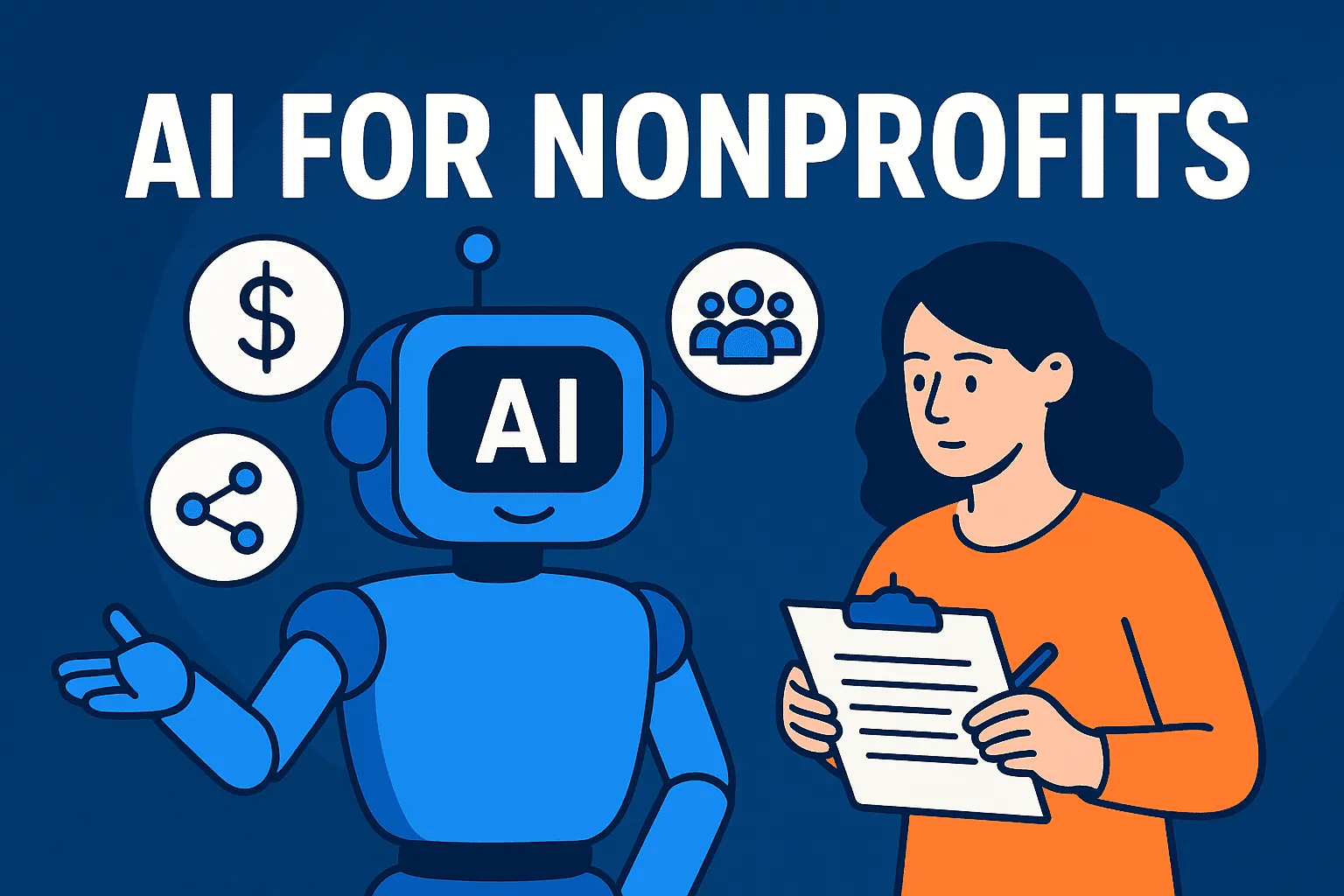
**Penny is an AI fundraising strategist embedded in the Bloomerang Giving Platform that translates an organization's donor history, engagement patterns, and campaign performance into prioritized, actionable next steps.** Now available in beta to all Bloomerang customers, Penny isn't another generic chatbot. It's a purpose-built strategist grounded in thousands of real nonprofit consulting engagements, designed to help every organization raise more by focusing on what matters most.
In this post, we'll show you exactly how Penny works across four critical fundraising scenarios: identifying and prioritizing lapsed donors, segmenting for recurring gifts and retention, acting fast on time-sensitive matching gift opportunities, and drafting personalized re-engagement outreach. Along the way, you'll see why the playbooks that shaped Penny have helped teams achieve up to 47% cumulative revenue growth and donor retention rates 2.5 times the industry average.
---
## Why Nonprofits Need a Smarter Approach to Fundraising Right Now
The numbers paint a sobering picture. According to Q4 2024 data from the Fundraising Effectiveness Project, the average donor retention rate in the nonprofit sector dropped to 42.9%—a 2.6% year-over-year decline. Even more concerning, only 19.4% of new donors gave again the following year. That means 4 out of 5 first-time donors never come back.
Meanwhile, the pressure to do more with less has never been greater. 70% of nonprofits believe AI can help reduce workload and improve communications, but 60% say they lack the in-house expertise to assess tools. Most teams are turning to generic AI—tools trained on broad internet data that have no idea what a lapsed donor stewardship sequence looks like or how to prioritize a prospect list for a 72-hour matching gift window.
AI is top of mind for nonprofits in 2025. According to Raisely's 2025 Fundraising Benchmarks study, 47% of fundraisers see AI as their biggest opportunity for digital fundraising. The opportunity is real. But the tools have to be built for the work.
That's the gap Penny fills.
---
## What Is Penny? Bloomerang's AI Fundraising Strategist, Explained
Penny is the first AI fundraising strategist built on thousands of real nonprofit consulting engagements—and it lives directly inside the [Bloomerang Giving Platform](https://bloomerang.com/product/donor-database/). Unlike generic AI tools trained on broad, mixed-quality data, Penny is grounded in proven fundraising strategies that have delivered measurable results, translating what actually works into clear, actionable guidance.
Developed through deep collaboration between Bloomerang's nonprofit experts and engineering team, Penny combines expert strategy, real-time donor data, and built-in guardrails to ensure recommendations are accurate, transparent, and designed to drive results. By operating directly within the platform, Penny analyzes each organization's full donor history—giving, engagement, and campaign performance—to deliver strategies that are specific, relevant, and immediately actionable.
The result? Organizations that follow the playbooks informing Penny have achieved up to **47% cumulative revenue growth** and donor retention rates **2.5 times the industry average**—a striking contrast to the sector's persistent retention challenges.
---
## How Can Penny Identify Which Donors Gave Last Year but Not This Year—and Who to Prioritize?
**A lapsed donor is a supporter who made a gift during a prior period—typically the previous fiscal year—but has not given during the current period, signaling a potential loss of engagement that requires targeted outreach.**
The downward trend in donor retention means nonprofits continue to face the daunting challenge of replacing approximately half of their donor base yearly. Retention rates for first-time donors have been on a steady decline—in 2023, only 28% of new donors gave a second gift. For most teams, identifying who lapsed and who is worth reaching out to is a slow, manual process. Penny changes that.
Fundraisers can simply ask: *"Who gave last year but not this year?"* and receive an immediate, prioritized answer drawn from the organization's full donor history. Penny analyzes giving frequency, engagement signals, and recent activity to score each lapsed donor by re-engagement potential—so your team knows exactly where to invest its limited time.
Here's how Penny might categorize a lapsed donor list:
| Priority Tier | Donor Characteristics | Suggested Action |
|---|---|---|
| **High Priority** | Multi-year giver, attended recent event, opened last 3 emails | Personal phone call or handwritten note |
| **Medium Priority** | Gave 1–2 times, moderate engagement signals | Personalized email with impact update |
| **Lower Priority** | Single gift, minimal engagement history | Re-engagement email series |
The biggest drop-off in donor engagement happens after the first gift. While only 19.4% of first-time donors gave again in 2024, the retention rate for returning donors was 69.2%—which is why securing a second gift is the best way to set a first-time donor on the path to becoming a long-term supporter. Penny makes it possible for even the smallest team to act on that insight at scale.
Explore Bloomerang's [lapsed donor re-engagement strategies](https://bloomerang.com/blog/strategies-to-re-engage-your-lapsed-donors) for more guidance on what to do once Penny surfaces your priority list.
---
## What Donor Segments Should We Target to Increase Recurring Gifts and Improve Retention?
**Donor segmentation is the practice of dividing a nonprofit's supporter base into distinct groups based on shared characteristics—such as giving frequency, gift size, recency, engagement level, or communication preferences—to deliver more relevant, personalized outreach that improves retention and lifetime value.**
Most donor databases support basic filtering. Penny goes further. It identifies not just *who* is in a segment but *why it matters* and *what to do next*—drawing on Bloomerang's proven fundraising playbooks to match each segment with a strategy that's worked for organizations like yours.
Specific segments Penny might surface include:
- **Upgrade-ready donors:** Supporters whose giving has increased year-over-year and who show high engagement—prime candidates for a meaningful ask increase
- **Recurring gift candidates:** One-time or occasional donors who gave multiple times within a 12-month window—one step away from a monthly commitment
- **At-risk segments:** Previously consistent donors whose engagement metrics (email opens, event attendance) have declined—requiring proactive outreach before they lapse
Recurring monthly givers have yearly retention rates up to 90%. Monthly giving programs are where your donor acquisition efforts yield the greatest return. Creating a monthly giving program, nurturing repeat donors, upgrading their giving over time, and keeping them deeply connected should be a top priority.
Here's how a fundraiser would use Penny for a segment-based recurring gift strategy:
1. Ask Penny to identify donors who gave more than once in the past year but are not yet on a recurring plan
2. Review Penny's prioritized list with engagement context for each donor
3. Use Penny's recommended talking points to craft a recurring gift ask tailored to each segment
4. Execute outreach directly within the Bloomerang Giving Platform
5. Monitor results and ask Penny for follow-up recommendations
According to Neon One's 2025 Generosity Report, donors who give over multiple years are dramatically more valuable: those who gave consistently for five years contributed 1,519% more than one-time donors. These five-year repeat donors made up nearly half of total revenue—proof that long-term supporters are the foundation of nonprofit sustainability. Penny's segmentation capabilities are built to accelerate exactly this kind of long-term value creation.
Deepen your approach with Bloomerang's resources on [donor engagement strategy](https://bloomerang.com/blog/creating-a-strategic-engagement-plan-for-your-donors).
---
## How Can We Quickly Identify and Prioritize Prospects to Unlock a Time-Sensitive Matching Gift Opportunity?
**A matching gift opportunity occurs when a corporation, foundation, or major donor agrees to match contributions made during a defined period—effectively doubling (or multiplying) the impact of each gift and creating urgency that can motivate donor action.**
When a matching deadline is 72 hours away, there's no time to pull reports manually, cross-reference spreadsheets, and rank prospects by hand. Penny was built for exactly this moment.
The Joe Nuxhall Miracle League Fields proved it. With limited staff and a tight deadline, the organization needed to unlock a $1 million matching gift. Using Penny, the team identified high-potential donors and guided outreach with precision—ultimately raising **$2.25 million** and exceeding its goal.
As their Executive Director Tyler Bradshaw described it: *"Penny helped us focus on what actually mattered—who we should be talking to, why, and how to approach them. Instead of guessing, we were able to be precise."*
Here's the step-by-step matching gift workflow Penny enables:
1. **Ask Penny:** *"Which donors are most likely to give in the next 72 hours based on past giving patterns and engagement?"*
2. Penny surfaces a prioritized prospect list drawn from the organization's full donor history—in seconds
3. Ask Penny for suggested talking points and email language emphasizing the match deadline
4. Deploy segmented outreach—major donor phone calls, mid-level personalized emails, broad-audience campaign blasts—directly from the platform
5. Use Penny to monitor early response data and adjust messaging in real time
In time-sensitive fundraising, "immediately actionable" isn't a nice-to-have. It's the difference between unlocking a match and leaving money on the table.
---
## Can Penny Draft a First-Draft Email and Outreach Plan to Re-Engage Lapsed Major Donors?
Yes—and this is one of Penny's most powerful capabilities for time-pressed teams.
Penny doesn't just surface insights; it helps fundraisers move from insight to execution. It supports smart automation—including first-draft content creation for emails and letters—drawing on a specific donor's giving history, engagement patterns, and recent activity. This isn't generic template content. It's personalized starting material a fundraiser can refine and send with confidence.
Here's a sample outreach plan Penny could generate for a lapsed major donor re-engagement campaign:
| Outreach Step | Channel | Timing | Penny's Role |
|---|---|---|---|
| 1. Personal reconnection | Phone call | Day 1 | Generates donor brief with giving history, last interaction, and suggested talking points |
| 2. Follow-up email | Email | Day 3 | Drafts personalized email referencing past impact and inviting a conversation |
| 3. Impact update | Direct mail or email | Day 10 | Creates a summary of recent organizational wins relevant to the donor's interests |
| 4. Soft re-engagement ask | Email or meeting | Day 21 | Suggests an appropriate ask amount based on giving history and readiness signals |
The top ways nonprofits use AI tools include helping brainstorm headlines and subject lines, and creating first drafts of content—with 82% of nonprofits currently using AI informally, mostly to generate content like drafting donor emails. Penny brings that capability into focus by grounding every draft in your organization's unique donor data, not generic internet content.
Penny is a strategist, not just a writer. It provides the context and rationale behind every recommended message so fundraisers can make informed edits before anything reaches a donor. For more on building a [donor engagement strategy](https://bloomerang.com/blog/donor-engagement), explore Bloomerang's dedicated resources.
---
## The Broader Strategic Value: How Penny Supports Your Entire Fundraising Operation
Penny isn't a single-purpose tool. It's a strategic layer that sits across your entire fundraising lifecycle—connecting data analysis, campaign planning, board reporting, and day-to-day execution into a unified workflow.
That means Penny supports not just frontline fundraising but also internal reporting, leadership communication, and strategic planning. Key capabilities include:
- **Campaign analysis:** Penny evaluates campaign performance and identifies what worked, what underperformed, and what to adjust
- **Board meeting preparation:** Penny generates summaries of fundraising progress, donor trends, and key risks—without manual report building. Fundraisers can simply ask: *"Can you prepare fundraising data for me to share in an upcoming board meeting?"*
- **Donor meeting briefs:** Penny assembles a donor's full engagement picture—gifts, interactions, communication history—into a concise briefing document so you walk into every conversation prepared
- **Next best action recommendations:** Penny suggests the single most impactful thing a fundraiser should do next for a given donor or segment
AI enables nonprofits to automate donor outreach, optimize donation forms, and increase efficiency and impact. By leveraging AI, organizations can spend less time on repetitive tasks and more time fostering meaningful connections with donors, ultimately increasing their long-term impact. Penny was built with this exact principle in mind—eliminating repetitive data work so staff can spend more time on the relationship-building and strategic conversations that actually move donors.
If your team manages volunteers alongside donors, Penny's insights live alongside Bloomerang's [volunteer management tools](https://bloomerang.com/product/volunteer-management/), giving you a full picture of supporter engagement in one platform.
---
## Transparency, Accuracy, and Human Oversight: How Penny Keeps Recommendations Trustworthy
Nonprofits cannot afford to send a tone-deaf message to a major donor or misidentify a lapsed supporter's giving capacity. Trust is the currency of the sector, and any AI tool operating in donor relationships carries real responsibility.
That's why Bloomerang built Penny with guardrails.
**AI guardrails are built-in safeguards that constrain an AI system's outputs to ensure accuracy, relevance, and alignment with organizational values—preventing the tool from generating misleading, off-brand, or harmful recommendations.**
70% of nonprofit professionals are concerned about data privacy and security, 63% worry about accuracy, and 57% are concerned about representation and biases in AI tools. These concerns are valid—and they shaped how Penny was built. In practice, transparency in Penny looks like this:
- **Penny shows its reasoning.** The data and rationale behind each recommendation are visible, so fundraisers understand *why* a donor was flagged or a strategy was suggested—not just *what* to do.
- **Fundraisers stay in control.** Penny advises; humans decide and act. No outreach goes out without a human in the loop.
- **Training rooted in real expertise.** Penny was developed from thousands of real nonprofit consulting engagements—not unvetted web content—which reduces the risk of irrelevant or inaccurate suggestions.
- **Built-in confidence.** Penny is designed to help organizations act with confidence, not create doubt or dependency.
Responsible use of AI technologies for fundraising is key to fostering continued innovation. Penny is a strategist, not an autopilot—and that distinction is a feature, not a limitation. We encourage every organization to validate Penny's recommendations against their own mission-specific knowledge and organizational nuance. Your fundraisers' judgment, relationships, and storytelling remain irreplaceable.
---
## Getting Started with Penny Inside the Bloomerang Giving Platform
Penny is available in beta to all Bloomerang Giving Platform customers right now. Because Penny runs directly inside the platform, there's no separate tool to install, no additional login, and no complex setup process.
**Here's how to get started:**
1. Log in to the [Bloomerang Giving Platform](https://bloomerang.com/product/online-giving/)
2. Open Penny from within the platform interface
3. Start with a simple, natural-language question
4. Review Penny's prioritized recommendations and supporting data
5. Take action—send an email, prepare for a call, or launch a campaign—directly within the platform
**First questions worth asking Penny:**
- *"Which donors gave last year but not this year?"*
- *"Who is ready for a recurring gift upgrade?"*
- *"What should I focus on this week to improve retention?"*
- *"Can you prepare fundraising data for me to share in an upcoming board meeting?"*
- *"Who are my top prospects for the matching gift campaign this week?"*
Every one of these questions unlocks an answer grounded in your organization's real donor data—not generic internet content, and not guesswork.
As Bloomerang CEO Dennis Fois put it at launch: *"For the first time, every nonprofit can benefit from the proven playbooks and methodology we've developed through years of hands-on consulting with thousands of organizations."* Penny makes those playbooks accessible to organizations of every size, budget, and team capacity.
---
## Frequently Asked Questions About Penny
### What makes Penny different from other AI fundraising tools?
Penny is built on thousands of real nonprofit consulting engagements and proven fundraising playbooks—not generic internet data. Its recommendations are grounded in strategies that have driven measurable results for real nonprofit organizations, delivered through guardrails that keep outputs accurate and transparent.
### How can Penny help me engage lapsed donors effectively?
Penny analyzes your organization's full donor history—giving patterns, engagement signals, and recent activity—to identify donors who gave last year but not this year and prioritize them by re-engagement potential. Your team can focus outreach where it's most likely to succeed. Explore more in Bloomerang's [guide to lapsed donors](https://bloomerang.com/guide/the-fundraisers-guide-to-loving-lapsed-donors).
### Can Penny generate personalized donor communication content?
Yes. Penny can draft first-draft emails, talking points, and full outreach plans tailored to a specific donor's giving history and engagement patterns—giving fundraisers a personalized starting point to refine before sending.
### Does Penny replace the work of fundraising staff?
No. Penny is designed to support fundraisers by handling repetitive data work—segmentation, report generation, draft creation—so staff can focus on relationship-building and strategic decision-making. Fundraisers remain in full control of every donor interaction.
### How quickly can nonprofits see results using Penny?
Penny delivers insights and actionable recommendations in seconds. Nonprofits can begin identifying priority donors, preparing for meetings, and launching targeted outreach immediately after accessing the tool within the Bloomerang Giving Platform.
---
Penny represents a genuine shift in what's possible for nonprofit fundraising teams of any size. The expertise that once required a dedicated consulting engagement is now available on demand, embedded in the platform where your donor data already lives. The organizations that will raise more in the years ahead are the ones that stop guessing and start acting with precision—and Penny was built to help you get there.
**Ready to see Penny in action?** [Tour Penny inside the Bloomerang Giving Platform today.](https://bloomerang.com/product/donor-database/)
---
*¹ Bloomerang aggregate product research reflecting Bloomerang customers who have used Bloomerang CRM and/or Fundraising products for over 3 consecutive years; stat reflects median annual revenue increase over 3 years.*
*² Bloomerang aggregate product research reflecting Bloomerang customers active prior to 2022. Represents the percentage of donors who gave for the first time to an organization in 2022, and gave again to the same organization in 2023.*
```