Winning YMCA Fundraising Campaigns: Year-Round Guide




Many fundraisers will tell you, “Fundraising is different for my organization.” Most of them are wrong. Unless you work for a YMCA, in which case you’re 100% right! This guide explores why fundraising for YMCAs is unique, provides examples of campaigns to run, and offers tips for driving more revenue for your organization.
5 ways fundraising is different for YMCAs
1. YMCAs typically launch one annual appeal a year.
Many nonprofits send fundraising appeals every month, every other month, or at least once a quarter, in addition to days of giving, GivingTuesday, and year-end.
However, for most YMCAs, the fundraising ask comes once a year during the annual appeal. That doesn’t mean that’s the only time they invite donors to give, since YMCAs may also participate in the YMCA Day of Giving, GivingTuesday, end-of-year fundraising, or a capital campaign. But the YMCA model is still very different from other nonprofits.
2. Many YMCA donors are also members.
This poses an additional challenge for YMCAs. If a member isn’t happy with their customer experience, they may be less likely to give.
YMCAs must strategically segment their member-donors to make fundraising requests without alienating them as customers. This requires asking for and incorporating their feedback, thanking them for their past contributions, and sending them fundraising asks that align with their capacity and the level of warmth they feel toward your organization.
3. YMCAs often lack fundraising systems and tools.
Because YMCAs are, first and foremost, membership organizations, their software may be limited to just a membership platform. It’s very difficult to manage fundraising without the proper resources, such as sophisticated donor management software that enables YMCAs to create fundraising campaigns and online donation forms, and (even better) offers predictive giving insights to reveal philanthropically minded high-net-worth members they can cultivate and solicit.
4. They may not have a culture of philanthropy.
As membership organizations that derive a significant portion of their operating budgets from dues, many YMCAs lack a robust culture of philanthropy. Development staff may feel very isolated from program and operational staff.
Since they aren’t 100% reliant on donations as their sole source of income, YMCA executive and board leadership may not embrace fundraising, relationship building, and a culture of gratitude as much as typical nonprofits might. Worst case, executive and board leadership may look at fundraising as something they “have to do once a year for the annual campaign.”
5. Stewardship may be an afterthought.
With a full calendar of daily events and programs for members—and, at a bare minimum, a single annual fundraising campaign—it’s easy to see how stewarding donors and keeping them engaged with the impact of their donations throughout the year can fall through the cracks.
This is one area where YMCAs are like many nonprofits—stewardship can be viewed as a “nice to have” or, at worst, a cost center. But if you only send out one annual campaign, you have to keep donors connected to your cause year-round, ensure they feel special, and make them know their gift had a meaningful impact.
29 year-round YMCA fundraising campaign ideas by month
Depending on when you hold your annual fund or gala, consider running any of the 29 fundraising and stewardship campaigns below in the other months.
January: New Year’s Resolutions
1. Harness the energy of the New Year by inspiring your donors and potential donors to make a resolution that’s easy to keep: committing to give back—or give even more! Invite them to consider a monthly recurring donation as their New Year’s Resolution.
2. Host a polar plunge where participants enlist their social networks to sponsor their frosty dip, all in the name of a great cause.
February: Valentine’s Day Appreciation
3. Send Valentine’s or thank-you notes to donors.
4. Share impact stories or testimonials with donors to let them feel the difference they made—whether it’s a story about how an economically disadvantaged child or family was served through learning how to swim, going to summer camp, securing child care for working parents, health programs, and more.
5. Promote monthly giving to “share the love” all year long with prospects.
March: Spring Fitness Peer-to-Peer Challenge
6. Organize a fitness challenge to promote healthy living and recruit participants to fundraise through a peer-to-peer campaign.
7. Highlight the YMCA’s health and wellness programs.
8. Do a campaign for the YMCA’s Day of Giving.
April: Volunteer Recognition Month
9. Highlight the contributions of volunteers and their impact in special email newsletters, social media posts, or blog updates.
10. Encourage donations in honor of volunteers.
11. Host a volunteer appreciation event, such as a picnic or gala.
May: Mother’s Day Campaign
12. Share stories of mothers and families impacted by the YMCA.
13. Offer donors an option to give in honor of their mothers; your YMCA will send them each a Mother’s Day card, letting them know their child made a gift in tribute to them.
14. Host a special Mother’s Day event or class.
June: Summer Camp Appeal
15. Craft an appeal for summer camp scholarships for children in need.
16. Share stories from past campers and the benefits of the camp experience.
17. Host a donor committee to read scholarship applications, award them, and invite the donors to give so all applicants can attend camp.
July: Independence Day Celebration
18. Promote a “Freedom to Play” campaign to support youth programs.
August: Back-to-School Campaign
19. Fundraise for after-school programs and educational support, sharing testimonials from kids in need.
20. Host a back-to-school fair or supply drive.
21. Launch a monthly giving back-to-school campaign soliciting a monthly gift to help kids year-round.
September: Healthy Aging Month
22. Secure a matching gift from a major donor and fundraise for seniors’ programs, spotlighting the importance of healthy aging with testimonials from program participants.
October: Fall Festival Fundraiser
23. Organize a fall festival with activities, food, candy, fun games, and sponsorship opportunities.
24. Share stories of how the YMCA brings the community together.
November: GivingTuesday and Thanks for Giving
25. Send a gratitude-themed letter, postcard, or email.
26. Share stories of families and individuals who are thankful for the YMCA.
27. Launch a GivingTuesday campaign to raise money over the course of a single day and make the most of this global giving movement.
December: Year-End Giving Campaign
28. Launch a multichannel year-end giving campaign.
29. Send personalized donor thank-you notes and share stories of how their donations have made a difference.
How can your Y make the most out of stewardship?
Here are some of the very best YMCA stewardship examples to inspire your Y and boost your donors’ giving and loyalty.
First-time donor welcome postcard: YMCA of Northwest North Carolina
Why is it so important to make your first-time donors feel recognized, valued, and appreciated with a welcome postcard? According to the Fundraising Effectiveness Project, only 19% of first-time donors give a second gift.
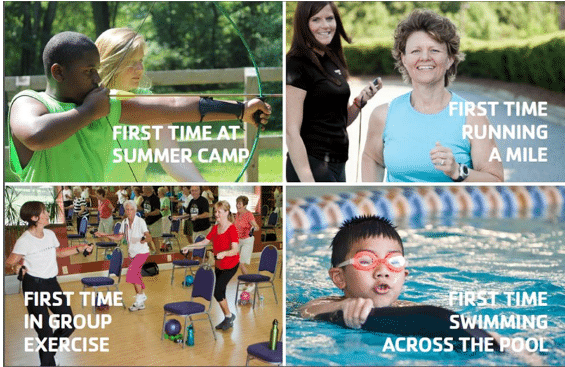
To put this another way, 81% of first-time donors won’t give to your YMCA again. But if you can get them to give a second gift, a whopping 60% will give again.
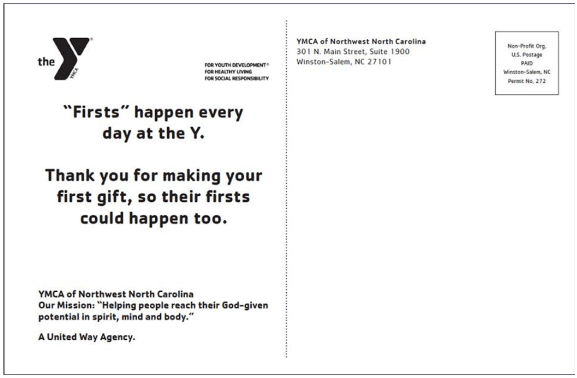
If you consider your fundraising return on investment (ROI), retaining your donors is infinitely more cost-effective than acquiring new ones, since acquisition costs can be as much as 10 times higher than the cost of communicating with your existing donors.
The greatest gift we can give our donors is the gift of being known by us; this is why special communication acknowledging a first-time gift is so important.
After they’ve made their first gift and you’ve thanked them properly, it’s time to build their engagement.
Engagement campaign: What’s your Y story?
The better a donor’s engagement, the higher their retention.
Ask any member, and they’ll tell you their Y story. It could be a childhood memory of their first swimming lesson. That memory could take them back to the sounds of the lifeguard blowing their whistle, or the smells of the pool’s chlorine, or even how far away the water looked when they stood on the diving board for their very first dive. Maybe it’s a caring staff member they remember who helped them set goals and build confidence.
Consider how you can invite members to share their Y story with easy story prompts they can submit online, like this example from the Indy YMCA.
Thank members for their submissions and consider a mission-related prize or giveaway.
Don’t forget to add their submission to their record in your donor management software. That information is an important part of upgrading their giving. If you don’t currently use donor management software, a platform like Bloomerang can automatically track and measure this donor engagement for you, taking the guesswork out of your stewardship strategy.
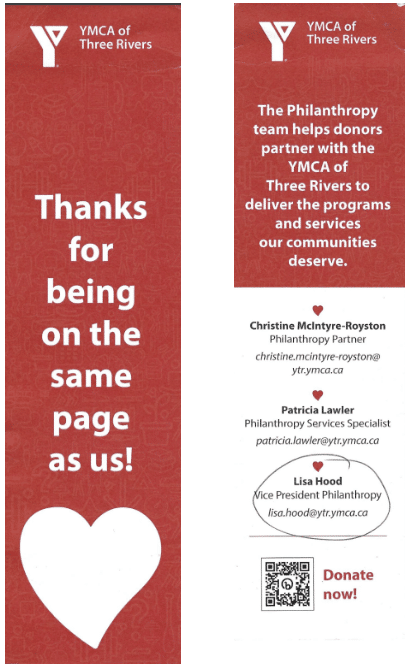
Staying top of mind with a donor thank-you bookmark: YMCA of Three Rivers
A bookmark is an inexpensive way to stay top of mind with your donors. Theirs has a lovely gratitude message on the front, their mission on the back, the philanthropy team’s contact information, and a QR code to donate.
Frequently asked questions about YMCA fundraising
What is the YMCA annual fund?
The YMCA annual fund (often referred to as the Annual Campaign) is a dedicated, yearly fundraising initiative designed to raise essential financial support for the organization’s mission-driven work. Rather than funding day-to-day facility maintenance, these campaigns raise charitable dollars to provide financial assistance and fund community outreach programs, such as subsidized childcare, water safety classes, teen leadership programs, and summer camp scholarships.
To truly understand the annual fund, it is crucial to clarify how it differs from standard membership dues:
- Membership dues are transactional. When a member pays their monthly fee, they are purchasing a service. Those dues cover the facility’s operational costs—keeping the lights on, maintaining equipment, and paying fitness instructors for services the member directly uses.
- The annual fund is philanthropic. When a donor gives to the annual campaign, they make a charitable contribution to support others. These funds bridge the gap between the cost of running the YMCA’s community programs and what local families can afford.
A helpful way to frame this distinction for your constituents is: “Membership dues pay for you, while the annual fund pays for your community.”
Because membership fees alone rarely cover the full scope of a Y’s charitable mission, the annual fund serves as the financial engine that ensures the YMCA remains accessible to everyone, regardless of their financial capacity.
How often should your Y ask donors for gifts?
You should ask donors for gifts year-round, not just during your annual campaign. If you’re only asking for gifts during your annual campaign, you’re missing out on a major opportunity to strengthen supporter relationships and maximize fundraising.
Worried that might be too many appeals? Scared your donors might get tired of being asked multiple times and develop donor fatigue? Here’s the good news: as long as you properly thank your donors and report back to them on how their gift made a difference, your donors are ready to be asked again.
How can you start?
Look at your 12-month calendar. Block off whatever month is the peak of your annual fund campaign. Dedicate that month to your annual fund and make it your only ask. Likewise, if you hold a big in-person fundraiser or gala, dedicate that month to just that event rather than other asks.
How can our YMCA successfully transition long-time members into first-time donors?
The biggest hurdle in converting members to donors is education. Many members simply assume their monthly dues cover the Y’s charitable initiatives. To bridge this gap, focus on passive and active storytelling within your facility. Use lobby signage, locker room flyers, and email newsletters to highlight community impact with clear messaging. A great talking point is: “Your dues keep our pool open and clean; our donors provide free water safety classes to local children.”
What is the difference between a YMCA annual campaign and a capital campaign?
While both are essential to a thriving YMCA, they serve completely different purposes:
- Annual campaigns fund ongoing, yearly charitable needs. The money raised goes directly toward community outreach, financial assistance, and subsidized programs (such as summer camp or childcare).
- Capital campaigns are massive, multi-year, and highly targeted fundraising initiatives designed to fund physical assets. You would launch a capital campaign to build a new branch, renovate an aging gymnasium, or expand your parking lot.
How do we encourage our board of directors to prioritize fundraising?
Because YMCAs rely heavily on membership dues, board members often lack traditional fundraising experience. The key is to shift their perspective from asking for money to sharing the Y’s impact. Start by involving them heavily in stewardship. Ask board members to make a handful of thank-you calls to first-time donors or to write personal notes on appeal letters. Once they experience the joy of thanking donors and discussing the mission, any fundraising fears will likely lessen.
Should our YMCA pursue corporate sponsorships in addition to individual giving?
Absolutely! The YMCA is a highly trusted, recognizable brand, and local businesses are usually eager to align themselves with your mission. Corporate sponsorships are particularly effective for funding the specific events mentioned in your year-round calendar. Consider pitching sponsorship tiers for your 5K runs, fall festivals, or youth sports leagues. This provides local businesses with valuable community visibility while offsetting your operational costs so that more individual donations can go directly to your charitable programs.
How can the front desk and program staff help with our development efforts?
Your member services team, fitness instructors, and childcare staff are the true faces of your YMCA. While they shouldn’t be expected to solicit major gifts, they are your best resource for donor prospecting. Train your front-line staff to identify “Y Champions”—members who are incredibly enthusiastic, frequently volunteer, or actively participate in multiple programs. Establish a simple, internal process for staff to pass these names along to your development team so you can begin cultivating them for future giving.
Final thoughts
Incorporating year-round fundraising into your YMCA’s strategy isn’t just a way to increase donations—it’s a way to build and deepen relationships with your donors.
Creating meaningful and varied campaigns throughout the year keeps your supporters engaged and invested in your mission. Every campaign is an opportunity to connect, to thank, and to inspire them with the lives they are changing through their generosity.
So, dive in and embrace a year-round approach. Your donors are ready, and with thoughtful planning, your YMCA will thrive all year long!