Why You Should Attend Nonprofit Conferences: The Complete ROI Guide for 2026




Nonprofit work asks a lot of you—big goals, tight resources, and a mission that deserves everything you’ve got. The good news? You don’t have to figure it all out alone.
Nonprofit conferences bring the nonprofit sector together to share ideas, learn from peers, and discover new ways to strengthen supporter relationships. They deliver measurable nonprofit conference ROI through professional development, strategic partnerships, donor engagement insights, and innovative fundraising techniques that help nonprofit professionals gain more support and expand their impact.
For organizations deciding where to invest limited resources, conference attendance is one of the highest-return opportunities available in the nonprofit sector, giving your team the knowledge, connections, and confidence to move your mission further.
This guide unpacks the full value nonprofit conferences can deliver for organizations—from proving nonprofit conference ROI and securing budget approval to turning what you learn into stronger fundraising, deeper donor engagement, and greater mission impact. Whether you’re a nonprofit executive building the case for board approval, a development director seeking networking opportunities, or a program manager exploring professional development options, you’ll find actionable guidance for maximizing nonprofit conference investments in 2026’s competitive funding landscape.
Frequently asked questions about attending nonprofit conferences
Understanding the true value of nonprofit conference attendance
Conference ROI in the nonprofit sector extends beyond professional development credits to encompass measurable organizational impact: new donor relationships, partnership opportunities, fundraising process improvements, and staff retention benefits. Unlike online training that occurs in isolation, attending nonprofit conferences creates interactive environments where nonprofit leaders engage directly with keynote speakers, participate in breakout sessions, and solve real problems alongside peers facing similar challenges.
For organizations working to strengthen donor engagement and fundraising performance, nonprofit conferences create the space to learn, collaborate, and move mission-driven work forward.
Direct professional development benefits
Nonprofit conferences bring fundraising professionals together to exchange insights, learn from one another, and uncover new ideas that simply don’t happen through digital channels alone. Sessions cover donor management strategies, nonprofit technology implementations, and CRM best practices led by thought leaders with demonstrated track records.
The learning occurs experientially. Attendees ask clarifying questions, work through case studies with other nonprofit professionals, and participate in interactive sessions that deepen understanding. Many conferences offer continuing education credits that help development professionals and board members maintain certifications, turning conference attendance into professional growth that benefits both the individual and the mission.
Strategic organizational advantages
Beyond individual skill-building, nonprofit conferences help nonprofit organizations see what’s possible. They offer benchmark insights from peer organizations’ fundraising performance, early access to emerging nonprofit technology, and a fresh perspective on the trends shaping donor behavior.
The best nonprofit conferences attract thought leadership from across the nonprofit world, providing unique insight on challenges ranging from corporate partnerships to community engagement strategies. This exposure helps organizations avoid strategic blind spots and identify opportunities before competitors.
Network and partnership development
Perhaps the most undervalued benefit of nonprofit conferences involves networking opportunities and relationship building that extend far beyond the annual event. Connections made during panel discussions, breakout sessions, and informal networking gatherings frequently evolve into partnerships, mentorships, and collaborative initiatives.
Face-to-face interactions create rapport that digital communication cannot replicate. Fundraisers consistently report that conference relationships lead to peer support networks, potential partners for joint programs, and access to funders they couldn’t reach through cold outreach.
Maximizing conference learning for donor engagement success
Translating insights from nonprofit conferences into improved donor engagement requires intentional application strategies. The professional development value compounds when nonprofit professionals systematically implement learned techniques within their donor management system or CRM platform.
Advanced fundraising techniques and technologies
Top nonprofit conferences like GiveCon 2026 feature sessions on peer-to-peer fundraising optimization, major gift cultivation, and donor database management led by practitioners who’ve achieved measurable results.
Workshops provide hands-on experience with advanced donor segmentation, automated stewardship sequences, and donor retention strategies that strengthen donor engagement and drive higher retention rates.
Case studies from successful nonprofit organizations reveal real-world tactics, from nonprofit storytelling strategies to social innovation ideas, that nonprofit professionals can adapt to strengthen relationships with their donors.
Navigating compliance and managing risk
Compliance requirements evolve continuously, and nonprofit technology conference sessions provide critical updates on data privacy regulations, donor data security standards, and donor management system protocols. Attending these sessions helps nonprofit organizations avoid costly compliance failures while strengthening donor trust.
The networking opportunities at these sessions prove equally valuable. Connecting with nonprofit professionals focused on compliance creates ongoing support networks for navigating regulatory challenges throughout the year ahead.
New ways to connect with donors
Multi-channel stewardship approaches, personalization strategies leveraging donor data analytics, and impact reporting techniques represent core learning objectives at leading nonprofit leadership conferences. Sessions demonstrate how nonprofit organizations use nonprofit innovation strategies to deliver personalized donor engagement at scale.
Interactive sessions allow nonprofit professionals to workshop their own communication challenges with facilitators and peers, leaving nonprofit conference attendees with practical takeaways ready for immediate implementation.
Conference ROI framework and post-event implementation
A nonprofit conference investment delivers the most value when it’s paired with thoughtful planning, clear tracking, and follow-through. GiveCon shows how the right nonprofit conference, combined with ROI tracking frameworks, can turn new ideas and connections into measurable organizational impact.
Pre-conference planning and goal setting
Strategic conference planning maximizes take-home value from nonprofit conferences. Before registering, set specific objectives aligned with your fundraising goals:
- Define learning objectives and KPIs: Identify 3–5 outcomes you’ll measure, such as new major donor leads, partnership conversations initiated, and skills acquired.
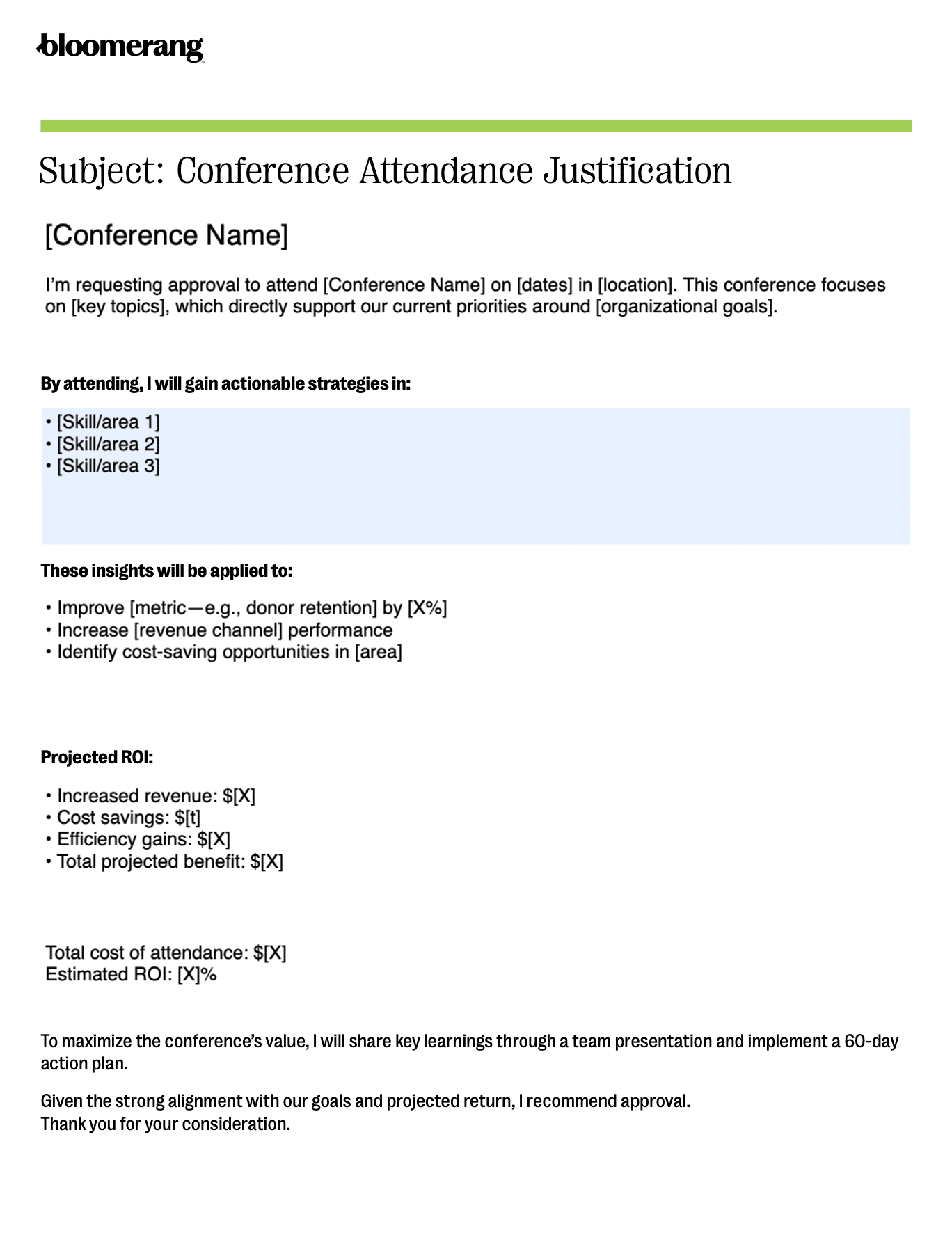
- Create budget justification documentation: Use projected ROI calculations to secure approval.
- Map sessions to organizational priorities: Review agendas for GiveCon 2026 and similar nonprofit conferences to identify must-attend sessions.
- Establish baseline metrics: Record current donor retention rates, average gift sizes, and pipeline totals in your CRM or donor management system.
ROI measurement framework
Track nonprofit conference impact across multiple categories using this framework:
Adjust targets based on organizational size and focus. Smaller nonprofits may prioritize relationship building metrics, while larger nonprofits track efficiency improvements.
CRM tagging and post-event tracking
Implement systematic tracking in your donor management system immediately following nonprofit conference attendance.
Tag conference contacts with specific identifiers:
- Source tag: “GiveCon2026” or the conference name
- Contact type: Potential donor, partnership lead, peer connection
- Follow-up priority: High / Medium / Low based on conversation quality
- Interest areas: Specific programs or campaigns discussed
Integration with platforms like Bloomerang:
- Create conference-specific contact segments
- Set automated follow-up reminders within 48 hours, 2 weeks, and 90 days
- Track conversion from conference lead to donor or partner status
- Schedule quarterly reviews comparing baseline metrics to post-conference results
This systematic approach transforms nonprofit conference networking opportunities into a measurable donor pipeline activity.

Common conference objections and practical solutions
Budget-conscious nonprofit organizations often encounter internal resistance to nonprofit conference investments. These solutions address the most common objections nonprofit leaders face.
“We don’t have a budget for conference travel.”
Solution: Estimate projected ROI and position conference attendance as an investment in your fundraising infrastructure, not just another discretionary expense.
Alternative funding approaches:
- Allocate a portion of the professional development budget specifically for nonprofit conference attendance
- Request board member sponsorship of staff attendance as an in-kind contribution
- Explore vendor partnerships, since many nonprofit technology providers offer sponsored conference attendance
- Consider virtual nonprofit conferences or local nonprofit events as stepping stones to full attendance
“We’re too busy with current campaigns.”
Solution: Position nonprofit conferences like GiveCon as campaign strategy refinement opportunities. Mid-year nonprofit conferences provide natural checkpoints for evaluating fundraising strategies and adjusting course.
Time management strategies:
- Delegate conference attendance across nonprofit team members
- Assign temporary coverage for key roles during the conference
- Use collaborative notes to share nonprofit conference insights across the organization
- Treat concentrated learning time as an investment in campaign effectiveness
“We already have established donor management processes.”
Solution: Emphasize that nonprofit conferences provide a competitive advantage through exposure to new nonprofit technology, donor engagement strategies, and emerging donor behavior trends.
Nonprofit organizations relying on outdated fundraising techniques risk falling behind peers that continuously improve their donor engagement strategies.
Even mature nonprofit organizations benefit from fresh insights, peer validation, and exposure to innovations shaping the nonprofit sector.
Conclusion and next steps
Nonprofit conference attendance generates measurable ROI through enhanced fundraising capabilities, strategic partnerships, and improved donor engagement. These are benefits that compound over time as nonprofit professionals deepen relationships and implement new strategies.
For organizations committed to maximizing social impact, nonprofit conferences represent essential investments in professional development, fundraising innovation, and mission advancement.
Take action now
- Estimate projected ROI from attendance and write a letter to secure organizational approval
- Register for conferences (like GiveCon) early to access preferred pricing and session availability
- Establish baseline CRM metrics for post-conference comparison
- Create learning objectives aligned with your organization’s fundraising goals
- Identify peers attending the same nonprofit conferences for collaborative learning
Related topics to explore
- Donor segmentation: comprehensive guide + tips for success
- Your Roadmap For CRM/DRM Success: Prepare, Manage, And Sustain The Change
- The Strength of Mentorship for Nonprofit Professionals