Nonprofit Influencer Marketing: Strategies That Work




Wondering how to increase your nonprofit’s reach on social media? Let’s face it, the social media space today is a noisy one. It’s hard to cut through the clutter. Social media influencer strategies can help without resorting to paid advertising.
In fact, these social media influencer strategies can be more powerful than ads, because they’re perceived as more authentic. Simply put, you can ask other social media users to help you spread the word about your vision and mission through nonprofit influencer marketing.
In this guide, we’ll provide information and strategies to help you get started with nonprofit influencer marketing.
What is nonprofit influencer marketing?
At its core, nonprofit influencer marketing is all about partnering with content creators to spread your mission, build trust, and inspire people to take action. By tweaking traditional social media influencer strategies for cause-driven goals, nonprofits can tap into passionate online communities through genuine, relatable storytelling.
These partnerships can range from unpaid setups—like volunteer ambassadors, pro bono celebrity shoutouts, and in-kind creator support—to paid or sponsor-backed campaigns that reward creators or cover their production costs.
Types of influencers for nonprofits
Not all influencers look like traditional social media stars with millions of followers. For nonprofits, influence is ultimately about trust and reach—and that can come from a creator with a tight-knit local following just as easily as an A-list celebrity or an internal champion.
Here is how the main types break down across creator tiers and internal networks:
Social media influencers
- Nano-influencers (1K–10K followers): These are everyday creators with hyper-local or highly specialized followings. They boast high engagement rates and are usually eager to support local causes for free or in exchange for event tickets.
- Micro-influencers (10K–100K followers): Micro-influencers are the sweet spot for cause-based marketing. They maintain strong personal connections with their audiences while offering a substantial, targeted reach.
- Macro-influencers (100K–1M followers): Established creators with massive reach and polished production quality are macro-influencers. They are great for national awareness campaigns, though they often require budget or corporate sponsor backing.
- Celebrities and mega-influencers (1M+ followers): Celebrities and mega-influencers are household names that lend instant credibility and mainstream media coverage. While harder to land, pro bono celebrity endorsements can transform a fundraising gala or viral campaign overnight.
Internal and organic cause ambassadors
Don't overlook your inner circle. People who already love your mission often make the most convincing advocates because their passion for your cause is personal. Segments you can tap include:
- Staff and volunteers: Your boots-on-the-ground team sees your nonprofit’s impact firsthand every day. Behind-the-scenes posts from staff or volunteer takeover stories feel real, raw, and deeply authentic.
- Donors and board members: High-net-worth donors and active board members carry major professional clout. Encouraging them to share why they give opens doors to corporate networks and peer-to-peer giving.
- Corporate partners: B2B partners and corporate sponsors can cross-promote your campaigns on their official channels, lending both executive influence and employee volunteer power to your reach.
Social media influencer strategies for nonprofits
To grow your audience and make the most of influencer strategies, try leveraging three distinct tiers of influence:
1. Partner with micro-influencers.
2. Engage your staff as advocates.
3. Engage your fans as ambassadors.
Partner with a social media micro-influencer.
Generally, a micro-influencer is a blogger, podcaster, or social media user with between 10,000 and 100,000 followers. Unlike a larger influencer with several hundred thousand followers, these folks tend to operate within a specific niche. People pay attention to them because they create their own content that’s relevant to their followers' interests.
There are micro-influencers in just about any category you can think of — from food to travel to parenting to environment to justice to arts to animal rescue to historical preservation to early childhood education to literacy to nonviolence to… you name it.
Here’s what’s great about micro-influencers:
- They have a loyal following.
- They tend to specialize in a particular niche, so they are easy to target.
- They are highly trusted in their area.
- You can reach and connect with them.
- They’re more likely to respond to you than a superstar.
Here’s what you should do, step-by-step:
1. Brainstorm fields of interest related to your mission. Then search for these influencers online (e.g., use #mommy, #daddy, #parents, #childpoverty if you run parenting or other programs to support healthy child development; use #theater, #arts, #classicalmusic if you run a performing arts program). You can brainstorm hashtags or use a tool like hashtagify. You can also try adding ‘blogger’ to your hashtag to find folks who don’t just follow these areas, but are active leaders (e.g., #foodblogger; #mommyblogger).
2. Once you’ve identified possibilities, narrow the field. Some will merit more of your time than others, and you’ll need to assess this. You can’t work with 100 influencers. Shoot for 5-10 to begin. Don’t just look at the number of followers. Check whether someone’s content gets a lot of shares on social media. Also, consider whether the content they offer might be a worthwhile resource for your own followers.
3. Begin to follow the targeted influencers you’ve qualified. This is how you demonstrate an interest in what they do. When you ultimately reach out to ask for a favor, they’ll undoubtedly look to see if you follow them and share their content.
4. Notice the hashtags the people you’re following use; search on them to identify more potential influencers. You’ll find ideas that didn’t occur to you during your initial brainstorm. This is an iterative process.
5. Begin to engage with the influencers you’ve qualified. Get to know them online. Share their content. Compliment their content. Comment on their content.
6. After you’ve identified a promising online connection (or several), share content that will be useful to their followers. Make it easy for folks to ask questions so you can answer and establish your thought leadership. Center your messaging on what’s relevant to the community; don’t make it all about you.
7. Reach out personally to the influencer(s) and ask if you can schedule a call to explore ways you might help each other. Build genuine relationships by reaching out personally, praising a specific post you loved, and inviting them for an on-site tour to move the connection from virtual to real. Ask if they collaborate with nonprofits, offering ready-to-share content or seeing if they would be willing to amplify key campaigns to their audience.
8. Thank influencers for everything they do to help you! Compliments, praise, recognition, and genuine follow-through go a long way.
Example: San Francisco Marin Food Bank
My last full-time gig as a director of development and marketing was with the S.F-Marin Food Bank. Social media was just taking off. We had a Twitter and a Facebook account. Followers, but… not a lot of action. Social media wasn’t really helping us reach our volunteer recruitment and fundraising goals.
Then we noticed something. Two groups of bloggers were the most engaged in sharing our posts: mommy bloggers and food bloggers. We began to engage with them. What we learned was:
- Mommy bloggers cared about keeping kids healthy. We had a number of programs that did that. Food pantries in schools. A morning snack program. Advocacy to help families access available benefits. The mommy bloggers wanted to know about these programs. Better still, they wanted to advocate for their continued existence and growth!
- Food bloggers cared about nutritious, delicious food for all. We had a nutrition program that taught families how to make delicious, healthy meals with food pantry items. We shared recipes that included using products with which they might be unfamiliar. The food bloggers were interested and wanted to help spread our information!
It turned out that when we reached out personally to these micro-influencers to ask for their help, they were more than willing to say yes. It made them look good, and it helped their constituents feel good, too. We raised awareness, added followers and ultimately converted a decent number of these folks to donors. We also let these influencers know how much their help meant to us, and reported back to them on results.
Engage staff as nonprofit social media advocates.
Hidden gold! Studies show employees are more than twice as trusted as a CEO, senior executive, or activist consumer. Also, their social posts generate 8X greater engagement than posts from their employer.
Here’s what’s great about employee social advocates:
- They have their own media channels and may be on networks your organization is not.
- They have their own fans and followers and can extend your reach to folks who’d otherwise be unaware of your work.
- They have greater credibility than your brand as a whole.
- They enable you to spread the job of creating brand awareness and engagement across multiple staff members.
- They show they’re enthusiastic about your vision and mission, thereby giving you a competitive advantage over nonprofits with less embracing cultures.
Here’s what you should do, step-by-step:
1. If you’ve not done so already, make building a culture of philanthropy a priority.
2. Clarify your social advocacy goals. It’s not that helpful to have staff simply post randomly. You want to coordinate your efforts and be able to track progress towards desired outcomes. Here are some ideas:
- To increase brand awareness
- To increase social media traffic
- To develop a presence on new platforms
- To reach a new demographic
- To promote a new program or service
- To recruit volunteers
- To sell tickets
- To generate donations
For each goal, consider how employee social advocacy can help.
3. Identify staff who have an interest and skill in social media. This isn’t a job for everyone. But for those who are on social media frequently, it’s an easy task (provided your employees love your organization and are more than willing to share their joy).
4. Create a staff social media ambassador work group. Develop a job description and social media guidelines (also see here and here). Work together to create a realistic work plan. What you’ll share. When you’ll share. Where you’ll share. Who will share. Why you’ll share (i.e., clarify your desired outcome so you can measure success).
5. Regularly convene a meeting of your work group. Monthly is reasonable, as it’s not so frequent as to be onerous and not so infrequent as to make news you might want to share stale. Depending on how much breaking news your organization has to share, you may want to meet weekly, biweekly, quarterly, or something else. Brainstorm ideas. Consider your audience’s interests, not your own. Touching stories, breaking news, upcoming events, volunteer opportunities, and urgent campaigns. Not the fact that you hired a new staff member or renovated your website. Make it fun; serve refreshments!
6. Make advocacy fun and easy. This is not about asking staff to write their own blog posts (of course, you can do this; just choose people who can write). Give your already busy employees consistently shareable content that’s a no-brainer to promote. Maybe it’s an inspiring video. Or a heart-wrenching story. Or a new research study with fascinating results. Or just a funny photo or an inspirational quote. You can even make a game of it, creating a drawing among group members who create posts using specific hashtags.
7. Celebrate your ambassadors publicly. Create awards to publicly recognize staff who go above and beyond. Bestow these at all-staff meetings and/or post on your intranet. Consider offering a tangible token of appreciation, such as a gift card, coveted swag, a plaque, or even a single rose.
8. Track and evaluate your progress; adjust accordingly. Look back at the goals you established. How effectively were they met? Use analytics tools to measure success and report back to the entire team. Consider together what worked/didn’t work. Use this information in revising your plan moving forward. Here are some things you can measure:
- Top contributors. Which advocates shared the most? Which advocates generated the most engagement?
- Organic reach. How many people saw content shared through your employee advocates?
- Engagement. How many people clicked links, left comments, and shared content from your advocates? How did this vary over different networks?
- Traffic. How much traffic did the content shared by employee advocates drive to your website?
- Conversion. How many folks took a desired action response as a result of content shared by your advocates?
Engage fans as social media ambassadors.
Online fans are folks who don’t work for you but are proactively connected to you in the digital space. They consume your content by clicking on links, sharing your content, making comments, and participating in discussions.
They may be donors, members, social media connectors, or volunteers. You have the ability to reach out to them because their names are on a list. The list could be as broad as all your Facebook friends or a narrower list (e.g., one you create on Twitter of volunteers for a particular project; one that exists on Pinterest of folks who follow a specific board, one you have on LinkedIn comprised of those who connect with your corporate profile, etc.).
It might also be an email list, say of donors or volunteers; you can use this list to ask folks to become social media ambassadors.
Here’s what’s great about fan social media ambassadors:
- They can extend your reach to folks who’d otherwise be unaware of your work by extending access to their own networks of fans and followers.
- They have greater credibility than you or your staff as they’re not being paid.
- They can form a deeper relationship with you through their advocacy, becoming more loyal through this interaction.
- They can establish relationships with like-minded people, thereby cementing their sense of identification with your vision, mission, and values.
- They can interact with your nonprofit brand and even co-create it, helping you to remain relevant.
Here’s what you should do, step-by-step:
1. Determine your social media ambassador program goals. These will range from general awareness to more specific objectives, such as those outlined for staff advocates. Whatever goals you select, be sure to also consider how you’ll measure progress towards these goals and incorporate evaluation strategies in your plan.
2. Develop a written plan and framework for your social media ambassador program.
3. Recruit your social media ambassador team. Look for fans who are actively engaging with you, for example:
- They open your emails; they share your emails with their friends, family, and colleagues.
- They click through and open your e-newsletter and/or blog posts; they share content with their networks.
- They like, comment on, and share your social media content.
- They’ve fundraised on your behalf using P2P tools.
- They’ve asked friends to make tribute gifts in honor of or in memory of their friends and family.
Determine your likely most passionate fans by cross-referencing the list of folks who friend, follow, and share with current donors, event attendees, and volunteers. Send them a formal invitation to join your team. Be sure to make them feel special! Julia Campbell of Marketing for the Modern Nonprofit has created a free downloadable Nonprofit Guide to Recruiting and Coordinating Social Media Ambassadors.
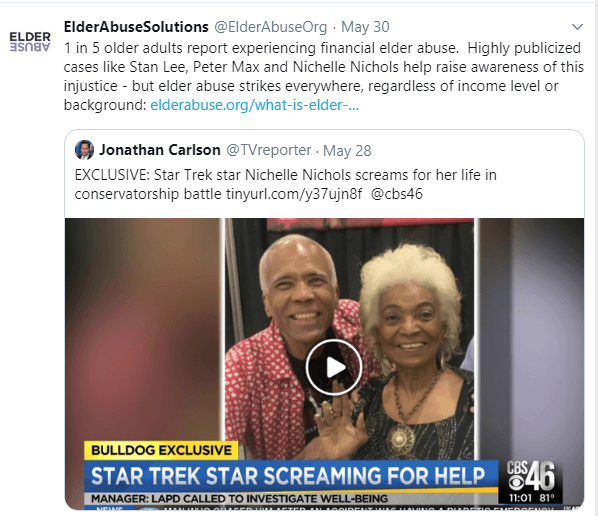
4. Engage with your social media ambassador team. Treat them like you’d treat any other committee. Give them a job description, materials they can use (e.g., prepared tweets, compelling photos to share on Facebook, links to YouTube videos), and lots of cheerleading and support. Who can resist sharing a compelling photo and story like these?
5. Give ambassadors fun, simple assignments. For example, you might ask fans to take selfies wearing your organization’s swag, and share them using a specific hashtag. Be sure to collect these and give a shoutout to your fans, perhaps as part of a #FanFriday feature. See some examples of selfie campaigns here and here. Or if you have a challenge grant or urgent campaign, ask fans to participate.
6. Make sharing your content easy. Include share buttons everywhere, including your emails.
7. Give frequent progress updates; celebrate successes. Let your ambassadors know the results of their outreach. Ask them for their feedback to show how much you value them. Make them feel like the heroes they are!
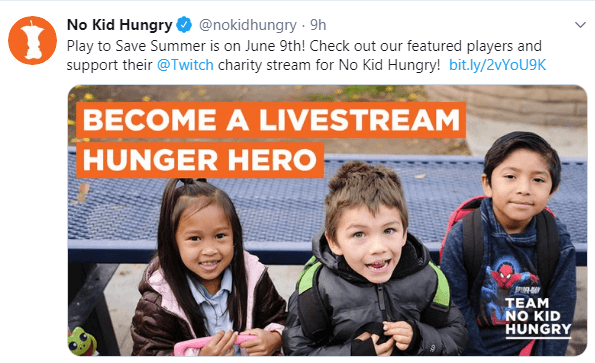
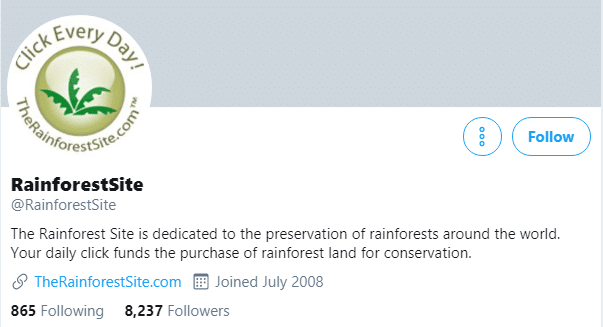
Example: The Rainforest Site
The Rainforest Site has sponsors who’ve agreed to help subsidize their work whenever someone clicks on their online link. This gives ambassadors something tangible to share with their networks. It’s an easy ask that makes people feel good.
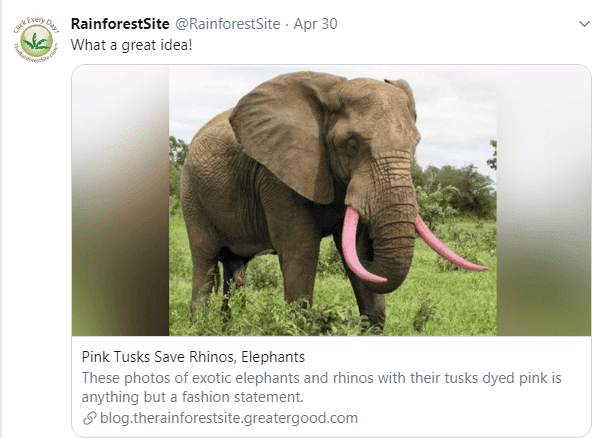
Here’s another tweet from the Rainforest Site folks that just begs to be opened because it’s so tantalizing and unusual. Ambassadors can feel good sharing this, because it’s bound to arouse curiosity. Bonus: when folks click the link, it takes them directly to the organization’s blog, which has a complete array of share icons – so friends of fans may now share with their networks as well.
Platform-specific influencer strategies
Not all social media platforms deliver the same results for cause-based campaigns. What works on LinkedIn won't fly on TikTok, for instance, so matching your campaign format to the unique audience behavior of each network is key.
Instagram: Visual storytelling and quick donations
Instagram is built for compelling visuals and seamless giving, making it a natural fit for lifestyle, environmental, and direct-relief nonprofits.
- Best format: Reels for emotional storytelling, Carousel posts for educational guides, and Stories for live updates.
- Influencer strategy: Have creators use Instagram’s "Add Fundraiser" sticker directly on their Stories or Reels so followers can donate without leaving the app. Partner with creators on collaborative posts so their content co-appears on your organization’s feed, doubling your reach instantly.
TikTok: Raw authenticity and viral awareness
TikTok favors raw, unpolished storytelling over glossy ads. It’s ideal for reaching Gen Z and younger Millennials who value real-time human connection.
- Best format: Short-form video, behind-the-scenes vlogs, and trend-driven voiceovers.
- Influencer strategy: Invite creators to host a live Q&A or field tour from your facilities, or leverage the TikTok Donation Sticker in native posts. Give creators creative freedom to speak in their own voice—stiff corporate scripts rarely perform well here.
LinkedIn: Thought leadership and corporate sponsorship
LinkedIn is the premier network for professional influence, B2B storytelling, and corporate social responsibility (CSR) initiatives.
- Best format: Long-form text posts, personal reflection articles, and professional video snippets.
- Influencer strategy: Partner with industry executives, board members, and corporate partner leaders to share thought leadership pieces. Focus on impact metrics, career development stories tied to your cause, or corporate matching grant announcements.
YouTube: Long-form storytelling and deep impact
YouTube provides the space needed for deep dives, documentary-style content, and long-term donor conversion.
- Best format: In-depth video essays, field documentaries, and YouTube Shorts.
- Influencer strategy: Work with creators on dedicated video segments or sponsored integrations where they explain your mission in detail. Leverage YouTube Giving tools, which allow creators to attach a live "Donate" button right alongside their videos during major fundraising drives.
Always customize the call-to-action (CTA) by platform. Keep it to one-click donations on Instagram and TikTok, professional network shares on LinkedIn, and detailed website visits or link-in-description sign-ups on YouTube.
How to create a nonprofit influencer campaign in 8 steps
Launching a successful influencer initiative takes more than just sending a direct message to a creator and hoping for the best. Following a clear, structured workflow ensures your campaign drives real, measurable impact for your cause.
1. Define your primary goal.
Start by deciding exactly what success looks like. Are you raising immediate funds, driving petition signatures, recruiting volunteers, or boosting general brand awareness? Having a single focus keeps your messaging clear and your campaign on track.
2. Identify your target audience.
Pinpoint who you need to reach to achieve your goal. Consider demographics, values, and online behavior to find the specific community most likely to care about your mission.
3. Choose the right platforms.
Match your target audience to where they naturally spend their time. Choose platforms where your cause’s narrative shines best, whether that's short-form video on TikTok and Instagram Reels, professional articles on LinkedIn, or long-form storytelling on YouTube.
4. Find aligned influencers.
Look for creators who post about topics adjacent to your cause, such as sustainability, community advocacy, or education. Check your own follower list first to spot organic fans who already love your work.
5. Vet your potential partners.
Look beyond follower counts. Audit their past content for brand safety, review their engagement rate (comments and shares vs. likes), and ensure their values align with your organization's mission.
6. Create a clear campaign brief.
Equip your creators with a simple guide outlining key messaging, mandatory call-to-action details, campaign hashtags, and brand guidelines. Give them creative freedom to express the message in their own authentic voice.
7. Launch with trackable links.
Give each influencer a custom UTM link or specific promotional code. This allows you to track traffic, email sign-ups, and donations directly back to individual creators when the campaign goes live.
8. Report on results and thank your partners.
Analyze performance metrics against your original goal and share the overall real-world impact with your creators. Send sincere thank-you messages or public shoutouts to nurture those relationships for future campaigns.
Nonprofit influencer campaign brief template
Providing creators with a clean, structured campaign brief ensures alignment with your mission while giving them the creative freedom to sound authentic. Copy and customize the template below for your next initiative:
1. Campaign Overview & Background
- Organization Name: [Your Nonprofit Name]
- Campaign Title: [e.g., Summer Clean Water Initiative]
- Mission Background: [Briefly describe your cause, the specific problem you are solving, and the real-world impact of your work in 2-3 sentences.]
2. Campaign Goals & Target Audience
- Primary Goal: [e.g., Raise $25,000 / Collect 1,000 petition signatures / Recruit 50 volunteer mentors]
- Target Audience: [e.g., Gen Z and Millennials interested in environmental conservation and local community action]
- Core Message: [The main takeaways for viewers—what is the central story or key takeaway?]
3. Deliverables & Posting Schedule
- Deliverables Requested:
- 1x Instagram Reel / TikTok Video (30-60 seconds)
- 1x Instagram Story sequence (3-4 slides with link sticker)
- 1x Cross-posted photo or short video update
- Key Posting Dates:
- Draft Due for Review: [Date]
- Scheduled Posting Window: [Date] – [Date]
4. Call-to-Action (CTA) & Links
- Primary CTA: [e.g., "Tap the link in my bio to donate $10 today and fund a family's clean water filter."]
- Custom Tracking Link: [Insert influencer-specific UTM link or short link]
- Promo/Matching Code: [Insert custom code if applicable, e.g., "Use code ALEX to double your donation"]
5. Visual & Creative Guidelines
- Tone & Style: [e.g., Authentic, hopeful, urgent, energetic—avoid overly sad or guilt-based messaging.]
- Visual Elements:
- Show personal interaction or reaction on camera.
- Incorporate provided raw footage or high-res photos if available.
- Ensure proper lighting and clear audio.
- What to Avoid:
- Do not use offensive or politically divisive language.
- Do not make medical, legal, or exaggerated impact claims.
6. Hashtags & Mandatory Disclosures
- Campaign Hashtags: #YourNonprofitName #CampaignHashtag
- Required Legal Disclosures (FTC Compliance):
- Text Posts/Captions: Include #ad or #sponsored at the very beginning of your caption (before any "...see more" cutoffs).
- Video/Stories: State the partnership verbally in the first 30 seconds AND place a clear, high-contrast text overlay (e.g., "Sponsored by [Nonprofit Name]") on-screen throughout the video.
- Note: Using vague hashtags like #collab or #partner is not compliant with FTC guidelines.
7. Success Metrics & Reporting
- How We Measure Success:
- Total engagement (likes, comments, saves, shares)
- Link clicks through your custom URL
- Direct conversions (donations, sign-ups, or downloads attributed to your link)
- Post-Campaign Reporting: Please send screenshot proof of post analytics (reach, impressions, and link clicks) within 7 days of posting.
Leverage the power of social proof
When you ask others to spread your message, you leverage the power of ‘social proof.’ This is one of Robert Cialdini’s top six magical powers of persuasion. It’s the principle at play in review sites like Yelp. When other folks praise you, it’s more credible than when you praise yourself.
Your job is to find the people who care about your work and who have influence over others. Of course, your own staff fit that bill. As do your own fans, followers, volunteers, and donors. And when it comes to influencers outside your current community, today it’s not just television pundits or journalists who wield the magic power or persuasion. It’s often bloggers, power Twitter users, people on YouTube, or Instagram, and so forth. Within particular social media communities, these people have fame and influence similar to big-name celebrities. And they aren’t a pie in the sky target for you. You can find them. You can reach out to them. You can connect with them!
Stop using the excuse that you can’t create awareness online because of limited capacity and staff resources. It’s time to build a plan to leverage the significant resources you already have: staff, donors, volunteers, fans, followers, and others who’ve demonstrated they care about what you do. Empower these folks to become your champions, thereby leveraging the power of their individual social networks.
Heed the advice above, and you should see a big engagement boost! Just be sure to incorporate social media influencer strategies to convert engagement into other desired actions. Bottom line: You ultimately don’t just want likes, follows, and clicks. You want email addresses, signers for your petition, ticket buyers, volunteers, donations, and whatever else you need to further your vision and mission.
By activating your biggest supporters and leveraging social proof, you multiply your reach without overstretching your team. Don't let limited resources hold you back—give your champions the tools to speak on your behalf, focus on driving meaningful action, and watch your mission gain serious momentum.