How to Start a Recurring Giving Program for Your Nonprofit




Whether it’s an existing loyal donor who wants to make a greater impact or a new donor on a budget, it can be convenient and empowering to give supporters an opportunity to donate a smaller gift multiple times over the course of the year.
This fundraising technique is called recurring giving or monthly giving—and it’s a really effective way to raise money for your organization.
Recurring giving isn’t just great for your organization’s bottom line; it also serves as a way to keep your donor active and engaged with your cause month after month.
You won’t regret starting a recurring giving program. Here’s everything you need to know to get started:
Why does recurring giving work?
A recurring giving program (often called a monthly giving program) is a fundraising strategy in which supporters commit to making regular, automated donations to a nonprofit organization, rather than making a single, one-time gift.
Most organizations start a recurring giving program because it’s a sustainable way to fundraise. By giving the same amount month after month, donors don’t necessarily have to take out their credit card 12 times per year. In fact, they should be able to fill out one “pledge card” or online form, check the “monthly gift” box, and be on their way.
It’s easy for everyone involved!
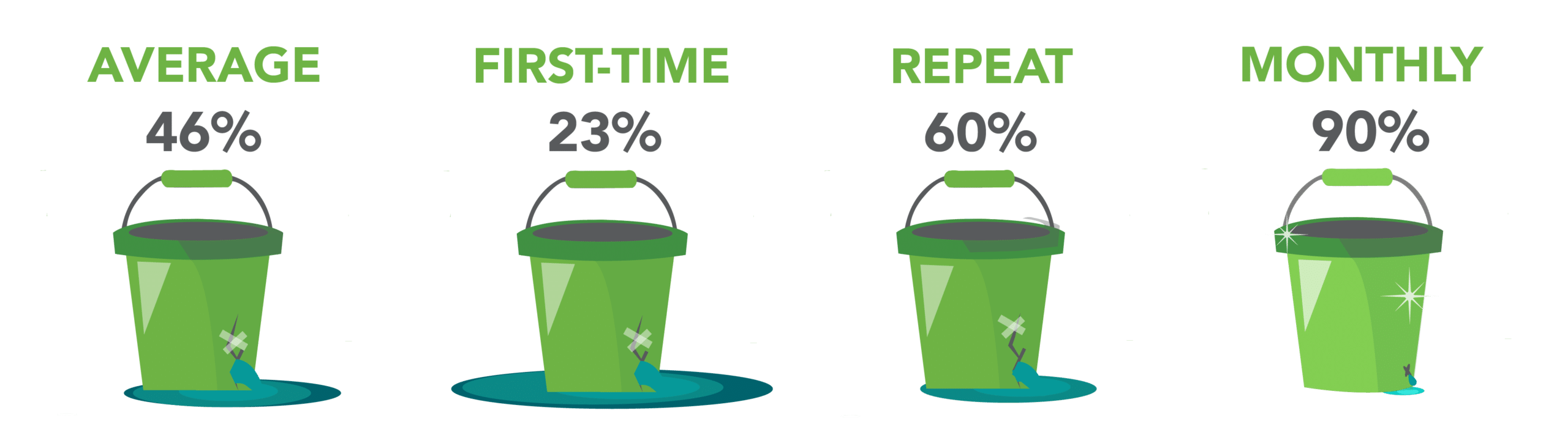
With that simple action, your nonprofit now has a consistent monthly income stream. The best part? Retention rates for recurring donors are sky-high:
The essential steps to recurring giving
Now that you know why you should start a recurring giving program, let’s dive into the basics of setting up your own.
1. Determine your resources
Like all fundraising strategies, recurring giving programs require an upfront investment. At the very least, you’ll need dedicated staff time to launch the campaign. You will also need to add a recurring giving option to your online donation form, create a pledge card for events and direct mail, and send out additional marketing/communications materials for these donors. Some organizations invest further by creating a branded program identity, such as NPR's “Sustaining Member” or St. Jude’s “Partner in Hope.”
Beyond budget and staff time, your most critical resource is your data. Before launching, you must allocate time for strategic CRM segmentation to identify which supporters are most likely to commit to a monthly schedule. Rather than blasting a generic appeal to your entire mailing list, use recency, frequency, and engagement scores to pinpoint your best prospects.
The ideal segments to target first include:
- Multi-year donors: They already demonstrate consistent loyalty to your cause.
- Recent first-time donors: Reach out while their connection to your mission is fresh.
- Event attendees: Capitalize on the in-person inspiration they just experienced.
- Volunteers and advocates: They are already investing their time; many will gladly invest a small monthly amount.
- Mid-level donors: Consistent, mid-level givers are prime candidates to sustain operations.
- Lapsed-but-engaged: Supporters who haven't donated recently but still open your emails or attend free events.
Using a robust donor management platform like Bloomerang makes this process seamless. By leveraging automated engagement scores and easy filtering tools, you can instantly pull lists of these highly primed segments, ensuring your marketing resources are spent exactly where they will yield the highest return.
2. Set a goal
Set your recurring giving goal based on SMART criteria—meaning your objectives should be specific, measurable, attainable, relevant, and time-based. Instead of a vague objective like "get more monthly donors," use your existing donor data to establish a realistic baseline and set precise targets that align with your organization's size and capacity.
To keep your team aligned and track progress effectively, build your SMART goals around specific key performance indicators (KPIs). Example targets to set your goals against include:
- New recurring donors per month: Set a target for raw acquisition (e.g., "Acquire 15 new monthly donors each month through the end of the fiscal year").
- One-time-to-recurring conversion rate: Measure your upgrade success (e.g., "Convert 5% of all one-time year-end donors into monthly sustainers by the end of Q1").
- Average monthly gift: Aim for financial growth within the program (e.g., "Increase the average monthly recurring gift size from $15 to $25 over the next 12 months").
3. Plan the program
What do you want the program to look like? Decide whether this will be a standalone, branded campaign where you actively recruit monthly donors during specific times of the year, or if it will be a passive "always-on" option seamlessly integrated into your standard donation pages.
As you build the framework of your program, map out these critical elements:
- Program name: Giving your recurring giving program a specific name makes donors feel like they are joining an exclusive, valued community rather than just completing a transaction. Keep the name mission-centered, short, and community-conveying, and always avoid internal nonprofit jargon.
- Examples: The Sustainers Circle, Hope Partners, or The Impact Circle.
- Flexible giving levels: Offer a manageable range of suggested giving tiers (e.g., $10, $25, $50, and $100). More importantly, use impact-based amounts. Tell the donor exactly what their specific tier accomplishes (e.g., "$25 a month provides textbooks for one student," or "$50 a month feeds a rescue dog for 30 days").
- Giving intervals: While monthly is the most popular cadence, give your donors flexibility. Provide options for monthly, quarterly, or annual automated withdrawals to accommodate different financial preferences.
- Upgrade paths: Plan for the future by mapping out an upgrade strategy. How and when will you ask a $10-a-month donor to increase their gift to $15 a month next year?
- Marketing materials: Determine what visual assets, email sequences, and direct mail pieces you will need to launch and sustain the program.
4. Inspire
At the end of the day, donors give because they’re inspired to, not just because they’re asked. Therefore, every recurring giving program must incorporate a powerful inspirational component.
Get donors interested in a long-term commitment through compelling client stories and passionate donor testimonials. Follow these storytelling best practices to amplify your message:
- Make the main character relatable: Center your narrative on a specific individual, animal, or community your audience can easily connect with emotionally.
- Highlight the impact: Clearly show how your organization’s work directly transformed the life of the subject in your story, and explain how ongoing support makes that transformation possible.
- Include a strong call to action (CTA): End with a clear, compelling prompt that propels the reader to take immediate action—which, in this case, is joining your recurring giving program.

5. Follow through and follow up
Once a donor signs up for the recurring giving program, your work isn’t over. Sure, they’re committed for an entire year, but you still need to put effort into engagement and retention.
For example, after processing a donor’s payment, send them a quick “thank you” note with a client story.
Video can also be a powerful tool in welcoming new monthly donors. Check out this personal email from Outreach, Inc. that includes a link to a unique video:

You can also incorporate engaging communications that inform donors about the impact of their gift—such as a dedicated monthly newsletter—to increase the likelihood of retention after the year ends.

Focus your post-donation efforts on these key retention strategies:
- Launch a dedicated welcome series: Send an automated email sequence immediately after their first gift. Don't just send a receipt—welcome them to the community, reiterate the impact they will have, and share an inspiring video or personal message from your leadership.
- Establish a continuous thank-you cadence: Do not limit your gratitude to their initial sign-up. Send strategic, genuine touchpoints throughout the year, such as a mid-year handwritten note or a quick personalized thank-you video.
- Share exclusive impact updates: Create communications specifically for this group. Send a dedicated monthly update showing these donors exactly what their ongoing support is accomplishing. During year-end, ensure they receive a personalized copy of your annual report.
- Celebrate giving anniversaries: Acknowledge their commitment milestones. Send a special "happy anniversary" email, a small gift, or a physical card when they reach their one-, two-, or five-year mark of continuous giving.
- Time your upgrade asks strategically: Once a donor has been in the program for 12 to 18 months, invite them to increase their impact. A simple, impact-driven request to upgrade their gift from $15 to $20 a month is highly effective when they already trust your organization.
- Implement a failed payment process: Involuntary churn (when a credit card expires or a payment fails) is a massive leak in recurring programs. Set up automated emails to gracefully notify donors of failed transactions and provide a secure, frictionless link to update their billing details.
- Focus on cancellation prevention: If a donor needs to stop their giving, make the cancellation process easy to maintain goodwill. However, before they finalize the cancellation, offer a "down-sell" alternative: ask if they would prefer to simply "pause" their giving for three months or downgrade to a lower monthly amount.
How to set up recurring giving online
Taking your recurring giving program online is the most critical step in making the donation process frictionless for your supporters. A clunky online experience will deter even the most inspired donors. Here is how to build a seamless, automated digital infrastructure for your program:
- Choose the right software: Select a donation platform and payment processor that natively supports recurring billing, secure tokenization, and digital wallets like Apple Pay and Google Pay.
- Build the recurring form: Create a dedicated landing page and donation form specifically for this program. Pre-select the monthly giving frequency and clearly display your impact-based suggested donation amounts.
- Connect your CRM: Ensure your donation form integrates directly with your constituent relationship management (CRM) system. When a donor sets up a recurring gift, their contact record, gift amount, and billing schedule should automatically sync to eliminate manual data entry.
- Automate receipts: Configure your system to instantly send a customized, tax-compliant receipt and a warm welcome email the moment the first transaction is processed.
- Test payment workflows: Before going live, run test transactions to ensure that money flows properly from the form, through the payment processor, and into your organization's bank account.
- Promote the page: Once live, make the recurring giving page easy to find. Add a prominent button to your website’s main navigation, include the link in your email footers, and share it consistently across your social media channels.
Pre-launch testing checklist
Never launch a new donation page without testing the user experience from the donor's perspective. Have a staff member or volunteer run through this checklist using a real credit card (you can refund the test gift later):
- [ ] Verify the form is easy to read and use on both desktop and mobile devices.
- [ ] Confirm the automated confirmation and welcome emails trigger immediately.
- [ ] Check that a new CRM record is created (or an existing one is accurately updated) with the correct recurring gift details.
- [ ] Test the payment-failure notices by temporarily lowering your card limit or using a test card number to ensure the system sends an update request.
- [ ] Log into the donor portal to ensure the cancel and payment-update flows are intuitive and functional.
30/60/90-day launch roadmap
A successful recurring giving program isn't just switched on; it is strategically rolled out. Follow this timeline to build momentum and maximize acquisition:
- First 30 days: Soft launch. Introduce the program exclusively to your board of directors, dedicated volunteers, and closest major donors. Ask them to become your founding members and use their feedback to iron out any bugs in your donation process or messaging.
- Day 60: Public launch. Roll the program out to your entire email list and broader community. Launch a multi-channel marketing campaign featuring client stories, social media posts, and a dedicated kickoff webinar or virtual event explaining the impact of recurring support.
- Day 90: Campaign integration. Tie your new program to a major giving event, such as GivingTuesday, or to your year-end appeal. To rapidly accelerate sign-ups, secure a major donor to provide a matching gift challenge (e.g., "For every new monthly donor who signs up this week, a generous sponsor will donate an additional $100 to our mission!").
Monthly giving program examples
To build a successful recurring giving program, it helps to see how different sectors of the nonprofit world package their monthly asks. Here are dedicated examples across seven different nonprofit types to inspire your own program’s structure, messaging, and donor benefits.
Animal rescue and welfare
- Program name: The Constant Companions
- Gift tiers: $15 / $35 / $50
- Impact statement: "$35 a month provides life-saving vaccines, microchips, and a warm bed for two newly rescued dogs."
- Donor benefit: Quarterly "behind-the-scenes" video updates from the shelter floor and early VIP access to major adoption events.
- Why it works: Animal welfare evokes a highly emotional response. By attaching specific, tangible care costs (like vaccines) to the tiers, donors can easily visualize exactly which animal they are saving each month.
Food bank and pantry
- Program name: The Sustenance Circle
- Gift tiers: $10 / $25 / $50
- Impact statement: "$10 a month provides 30 nutritious meals to families facing food insecurity right here in our community."
- Donor benefit: An annual exclusive volunteer sorting shift for monthly donors and a branded reusable grocery tote.
- Why it works: Food banks often have incredible purchasing power. Highlighting a massive return on investment (e.g., $1 = 3 meals) appeals heavily to practical, community-focused donors who want their dollar stretched as far as possible.
Faith-based organization
- Program name: Faithful Stewards
- Gift tiers: $25 / $50 / $100 / Custom (Tithe)
- Impact statement: "$50 a month sustains our weekly youth ministry programs and funds our weekend community outreach initiatives."
- Donor benefit: An exclusive monthly devotional email from the leadership team and reserved seating at special holiday services.
- Why it works: It ties directly into the core tenets of regular tithing and community stewardship. The language reflects shared values and positions the recurring gift as an act of faith and community building.
Arts and culture
- Program name: The Encore Society
- Gift tiers: $20 / $40 / $75
- Impact statement: "$20 a month subsidizes theater tickets and transportation for five local public school students to attend a matinee."
- Donor benefit: Presale ticket access, invitations to open dress rehearsals, and special recognition in the digital playbill.
- Why it works: It treats the donor like an "insider" or VIP. Arts patrons highly value exclusive access, behind-the-curtain experiences, and community recognition.
Health and medical
- Program name: Partners in Healing
- Gift tiers: $15 / $30 / $100
- Impact statement: "$30 a month covers the cost of one vital preventative health screening for an uninsured patient."
- Donor benefit: A quarterly impact report detailing patient success stories (HIPAA compliant) and an invitation to a yearly wellness webinar hosted by medical staff.
- Why it works: It focuses on ongoing, preventative care. The concept of sustaining health perfectly mirrors the concept of a sustaining, recurring financial gift.
Environmental and conservation
- Program name: The Canopy Coalition
- Gift tiers: $5 / $15 / $25
- Impact statement: "$15 a month plants 10 native trees and funds their essential maintenance and watering for the first critical year."
- Donor benefit: A yearly interactive impact map showing exactly where the forests are being restored, plus a digital badge for their social media profiles.
- Why it works: Environmental impact is inherently a long-term goal. Monthly giving aligns perfectly with the patience and ongoing effort required for true conservation and climate work.
International relief
- Program name: Hope Builders
- Gift tiers: $22 / $45 / $80
- Impact statement: "$22 a month provides clean, safe drinking water and hygiene education for one child for an entire year."
- Donor benefit: An annual personalized video message from the field staff and a welcome kit featuring photos of the specific communities being supported.
- Why it works: It uses highly specific, lower-cost tiers that make it feel accessible and solvable for the individual donor to address massive, overwhelming global problems.
How to measure and improve your program
Launching your recurring giving program is just the beginning. To ensure long-term sustainability, you must continuously track its health and find ways to optimize the donor experience. By monitoring the right metrics and deploying strategic retention tactics, you can maximize the value of your monthly sustainers.
Key performance indicators (KPIs) to track
Regularly pull reports from your CRM to measure these vital metrics:
- Active recurring donors: The total number of supporters currently enrolled in your monthly giving program.
- Monthly recurring revenue (MRR): The baseline amount of predictable, guaranteed income generated by the program each month.
- Average gift: The average dollar amount donated per recurring donor each month.
- Retention rate: The percentage of monthly donors who continue to give year over year (ideally aiming for 80-90%).
- Failed payment rate: The percentage of automated transactions that fail due to expired, lost, or declined credit cards.
- Cancellation (churn) rate: The percentage of donors who actively cancel or pause their recurring gift within a given period.
- Upgrade rate: The percentage of active recurring donors who choose to increase their monthly contribution amount over time.
- One-time to recurring conversion rate: The percentage of past single-gift donors who successfully upgrade to a monthly commitment.
- Donor lifetime value (LTV): The total projected financial contribution a recurring donor will make over the entire course of their relationship with your organization.
Tactics to optimize and grow your program
Once you have a baseline for your KPIs, implement these targeted strategies to improve retention, recover lost revenue, and increase average gift sizes:
- Send monthly impact reports: Do not let the gift's automated nature lead to automated communications. Send a dedicated monthly update exclusive to your recurring donor segment that shows exactly what their combined funds accomplished over the last 30 days.
- Make annual upgrade asks: Donors rarely increase their giving amount on their own. Once a year, send a targeted appeal to donors who have been in the program for at least 12 months, asking if they would consider upgrading their gift (e.g., from $15 to $20 a month).
- Automate failed-payment re-engagement: Involuntary churn due to expired credit cards is the biggest threat to recurring revenue. Set up an automated sequence of polite emails that notify the donor their payment failed and provide a secure, frictionless link to update their billing information.
- Send anniversary emails: Celebrate your donors' loyalty. Set automated triggers in your CRM to send a special thank-you email, video message, or physical card on the anniversary of their first recurring gift.
- Use segment-specific appeals: When recruiting new monthly donors, stop sending generic asks to your entire list. Tailor your appeals to specific segments. For example, you may ask volunteers to match their gift of time with a small $10 monthly gift, or ask multi-year one-time donors to switch to a more convenient monthly schedule.
Recurring giving FAQs
Should we send tax receipts monthly or annually?
While you should send a brief automated thank-you email after every successful monthly charge, it is best practice to send a single, consolidated tax receipt at the end of the calendar year. This reduces administrative clutter for both your staff and the donor during tax season.
Should we offer physical gifts, such as t-shirts, to attract monthly donors?
Proceed with caution. While premiums like branded mugs or apparel can boost initial sign-ups, they often attract transactional donors who cancel once they receive the item. Focus instead on offering exclusive experiences, inside access, or compelling impact updates to attract mission-driven, long-term supporters.
Can we accept recurring gifts via paper checks?
Yes, but it is not recommended for a scalable program. Relying on donors to remember to mail checks every month drastically increases churn and requires heavy administrative tracking. Encourage all recurring donors to use automated digital methods such as credit cards, ACH transfers, or digital wallets.
Wrapping up
You now have all the tools you need to begin crafting your recurring giving program.
To recap, recurring giving is an amazing fundraising technique for your organization because:
- You’ll maintain a steady stream of income throughout the year.
- Your organization will stay “top of mind” for donors.
- You’ll be using a built-in donor retention technique.
And now that you have a large pool of long-term donors, you can spend more time on recruiting new donors.
Isn’t recurring giving amazing?